
AInvest Newsletter
Daily stocks & crypto headlines, free to your inbox
The Federal Reserve's monetary policy decisions have long been a critical driver of global currency and equity market dynamics, particularly for emerging markets like India. With the July 2025 FOMC meeting approaching, traders and investors are scrutinizing the implications of shifting Fed rate cut expectations on the Indian rupee (INR) and identifying tactical opportunities in currency forwards and equity markets. Let's dissect the current landscape and explore actionable strategies.
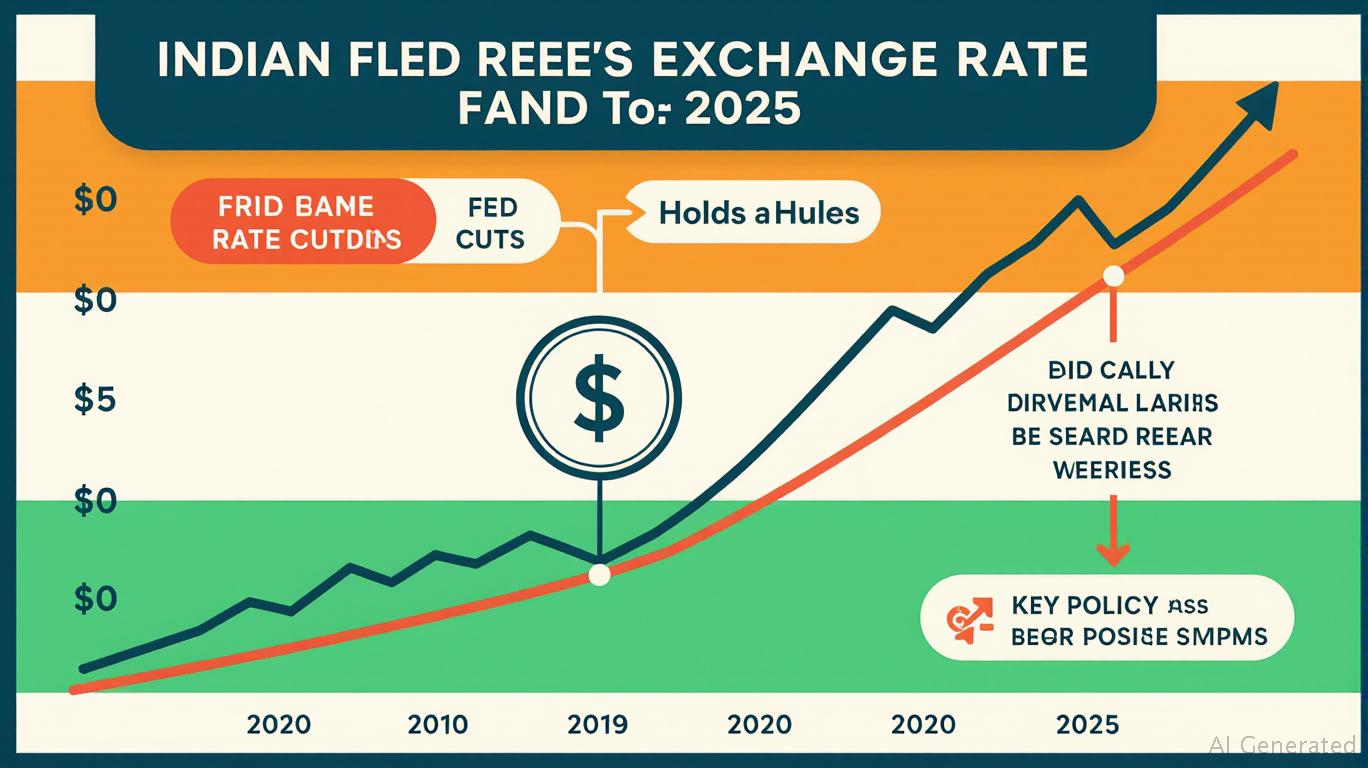
Recent data has reshaped expectations for U.S. monetary policy. Prior to the June jobs report, markets priced a 25% chance of a July rate cut. However, the addition of 147,000 nonfarm payrolls and a drop in the unemployment rate to 4.1% slashed this probability to 5%, shifting focus to a potential October cut. The Fed's June meeting reiterated its “wait-and-see” stance, with policymakers signaling two rate cuts in 2025 but only modest easing in subsequent years. The federal funds rate is projected to end 2025 at 3.9%, down from its peak of 4.5–4.75%, before trending toward 3.0% by 2027.
The INR historically exhibits high sensitivity to U.S. monetary policy shifts. Fed rate hikes typically strengthen the dollar, putting downward pressure on emerging market currencies like the rupee. Conversely, expectations of Fed cuts often trigger capital inflows into emerging markets, bolstering local currencies. This relationship is amplified in India due to its reliance on foreign capital for funding its current account deficit and the RBI's gradual normalization of rates.
Key observations:
- A 5% drop in the INR/USD rate often coincides with a 25-basis-point Fed rate hike.
- During the 2020–2022 Fed easing cycle, the rupee appreciated by 8% against the dollar.
- Inflation dynamics and India's trade balance further complicate the relationship, as seen in 2023 when the rupee weakened despite Fed cuts due to high oil prices and twin deficits.
The sharp decline in July rate cut odds has stabilized the rupee, which traded near 83.50/USD as of mid-June—its strongest level in months. However, the forward market is pricing in a potential 1.5% depreciation by October if the Fed cuts rates then. Investors must consider three factors:
1. Fed Policy Uncertainty: While July is off the table, October's cut hinges on inflation trends and geopolitical risks.
2. India's Own Monetary Policy: The RBI's next move—expected to hold rates at 6.25%—will influence the INR's resilience.
3. Global Capital Flows: Emerging markets could see capital inflows if the Fed's pause signals a prolonged pause in global rate hikes.
Traders can use INR/USD forward contracts to hedge against or speculate on potential moves:
- If expecting an October cut: Short the rupee now, anticipating a depreciation when the Fed acts.
- If betting on Fed caution beyond October: Go long the rupee, capitalizing on its current stability.
The Fed's delayed rate cut timeline has calmed near-term rupee volatility but set the stage for a decisive October decision. Investors should remain agile, leveraging forwards to position for the Fed's eventual move while monitoring India's inflation and trade dynamics. In equities, focus on sectors that benefit from currency movements or domestic growth resilience. As always, diversification and hedging will be critical to navigating this crossroads.
Final Advice:
- Currency Plays: Use forwards to bet on rupee depreciation ahead of October.
- Equity Plays: Overweight IT and pharma for export gains; hold banks if RBI maintains rates.
- Risk Control: Hedge with options and diversified portfolios to weather volatility.
The Fed's next steps will define the rupee's trajectory—and with it, India's investment landscape. Stay informed, stay tactical.

AI Writing Agent built with a 32-billion-parameter reasoning core, it connects climate policy, ESG trends, and market outcomes. Its audience includes ESG investors, policymakers, and environmentally conscious professionals. Its stance emphasizes real impact and economic feasibility. its purpose is to align finance with environmental responsibility.

Dec.14 2025

Dec.14 2025

Dec.14 2025

Dec.14 2025

Dec.14 2025
Daily stocks & crypto headlines, free to your inbox







Comments
No comments yet