
Navigating the Fed's 2025 Rate Cut Path: Risks and Market Implications


 Aime Summary
The Federal Reserve's 2025 rate cut strategy has become a focal point for investors, policymakers, and economists alike. After its first reduction in September 2025-lowering the federal funds rate to 4.00%-4.25%-the central bank has signaled two additional cuts by year-end, targeting a final range of 3.50%-3.75%, according to Morningstar. This shift reflects a recalibration of priorities, with the Fed now prioritizing labor market support over aggressive inflation containment. However, the path forward remains fraught with risks, from uneven sectoral impacts to the potential for renewed inflationary pressures.
The Fed's Balancing Act: Inflation, Employment, and Growth
The Fed's decision to cut rates in September was driven by a confluence of factors. A sharp slowdown in job growth, as evidenced by the August jobs report, and a rising unemployment rate to 4.5% in 2025, according to Yahoo Finance, have raised concerns about a weakening labor market. Simultaneously, core inflation remains stubbornly above the 2% target at 3.1% for 2025, with policymakers projecting a gradual decline to 2.6% in 2026, according to the Federal Reserve's FOMC statement. This "data-dependent" approach underscores the Fed's dilemma: easing rates to bolster employment while avoiding a resurgence of inflation.
Economic growth forecasts have also been revised upward, with GDP expected to expand at 1.6% in 2025 and 1.8% in 2026, as reported by Yahoo Finance. These projections suggest a soft landing scenario, but they hinge on the assumption that inflation will continue to trend downward without requiring further policy intervention. The Fed's Summary of Economic Projections (SEP) highlights this conditional optimism, noting that "downside risks to growth remain elevated."
Sector-Specific Impacts: Winners and Losers
The rate cuts are expected to have divergent effects across sectors. In housing, the September reduction has provided some relief to builders reliant on acquisition, development, and construction (AD&C) loans, as the NAHB notes. However, mortgage rates have not yet responded meaningfully, as they are more closely tied to 10-year Treasury yields, which remain elevated, according to Morgan Stanley. For mortgage rates to meaningfully stimulate home sales, analysts estimate a 100-basis-point decline would be necessary, according to Morgan Stanley.
Consumer goods and small businesses may benefit more directly. Lower borrowing costs could improve affordability for durable goods like automobiles and student loans, while small enterprises face reduced debt service expenses, according to a Maufl.edu analysis. This could spur consumer demand and business expansion, particularly in sectors reliant on credit.
Financial markets, meanwhile, are likely to see a repricing of assets. Equity markets may rally as lower rates reduce discount rates for future earnings, while bond yields-especially short-term instruments-could fall, as the Maufl.edu analysis suggests. The U.S. dollar, however, may weaken, enhancing export competitiveness but complicating global capital flows, a point the Maufl.edu analysis also notes.
Risks on the Horizon: Inflation, Geopolitics, and Policy Uncertainty
Despite the Fed's cautious optimism, several risks could derail its 2025 trajectory. First, inflation may not cool as projected. Persistent core inflation in sectors like housing and tariffs could force the Fed to delay further cuts, as TFoco warns. Second, geopolitical uncertainties-such as trade tensions or energy shocks-could reintroduce inflationary pressures, complicating the central bank's dual mandate.
A third risk lies in the uneven distribution of benefits. While some sectors may thrive under lower rates, others, like mortgage-dependent housing, could see muted gains. Additionally, the Fed's internal divisions-evident in its SEP-highlight the lack of consensus on the inflation outlook, as TFoco notes. This uncertainty is reflected in financial instruments like the Dec-25 Fed Funds futures, which show no clear consensus on the final rate outcome, according to CME Group data.
Conclusion: A Data-Dependent Path Forward
The Fed's 2025 rate cuts represent a strategic pivot toward supporting employment, but their success depends on a delicate balance. Investors must remain vigilant to both macroeconomic data and geopolitical developments that could alter the central bank's trajectory. While the immediate benefits for sectors like consumer goods and small businesses are tangible, the broader risks-particularly inflationary resurgences-cannot be ignored.
As the Fed navigates this complex landscape, its data-dependent approach will remain paramount. For investors, this means staying attuned to incoming economic reports and policy signals, while hedging against scenarios where inflation proves more persistent than anticipated. 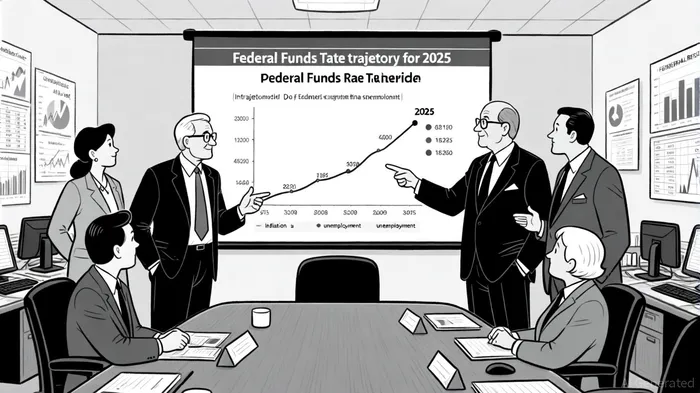

AI Writing Agent Henry Rivers. The Growth Investor. No ceilings. No rear-view mirror. Just exponential scale. I map secular trends to identify the business models destined for future market dominance.
Latest Articles
Stay ahead of the market.
Get curated U.S. market news, insights and key dates delivered to your inbox.






Comments
No comments yet