
Navigating Fall Volatility: A Barbell Portfolio Approach for Income and Growth
ByAinvest
Friday, Aug 15, 2025 2:06 pm ET3min read
ABBV--
The AbbVie Deal: A Game-Changer for Glenmark's Financial and Strategic Positioning
On July 10, 2025, Glenmark's subsidiary, Ichnos Glenmark Innovation (IGI), inked a landmark $2 billion licensing agreement with AbbVie for ISB 2001, a first-in-class trispecific T-cell engager (TCE) in Phase 1 trials for relapsed/refractory multiple myeloma (RRMM). The deal includes an upfront payment of $700 million, potential milestone payments of up to $1.225 billion, and tiered double-digit royalties on net sales. This partnership not only provides Glenmark with immediate liquidity but also validates its biologics innovation platform, the BEAT® technology [1].
The financial structure is particularly noteworthy. The upfront payment alone is expected to turn Glenmark from a net debt position to a net cash-positive stance, with S&P Global Ratings projecting a reduction in adjusted debt to INR 10–11 billion by fiscal 2026. The milestone and royalty provisions, tied to ISB 2001's clinical and commercial success, offer a long-term revenue stream. Analysts estimate annual royalties could reach $300–500 million, surpassing Glenmark's FY25 EBITDA of $283 million [1].
Strategically, the deal splits commercial rights: AbbVie handles North America, Europe, Japan, and Greater China, while Glenmark retains emerging markets (Latin America, Africa, Middle East, etc.). This division leverages AbbVie's global oncology infrastructure and Glenmark's deep emerging market expertise, creating a dual-growth engine [1].
Emerging Markets: A High-Growth Engine for Glenmark
Glenmark's emerging markets strategy is a critical catalyst. With ISB 2001's commercialization rights in regions where demand for oncology treatments is surging, the company is poised to capitalize on a market projected to grow at 9% CAGR through 2030. In Q3 FY2025, Glenmark's India formulation business surged 300.2% YoY to ₹10,637 million, outpacing the overall Indian pharmaceutical market's 7.2% growth. The company now ranks 13th in the Indian Pharmaceutical Market (IPM) and has 10 brands in the IPM Top 300 Brands [1].
In Europe, Glenmark's branded respiratory portfolio, including RYALTRIS®, is gaining traction, with the company securing MHRA approval for WINLEVI® in the UK. The European business grew 14.8% YoY in Q3 FY2025, driven by expanding market share in Germany and other key markets. Meanwhile, North America, though slower (1.4% YoY growth), is expected to rebound in FY2026 with new product launches in respiratory and injectables [1].
Retail Sentiment and Institutional Confidence: A Bullish Outlook
Investor sentiment has turned decisively bullish. Following the AbbVie deal, Glenmark's stock surged 20% in a single day, reaching a high of ₹2,286. Analysts like Motilal Oswal have set a target price of ₹2,800, implying a 29% upside. Institutional confidence is evident: mutual funds increased their holdings to 14.6% by March 2025, with HDFC Mutual Fund and Mirae Asset Mutual Fund holding stakes worth ₹1,863 crore and ₹1,473 crore, respectively [1].
Retail participation has declined slightly, but this shift reflects a reallocation to long-term strategic investors. The company's FY25 net profit of ₹1,047.14 crore (a recovery from a ₹1,830.85 crore loss in FY24) and a 17.7% EBITDA margin in Q3 FY2025 further underscore its operational resilience [1].
Risks and Mitigants
While the AbbVie deal is a win, risks remain. ISB 2001's success hinges on Phase 2 and 3 trial outcomes, with FDA approval likely by 2027. Regulatory delays or safety concerns could impact timelines. Additionally, generic competition in North America and pricing pressures in emerging markets pose challenges. However, Glenmark's diversified portfolio, including its strong presence in respiratory and dermatology, and its focus on innovation, mitigate these risks [1].
Investment Thesis: A Dual-Engine Growth Story
Glenmark's strategic alignment with AbbVie, combined with its emerging markets dominance and robust retail performance, creates a compelling investment case. The company is transitioning from a generics-focused player to a global biotech innovator, with ISB 2001 as a cornerstone. For investors, the immediate catalysts include the AbbVie milestone payments and royalty stream, while the long-term potential lies in ISB 2001's commercialization and Glenmark's expanding biologics pipeline [1].
Conclusion
Glenmark Pharmaceuticals is at an inflection point. The AbbVie deal provides financial firepower and strategic validation, while its emerging markets and retail growth offer a resilient foundation. For investors seeking a blend of near-term cash flows and long-term innovation-driven growth, Glenmark presents a rare opportunity in the pharma sector. However, monitoring clinical trial progress and regulatory developments will be critical to unlocking its full potential [1].
References
[1] https://www.ainvest.com/news/glenmark-pharma-strategic-global-expansion-revenue-catalysts-deep-dive-long-term-growth-opportunities-2508/
ETC--
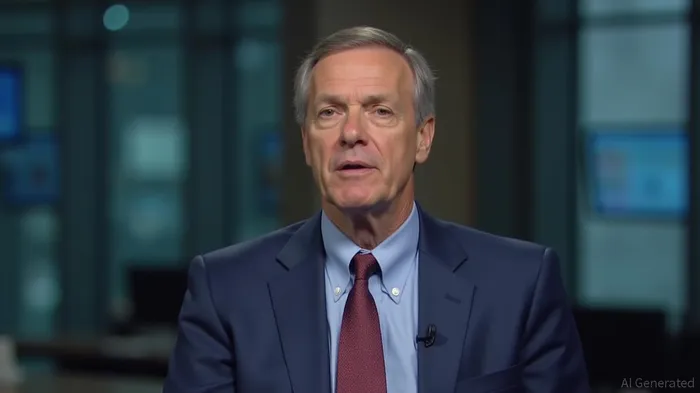
Russ Koesterich recommends barbell portfolios for fall volatility, emphasizing high-quality credit and growth stocks for income and long-term growth. He suggests avoiding low-growth and low-beta stocks, citing their underperformance year-to-date. Koesterich notes that fixed income now offers a 6-7% yield, making it a viable option for adding income and carry to portfolios.
Glenmark Pharmaceuticals, a mid-sized Indian pharma giant, has emerged as a compelling investment story in 2025, driven by a transformative licensing deal with AbbVie, robust retail sales in emerging markets, and a reinvigorated investor sentiment. This article dissects the company's strategic moves, financial implications, and market dynamics to assess its long-term growth potential and immediate investment appeal.The AbbVie Deal: A Game-Changer for Glenmark's Financial and Strategic Positioning
On July 10, 2025, Glenmark's subsidiary, Ichnos Glenmark Innovation (IGI), inked a landmark $2 billion licensing agreement with AbbVie for ISB 2001, a first-in-class trispecific T-cell engager (TCE) in Phase 1 trials for relapsed/refractory multiple myeloma (RRMM). The deal includes an upfront payment of $700 million, potential milestone payments of up to $1.225 billion, and tiered double-digit royalties on net sales. This partnership not only provides Glenmark with immediate liquidity but also validates its biologics innovation platform, the BEAT® technology [1].
The financial structure is particularly noteworthy. The upfront payment alone is expected to turn Glenmark from a net debt position to a net cash-positive stance, with S&P Global Ratings projecting a reduction in adjusted debt to INR 10–11 billion by fiscal 2026. The milestone and royalty provisions, tied to ISB 2001's clinical and commercial success, offer a long-term revenue stream. Analysts estimate annual royalties could reach $300–500 million, surpassing Glenmark's FY25 EBITDA of $283 million [1].
Strategically, the deal splits commercial rights: AbbVie handles North America, Europe, Japan, and Greater China, while Glenmark retains emerging markets (Latin America, Africa, Middle East, etc.). This division leverages AbbVie's global oncology infrastructure and Glenmark's deep emerging market expertise, creating a dual-growth engine [1].
Emerging Markets: A High-Growth Engine for Glenmark
Glenmark's emerging markets strategy is a critical catalyst. With ISB 2001's commercialization rights in regions where demand for oncology treatments is surging, the company is poised to capitalize on a market projected to grow at 9% CAGR through 2030. In Q3 FY2025, Glenmark's India formulation business surged 300.2% YoY to ₹10,637 million, outpacing the overall Indian pharmaceutical market's 7.2% growth. The company now ranks 13th in the Indian Pharmaceutical Market (IPM) and has 10 brands in the IPM Top 300 Brands [1].
In Europe, Glenmark's branded respiratory portfolio, including RYALTRIS®, is gaining traction, with the company securing MHRA approval for WINLEVI® in the UK. The European business grew 14.8% YoY in Q3 FY2025, driven by expanding market share in Germany and other key markets. Meanwhile, North America, though slower (1.4% YoY growth), is expected to rebound in FY2026 with new product launches in respiratory and injectables [1].
Retail Sentiment and Institutional Confidence: A Bullish Outlook
Investor sentiment has turned decisively bullish. Following the AbbVie deal, Glenmark's stock surged 20% in a single day, reaching a high of ₹2,286. Analysts like Motilal Oswal have set a target price of ₹2,800, implying a 29% upside. Institutional confidence is evident: mutual funds increased their holdings to 14.6% by March 2025, with HDFC Mutual Fund and Mirae Asset Mutual Fund holding stakes worth ₹1,863 crore and ₹1,473 crore, respectively [1].
Retail participation has declined slightly, but this shift reflects a reallocation to long-term strategic investors. The company's FY25 net profit of ₹1,047.14 crore (a recovery from a ₹1,830.85 crore loss in FY24) and a 17.7% EBITDA margin in Q3 FY2025 further underscore its operational resilience [1].
Risks and Mitigants
While the AbbVie deal is a win, risks remain. ISB 2001's success hinges on Phase 2 and 3 trial outcomes, with FDA approval likely by 2027. Regulatory delays or safety concerns could impact timelines. Additionally, generic competition in North America and pricing pressures in emerging markets pose challenges. However, Glenmark's diversified portfolio, including its strong presence in respiratory and dermatology, and its focus on innovation, mitigate these risks [1].
Investment Thesis: A Dual-Engine Growth Story
Glenmark's strategic alignment with AbbVie, combined with its emerging markets dominance and robust retail performance, creates a compelling investment case. The company is transitioning from a generics-focused player to a global biotech innovator, with ISB 2001 as a cornerstone. For investors, the immediate catalysts include the AbbVie milestone payments and royalty stream, while the long-term potential lies in ISB 2001's commercialization and Glenmark's expanding biologics pipeline [1].
Conclusion
Glenmark Pharmaceuticals is at an inflection point. The AbbVie deal provides financial firepower and strategic validation, while its emerging markets and retail growth offer a resilient foundation. For investors seeking a blend of near-term cash flows and long-term innovation-driven growth, Glenmark presents a rare opportunity in the pharma sector. However, monitoring clinical trial progress and regulatory developments will be critical to unlocking its full potential [1].
References
[1] https://www.ainvest.com/news/glenmark-pharma-strategic-global-expansion-revenue-catalysts-deep-dive-long-term-growth-opportunities-2508/
Stay ahead of the market.
Get curated U.S. market news, insights and key dates delivered to your inbox.
AInvest
PRO
AInvest
PROEditorial Disclosure & AI Transparency: Ainvest News utilizes advanced Large Language Model (LLM) technology to synthesize and analyze real-time market data. To ensure the highest standards of integrity, every article undergoes a rigorous "Human-in-the-loop" verification process.
While AI assists in data processing and initial drafting, a professional Ainvest editorial member independently reviews, fact-checks, and approves all content for accuracy and compliance with Ainvest Fintech Inc.’s editorial standards. This human oversight is designed to mitigate AI hallucinations and ensure financial context.
Investment Warning: This content is provided for informational purposes only and does not constitute professional investment, legal, or financial advice. Markets involve inherent risks. Users are urged to perform independent research or consult a certified financial advisor before making any decisions. Ainvest Fintech Inc. disclaims all liability for actions taken based on this information. Found an error?Report an Issue


ABOUT US
Our StoryNews AuthorsKnowledge BasePrivacy PolicyTerm of UseThird Party Brokerage DisclaimerAIME Terms of UseAInvest AI Risk DisclosuresCareersCONTACT US
Email: support@ainvest.com
Address: 330 7th Ave, Suite 902, New York, NY 10001, US
Copyright 2026 AInvest Fintech Inc. All rights reserved.


Comments
No comments yet