
Navigating the EV Trade Crossroads: China-EU Talks Unlock Supply Chain and Tech Opportunities
The ongoing China-EU electric vehicle (EV) trade negotiations, centered on tariff resolutions, battery collaborations, and cross-border investment rules, are reshaping global automotive and technology sectors. For investors, these talks present a critical juncture to capitalize on supply chain realignment and strategic partnerships. Here's how to parse the opportunities and risks.
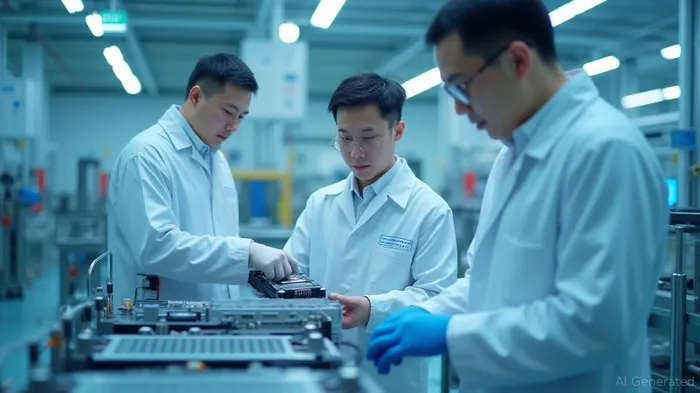
Tariff Resolutions: A Catalyst for Supply Chain Shifts
The EU's 2024 tariffs on Chinese EVs (ranging up to 35.3%) have spurred a scramble for manufacturers to avoid penalties. Key developments include:- Price undertakings: The EU and China are exploring minimum pricing agreements as an alternative to punitive tariffs. If finalized, this could stabilize trade flows while reducing the incentive for Chinese firms to undercut EU competitors.- Local production surges: German automakers like Mercedes-Benz and BMW are accelerating plans to establish European EV manufacturing hubs to bypass tariffs. This creates opportunities for suppliers of battery components, assembly equipment, and lithium.
Investment Takeaway: Companies exposed to EU EV production expansion—such as thyssenkrupp (TYEKF) for automotive machinery or Bosch (ETR:BOSS) for battery management systems—are poised to benefit. may stabilize as demand from European factories grows.
Battery Tech Collaborations: The Heart of the EV Transition
Battery partnerships are the linchpin of negotiations, driven by the EU's desire to reduce reliance on Chinese dominance in lithium-ion production. Key areas include:- Joint ventures: EU-China collaborations in battery cell manufacturing and recycling could unlock access to critical minerals like cobalt and nickel. Companies like Northvolt (a Swedish battery firm) and China's CATL are already exploring such ties.- EU's Strategic Autonomy Push: The bloc's €2.9 billion battery initiative aims to build 40% of its battery needs locally by 2030. This fuels demand for raw material suppliers such as Albemarle (ALB) for lithium and Vale (VALE) for nickel.
Investment Takeaway: Investors should look to lithium miners with European exposure, such as SQM (SQM), and battery recycling firms like Redwood Materials, which could benefit from EU-China recycling partnerships.
Cross-Border Investment Rules: Navigating Regulatory Risks
The EU's foreign subsidy probes—such as the investigation into BYD's Hungarian plant—highlight regulatory hurdles for Chinese firms. However, they also open avenues for compliant investors:- Strategic joint ventures: EU-China partnerships in EV charging infrastructure, like those between State Grid and Enel X, may gain favor if they align with EU data and sustainability rules.- Green tech licensing: EU firms with proprietary EV technologies (e.g., ZF Friedrichshafen's autonomous systems) could monetize patents through licensing deals with Chinese manufacturers.
Investment Caution: Monitor . A decline could signal regulatory overhang, while a rebound might reflect negotiated compromises.
Near-Term Catalysts and Geopolitical Risks
- July 2025 EU-China Summit: A potential breakthrough on tariffs or battery partnerships could boost EV stocks like NIO (NIO) and European automakers.
- US-China Dynamics: If U.S. tariffs on Chinese goods remain high, EU markets may absorb more discounted EVs, pressuring local manufacturers unless the EU enforces strict price floors.
Geopolitical Risks: Ongoing probes into Chinese subsidies (e.g., BYD's Hungarian plant) and data privacy cases (like TikTok's €530M fine) could disrupt supply chains. Investors should favor firms with diversified supply networks or EU-localized operations.
Final Investment Strategy
- Buy into EU EV production plays: Firms like thyssenkrupp and Bosch benefit from German automakers' localization.
- Diversify into battery minerals: Lithium and nickel stocks with EU projects offer leverage to the supply chain shift.
- Avoid overexposure to pure-play Chinese EVs: Until tariff and subsidy disputes are resolved, favor companies with dual exposure to EU-China partnerships.
The China-EU EV talks are a chess match with high stakes for investors. Those who align with supply chain localization, battery innovation, and regulatory-compliant partnerships will find fertile ground in this evolving landscape.

Stay ahead of the market.
Get curated U.S. market news, insights and key dates delivered to your inbox.


AInvest
PRO
AInvest
PRO



Comments
No comments yet