
Navigating the Eurozone Bond Market: Why German Bunds Offer Resilience Amid U.S.-EU Tariff Turmoil
The U.S.-EU tariff dispute, set to escalate with a 30% levy on European exports starting August 1, 2025, has injected volatility into global markets. Yet, European sovereign bonds—particularly German Bunds—have shown surprising resilience. This article explores how the trade tensions have created an undervalued entry point for fixed-income investors, with German Bunds offering a strategic hedge against geopolitical uncertainty and potential inflationary shifts.
The Trade Tensions Landscape: A Delicate Balancing Act
The U.S. tariffs, part of President Trump's “America First” strategy, target key EU exports such as automotive components, steel, and agricultural products. The EU, while delaying retaliatory measures until early August, has not ruled out countermeasures like tariffs on $21 billion of U.S. goods. European leaders, including French President Macron and German Chancellor Merz, stress the need to defend economic interests, but the lack of immediate retaliation signals a preference for negotiation.
This hesitation reflects the “TACO” (Trump Always Chickens Out) trade theme, where markets bet on diplomatic resolution over escalation. The EU's four-pronged strategy—negotiations, rebalancing measures, alliances with like-minded partners, and trade diversification—adds a layer of strategic patience.
The Resilience of German Bunds: A Safe Haven in Disguise
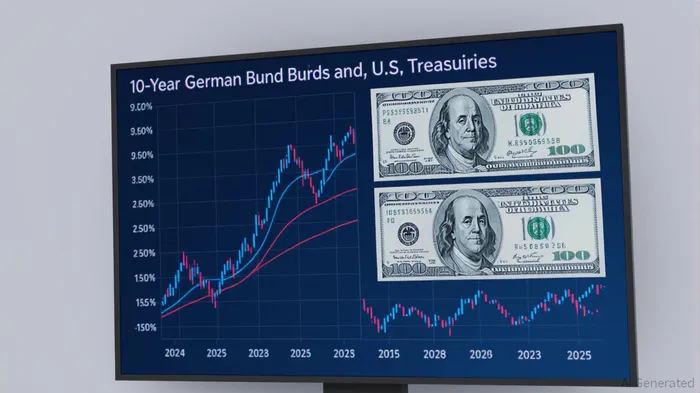
Despite the trade war risks, the 10-year German Bund yield has held steady at 2.72%, a stark contrast to the U.S. 10-year Treasury yield of 4.42%. This divergence defies the typical “risk-off” scenario, where uncertainty usually drives investors toward U.S. Treasuries.
The resilience stems from three factors:
1. Safe Haven Status: German Bunds remain the bedrock of European fixed income, offering liquidity and stability amid geopolitical turmoil.
2. ECB Policy Ambiguity: While inflation pressures persist, the ECB's reluctance to hike rates further (or even cut them) has kept Bund yields anchored.
3. Market Pessimism Pricing: Investors already anticipate a negotiated outcome, with the “TACO” effect limiting downside pressure.
Sector and Market Dynamics: Beyond the Bond Curve
The auto sector, a linchpin of Germany's export economy, has seen companies like BASF downgrade forecasts due to supply chain risks. Yet, bond markets have not yet priced in a full-blown recession. Instead, defensive sectors like utilities (e.g., EDP and Verbund) and European banks (UniCredit, CaixaBank) trading at 0.6x price-to-book ratios offer dividend yields of 5–7%, acting as a buffer against volatility.
The euro's decline to 1.168 against the dollar, driven by diverging monetary policies and safe-haven flows, also benefits European exporters. However, weaker eurozone inflation data could further pressure the ECB to delay rate hikes, indirectly supporting bond prices.
Investment Opportunities: Positioning for De-escalation or Inflation Relief
Investors should consider three strategic moves:
Overweight German Bunds: The current yield spread versus Treasuries (170 basis points) provides a cushion. A negotiated tariff truce or a surprise ECB rate cut could drive Bund yields lower, boosting prices.
Monitor Inflation Metrics: The ECB's August inflation report and U.S. CPI data will be pivotal. A slowdown in inflation could justify rate cuts, further supporting bonds.
Diversify into Periphery Bonds: While Italian BTPs or Spanish bonds carry higher yields (4.1% vs. 2.72% for Bunds), their risk/reward profile improves if trade tensions ease.
Risks and Considerations
- Trade War Escalation: If tariffs expand to energy or tech sectors, peripheral bonds could suffer.
- ECB Policy Shift: A hawkish surprise from the ECB could pressure yields higher.
- Global Growth Deterioration: A synchronized slowdown would hurt corporate bonds more than sovereigns.
Conclusion: A Cautionary Buy Signal
The U.S.-EU tariff dispute has created a paradoxical environment where European sovereign bonds remain undervalued despite headline risks. German Bunds, in particular, offer a rare combination of safety and yield, with catalysts like negotiations or inflation easing on the horizon. Investors should gradually build positions in EU core bonds while hedging with inflation-linked securities or defensive equities.
As trade talks loom, the Bund's resilience may just be the canary in the coal mine—signaling that European fixed income is due for a rebound.

Stay ahead of the market.
Get curated U.S. market news, insights and key dates delivered to your inbox.


AInvest
PRO
AInvest
PRO



Comments
No comments yet