
Navigating European Natural Gas Markets Amid Geopolitical Crosscurrents
The Trump administration's 50-day deadline for Russia to agree to a ceasefire in Ukraine, coupled with the threat of 100% secondary tariffs on countries purchasing Russian energy exports, has thrown European natural gas markets into a state of heightened uncertainty. As the clock ticks toward September 2025, investors must navigate a complex landscape of geopolitical risk, supply chain fragility, and shifting energy policies. This article examines the implications of these developments and outlines strategies to mitigate risks while capitalizing on emerging opportunities.
The Geopolitical Backdrop
The administration's dual approach—military aid to Ukraine and economic pressure on Russia—marks a strategic pivot. Secondary tariffs targeting third-party buyers of Russian energy (including the EU, China, India, and Turkey) aim to disrupt Moscow's revenue streams, which rely on fossil fuel exports for 30%-50% of federal budget revenue. The EU, having imported 17.2 billion cubic meters of Russian gas in early 2025, faces a precarious balancing act: comply with tariffs by increasing support for Ukraine or risk destabilizing its energy security.
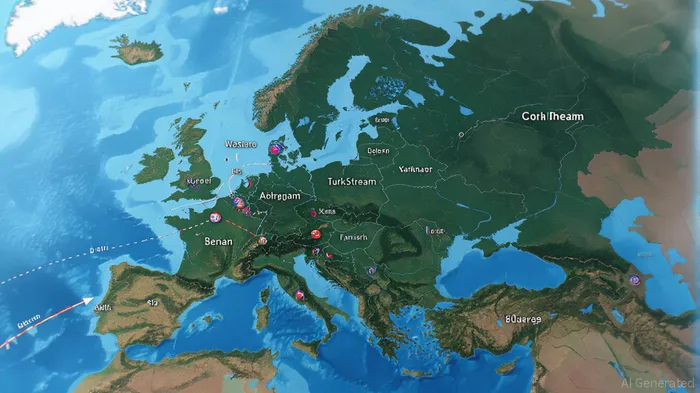
Crucially, exemptions may be granted to nations providing financial or military aid to Ukraine. This creates a conditional lifeline for the EU, which has already committed €12 billion in 2025 to Kyiv. However, enforcement remains murky. As analysts note, the U.S. has a history of unfulfilled threats against Russia, Venezuela, and Iran, raising questions about the administration's resolve.
Market Dynamics: Supply, Demand, and Volatility
The threat of tariffs has already introduced volatility into European gas markets. . Prices surged to €55/MWh in early July—up 20% month-on-month—as traders priced in potential supply disruptions. Key dynamics to watch:
- Russian Export Responses: Moscow may reduce gas flows to tariff-affected buyers to avoid penalties, tightening global supply.
- EU Diversification: Accelerated LNG imports from the U.S. and Qatar, plus increased pipeline gas from Norway and Azerbaijan, could mitigate shortages.
- Demand Flexibility: Industrial users (e.g., steel, chemicals) may curtail operations if prices remain elevated, easing pressure on storage levels.
Investment Implications: Opportunities in Uncertainty
Investors must adopt a multi-pronged strategy to navigate this environment.
1. Geopolitical Risk Mitigation
- Hedge against price volatility: Use futures contracts or options on the TTF hub to lock in costs for energy-intensive industries.
- Diversify energy sources: Invest in renewable energy infrastructure (e.g., wind farms in the North Sea) or storage facilities to reduce reliance on gas.
2. Opportunistic Plays
- LNG Infrastructure: Companies like Sempra Energy (SRE) and NextDecade Corp. (which operates the Rio Grande LNG terminal) stand to benefit from increased U.S. LNG exports to Europe.
- Russian Energy Plays: Short positions in Russian state-owned energy firms (e.g., Gazprom) could profit if tariffs cripple their export revenues. However, this carries execution risk due to potential geopolitical blowback.
- European Utilities: Firms with diversified energy portfolios, such as Uniper (UN01.GR) or EDP (EDP.LS), may outperform if governments subsidize energy costs to protect consumers.
3. Sector-Specific Considerations
- Industrial Stocks: Avoid heavy gas users (e.g., fertilizers, glassmakers) unless they have hedged prices.
- Renewables: Invest in solar and wind projects in energy-hungry regions like Germany and Italy.
The Bottom Line
The Trump administration's ultimatum presents a high-stakes test of geopolitical and economic strategy. While the EU's energy security remains at risk, investors can position themselves to profit from structural shifts in supply chains and policy responses. Key takeaways:
- Short-Term Volatility: Expect price swings until the September deadline clarity emerges.
- Long-Term Transition: The crisis accelerates Europe's pivot toward energy independence, favoring LNG infrastructure and renewables.
Investors should remain agile, monitor geopolitical developments closely, and prioritize resilience over speculative bets. As markets grapple with uncertainty, those who blend risk mitigation with opportunism will be best placed to navigate this turbulent landscape.
The views expressed are based on publicly available information as of July 14, 2025. Always conduct thorough due diligence before making investment decisions.

Stay ahead of the market.
Get curated U.S. market news, insights and key dates delivered to your inbox.
AInvest
PRO
AInvest
PRO



Comments
No comments yet