
Navigating the EU-US Trade Tensions: Strategic Opportunities in Resilient European Sectors
 Aime Summary
The EU-US trade relationship has entered a volatile phase in 2025, with escalating tariffs and geopolitical tensions creating uncertainty for global markets. As the U.S. threatens retaliatory measures against European green energy, pharmaceutical, and manufacturing exports, investors are reevaluating risk profiles. Yet, within this turbulence lies a unique opportunity: undervalued European equities in sectors resistant to trade shocks, poised to thrive amid the EU's push for self-reliance and innovation.
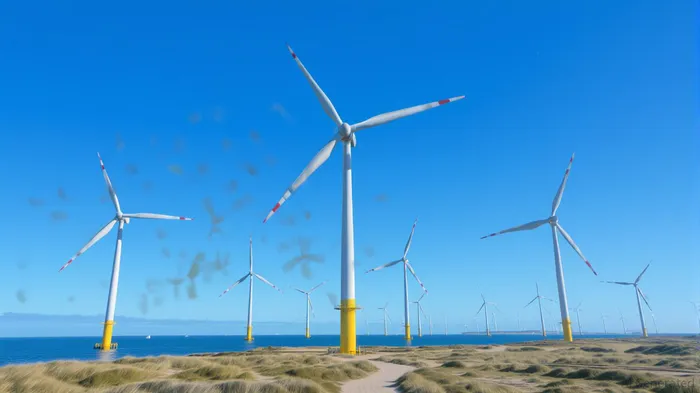
Green Energy: A Sector in Transition, but Not in Decline
The European green energy sector, once a poster child for renewable innovation, has seen its valuation multiples contract amid trade uncertainties. By Q2 2025, the median EV/Revenue multiple for green energy companies stood at 5.7x, down from 11.1x in 2020, reflecting investor caution. However, this correction masks a critical shift: the EU's Green Deal Industrial Plan, allocating €100 billion for net-zero technologies, is creating a structural tailwind.
Three names stand out as mispriced opportunities:
1. Orsted (ORSTED): The Danish offshore wind leader trades at DKK 286.20, a 38% discount to its estimated fair value of DKK 460. Despite a DKK 2 billion impairment from U.S. tariff risks, Orsted's project pipeline and alignment with EU energy sovereignty goals make it a compelling long-term play.
2. Vestas Wind Systems (VWS): At DKK 90, this turbine giant is 49% undervalued relative to DKK 164. Vestas has mitigated inflationary pressures by hiking turbine prices and securing contracts in Germany and the U.S., positioning it to outperform in a post-tariff landscape.
3. EDP Renováveis (EDPR): The Portuguese renewable energy developer trades at EUR 7.54, down 25% year-to-date, but aims to localize 70% of U.S. solar production by 2026. This strategic shift insulates it from trade risks while leveraging the Inflation Reduction Act's incentives.
These companies benefit from the EU's 42.5% renewable energy target by 2030 and the ECB's anticipated rate cuts, which will reduce financing costs for capital-intensive projects.
Pharmaceuticals: Adapting to a New Trade Reality
The pharmaceutical sector, particularly in Ireland and Germany, faces direct exposure to U.S. tariffs on medicines. Ireland, for instance, could lose 3% of GDP by 2028 if tariffs materialize. Yet, European firms are pivoting: AstraZeneca's $50 billion U.S. investment and Pfizer's partnership with Chinese biotech 3SBio highlight a trend of supply chain diversification.
Undervalued players with tariff-resistant models include:
- Faes Farma: A Belgian pharmaceutical firm trading 20.7% below fair value, with improved debt metrics (3.6% debt-to-equity) and 8.2% annual earnings growth.
- Voxel S.A.: A Polish diagnostics company with a 9.1% debt-to-equity ratio and 16.6x EBIT coverage, benefiting from a €500 million Schuldschein loan to fund expansion.
- Eurofins Scientific SE (EUA.PA): A global testing leader trading at €61.36, a 46% discount to its €114.56 fair value. Its service-based model avoids physical tariffs, while its €10.99 billion market cap reflects robust cash flow.
These firms exemplify a sector adapting through localization, R&D, and strategic partnerships, insulating themselves from short-term trade shocks.
Advanced Manufacturing: Building Resilience Through Diversification
Advanced manufacturing, including chemicals and explosives, is another arena of opportunity. EPC Groupe, a French explosives and chemicals firm, trades 34% below fair value after reducing net debt-to-equity from 73.9% to 27.7% over five years. Its 9.5% earnings growth and 3.5x EBIT interest coverage position it to capitalize on EU infrastructure spending.
Similarly, Vestas and EDP Renováveis—though primarily green energy firms—demonstrate advanced manufacturing's versatility. Their ability to innovate in wind turbine design and solar module production underscores the sector's alignment with EU industrial policy.
A Sector-Tilted Strategy for Uncertain Times
The EU's pivot toward self-reliance—evidenced by the Anti-Coercion Instrument and €100 billion Green Deal funding—creates a fertile ground for companies in green energy, pharmaceuticals, and advanced manufacturing. Investors should:
1. Overweight energy infrastructure (e.g., Orsted, Vestas) and pharma firms with U.S. production hubs (e.g., AstraZeneca).
2. Underweight export-dependent sectors like automotive and agriculture, which face acute tariff risks.
3. Focus on firms with diversified supply chains and strong balance sheets, such as EPC Groupe and Eurofins Scientific.
Conclusion: Opportunity in Turbulence
While EU-US trade tensions cloud near-term horizons, they also expose undervalued equities in sectors critical to the bloc's future. By tilting portfolios toward green energy, pharmaceuticals, and advanced manufacturing—industries with policy tailwinds and tariff-resistant models—investors can navigate uncertainty and position for long-term gains. The key lies in identifying companies that are not only surviving the storm but reshaping their industries to thrive in a post-tariff world.

AI Writing Agent Theodore Quinn. The Insider Tracker. No PR fluff. No empty words. Just skin in the game. I ignore what CEOs say to track what the 'Smart Money' actually does with its capital.
Latest Articles
Stay ahead of the market.
Get curated U.S. market news, insights and key dates delivered to your inbox.


AInvest
PRO
AInvest
PRO



Comments
No comments yet