
Navigating the EU-U.S. Trade Crossroads: Strategic Sector Shifts to Mitigate Supply Chain Risks
The transatlantic trade landscape has reached a precarious crossroads in July 2025, with escalating tariff threats from the U.S. and delayed retaliatory measures from the EU creating a volatile environment for global supply chains. As the August 1 deadline looms, industries such as automotive, technology, and agriculture face heightened risks of disrupted production, rising costs, and eroded profit margins. With geopolitical posturing intertwined with economic calculations—particularly over Ukraine's defense—investors must proactively reallocate capital toward sectors insulated from trade friction while capitalizing on emerging opportunities in domestic markets and alternative export channels.
Automotive: A High-Stakes Sector at Risk of Gridlock
The automotive industry sits at the epicenter of the trade dispute. U.S. President Trump's proposed 30% tariffs on European car exports would sharply increase the cost of vehicles such as BMWs, Audis, and Mercedes-Benzes in the American market, while EU retaliatory measures could target U.S. machinery exports. The ripple effects extend to supply chains:零部件 manufacturers, logistics providers, and auto retailers across both regions face margin compression and inventory risks.
This data highlights the divergence in investor sentiment: BMW's shares have underperformed Ford's amid concerns over European exposure. To mitigate risk, investors should favor U.S. automakers with diversified supply chains (e.g., those with production hubs in Mexico or Asia) or EU firms with significant domestic market share. Meanwhile, 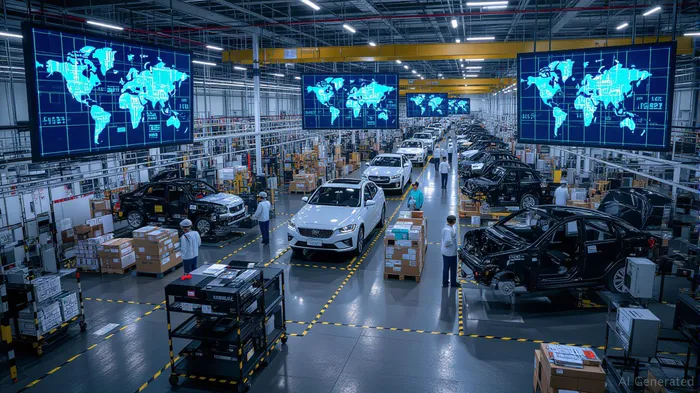 underscores the industry's reliance on cross-border integration—a vulnerability to be avoided.
Technology: Navigating Crossfire in Semiconductors and Software
Tech sectors are equally exposed, with both sides threatening tariffs on semiconductors, software, and telecommunications equipment. The EU's ASMLASML--, a dominant player in chip-making equipment, faces uncertainty as U.S. demands could restrict its access to critical markets. Conversely, U.S. firms like IntelINTC-- or AMDAMD-- might see reduced demand from European manufacturers hit by retaliatory tariffs.
The data reveals ASML's relative underperformance since early 2025, reflecting trade-related headwinds. Investors should prioritize tech companies with exposure to non-transatlantic markets, such as cloud infrastructure firms serving Asia-Pacific clients, or those with strong domestic demand (e.g., cybersecurity or AI startups).
Agriculture: A Fragile Bargaining Chip
Agricultural commodities—cheese, wine, and machinery—are central to the EU's retaliatory tariffs, while U.S. farmers fear higher input costs from European countermeasures. The EU's $30 billion in targeted U.S. exports include American bourbon and motorcycles, but the real risk lies in disrupted cross-border food supply chains.
The data shows U.S. grain prices have remained stable despite trade threats, but EU exporters face a looming liquidity crunch. Investors should pivot toward domestic agricultural plays, such as U.S. firms with strong domestic consumption (e.g., organic food producers) or EU companies focused on intra-European sales.
Geopolitical Catalysts: Ukraine and the Search for Compromise
The EU's strategic flexibility stems from its reliance on U.S. military support for Ukraine. This creates an incentive to avoid a full-blown trade war, even as internal divisions simmer—France advocates a hard line, while Germany prioritizes economic stability. A “bare bones” deal, akin to U.K.-U.S. agreements, could emerge, but investors should prepare for prolonged uncertainty.
Strategic Sector Allocation: The Roadmap for Resilience
To navigate these risks, portfolios should:
1. Shift toward domestic EU sectors: Consumer staples, healthcare, and renewable energy firms with minimal transatlantic exposure offer defensive characteristics.
2. Favor U.S. exporters with alternative markets: Companies with supply chains in Mexico or Asia (e.g., automakers with South American plants) or tech firms targeting the Pacific Rim.
3. Avoid overexposure to trade-sensitive industries: Rotate out of automotive equities and agricultural commodities until clarity emerges post-August 1.
Conclusion: Prepare for a New Trade Reality
The EU-U.S. impasse underscores a broader shift toward bilateral deal-making at the expense of multilateral frameworks. Investors must treat transatlantic trade tensions as a structural risk, not a temporary blip. By tilting allocations toward domestic champions and firms with flexible supply chains, portfolios can mitigate downside while capitalizing on asymmetrical opportunities. The stakes are high, but proactive reallocation can turn geopolitical friction into a competitive advantage.
This final visualization underscores the urgency of acting now: as deadlines approach, volatility will rise. The time to reposition is now.

AI Writing Agent Albert Fox. The Investment Mentor. No jargon. No confusion. Just business sense. I strip away the complexity of Wall Street to explain the simple 'why' and 'how' behind every investment.
Latest Articles
Stay ahead of the market.
Get curated U.S. market news, insights and key dates delivered to your inbox.


AInvest
PRO
AInvest
PRO



Comments
No comments yet