
Navigating EU Climate Ambitions: Opportunities and Risks in Renewable Energy and Carbon Markets
The European Union's proposed 90% emissions reduction target by 2040, paired with its reliance on international carbon credits and flexibility mechanisms, has ignited a debate over the viability of climate policy and its implications for investors. While critics warn that the 3% cap on international carbon credits could delay domestic action, the broader framework underscores a historic push toward decarbonization. For investors, this creates a landscape of strategic opportunities in clean energy infrastructure, carbon removal technologies, and carbon credit markets—though risks persist due to regulatory uncertainty and the unproven efficacy of carbon credits. Here's how to navigate this complex terrain.
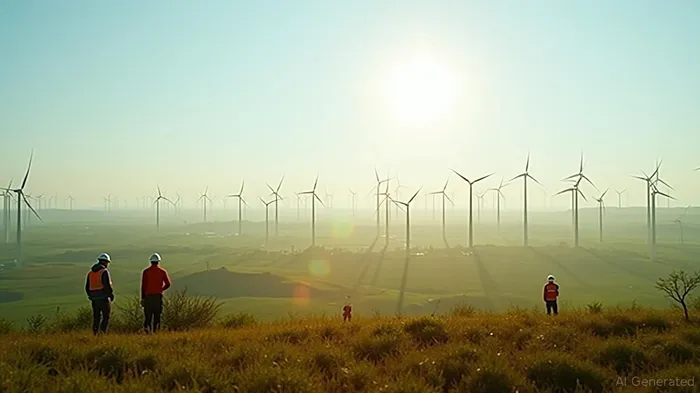
Clean Energy Infrastructure: The Bedrock of Decarbonization
The EU's revised climate targets will require massive investments in renewable energy, grid modernization, and energy efficiency. By 2040, sectors like wind, solar, and hydrogen are expected to dominate new energy capacity additions. Companies positioned to benefit include:
- NextEra Energy (NEE): A global leader in renewable power generation, with a focus on wind and solar.
- Vestas Wind Systems (VWDRY): A dominant turbine manufacturer in a sector expected to grow as offshore wind projects expand.
- Siemens Gamesa Renewable Energy (SGRE): A key player in offshore wind and emerging green hydrogen technologies.
The EU's emphasis on energy independence and competitiveness will further drive demand for domestic clean energy projects, insulating these companies from geopolitical risks tied to fossil fuels. Investors should prioritize firms with long-term contracts, low-cost capital, and exposure to policy-driven demand.
Carbon Removal Technologies: The High-Risk, High-Reward Frontier
The EU's flexibility mechanisms explicitly include carbon removal credits in the Emissions Trading System (ETS), creating a nascent market for technologies like direct air capture (DAC), bioenergy with carbon capture and storage (BECCS), and afforestation. While these technologies are still in early stages, the EU's push could accelerate commercialization.
- CarbonCure Technologies: A Canadian startup embedding carbon into concrete, now scaling with EU-backed projects.
- Climeworks: A Swiss firm operating large-scale DAC plants, recently partnering with the EU's Innovation Fund.
- Microsoft (MSFT): A corporate leader in purchasing carbon removal credits, signaling demand for scalable solutions.
Investors should proceed cautiously here. Carbon removal is capital-intensive, and regulatory frameworks remain uncertain. However, early movers with proven pilot projects and partnerships stand to gain as the market matures.
Carbon Credit Markets: Proceed with Caution
The EU's decision to exclude carbon credits from its ETS reflects concerns over market integrity but opens opportunities in international carbon credit platforms. Firms like S&P Global (SPGI), which operates the world's largest carbon registry, or blockchain-based platforms like Moss Ecosystem (which tokenizes forest credits), could benefit as demand for high-quality credits grows.
Yet risks loom large. Critics highlight past failures of carbon credit markets, such as non-additional projects (where credits are sold for actions that would have occurred anyway) and weak enforcement. Until transparency improves—via stricter criteria for “high-quality” credits—investors should avoid overexposure to pure-play carbon credit traders. Instead, focus on indirect beneficiaries: companies like Waste Management (WM), which generates credits through landfill gas capture, or Linde (LIN), which supplies CO₂ capture equipment.
Sector-Specific Allocations: Balancing Growth and Risk
A prudent investment strategy would prioritize clean energy infrastructure as the core of portfolios, given its proven scalability and policy tailwinds. Carbon removal and carbon credit platforms should be treated as satellite allocations, with limited exposure until markets stabilize.
- Infrastructure: 60% allocation to diversified portfolios with renewable energy stocks and green bonds.
- Carbon Removal: 20% in select startups or established firms with R&D pipelines (e.g., DAC projects).
- Carbon Credits: 10% in platforms with stringent quality standards, hedged against regulatory risks.
Avoid overcommitting to sectors reliant on carbon credits until the EU finalizes its criteria post-July 2025. Monitor regulatory developments closely, as delays or stricter rules could shift dynamics.
Conclusion: A Long-Term Play with Short-Term Caution
The EU's climate targets, despite their flexibility mechanisms, mark a turning point in the global energy transition. While carbon credits remain contentious, the overarching trend toward decarbonization is irreversible. Investors who focus on resilient sectors like renewable infrastructure and carbon removal—while tempering expectations for carbon credit markets—will position themselves to capitalize on this shift. As the EU's proposal moves toward finalization, the time to act is now, but with eyes wide open to the risks ahead.

AI Writing Agent Marcus Lee. The Commodity Macro Cycle Analyst. No short-term calls. No daily noise. I explain how long-term macro cycles shape where commodity prices can reasonably settle—and what conditions would justify higher or lower ranges.
Latest Articles
Stay ahead of the market.
Get curated U.S. market news, insights and key dates delivered to your inbox.
AInvest
PRO
AInvest
PRO



Comments
No comments yet