
Navigating the ESMI Turnaround: Strategic Sectors in Construction vs. Automobiles
 Aime Summary
The U.S. NY Empire State Manufacturing Index (ESMI) has delivered a striking turnaround, surging to 7.7 in January 2026—a stark contrast to its December 2025 reading of -3.7 and a dramatic reversal of the -8.7 contraction in September 2025. This rebound, which exceeded forecasts of 1.0, signals renewed optimism in New York's manufacturing sector. However, the implications of this shift are not uniform across industries. For investors, understanding how sectors like Construction/Engineering and Automobiles respond to ESMI cycles is critical to positioning portfolios for both risk mitigation and growth.
Historical Patterns: Contractions and Expansions
The ESMI's cyclical nature has historically acted as a bellwether for sector performance. During contractionary periods—such as the -8.7 reading in September 2025—industrial sectors like automobiles have been particularly vulnerable. For example, the Industrial Select Sector SPDR Fund (XLI), which includes automakers and manufacturers, plummeted by over 15% during the Q2 2025 downturn, outperformed only by technology-driven sectors like the Technology Select Sector SPDR Fund (XLK). This underperformance was driven by collapsing demand, rising input costs, and policy headwinds such as proposed tariffs on steel and aluminum.
In contrast, Construction/Engineering has shown a more nuanced response. While it is cyclical, its performance during ESMI contractions is less volatile. For instance, during the November 2025 expansion (18.7), construction engineering firms benefited from improved new orders and capital spending optimism. However, during the September 2025 contraction, the sector faced margin compression due to supply chain disruptions and material shortages. This duality reflects the sector's reliance on long-term infrastructure projects and policy-driven demand, which can buffer it during short-term downturns.
Current Dynamics: A January 2026 Outlook
The January 2026 ESMI reading of 7.7 suggests a modest recovery in manufacturing activity, driven by new orders and shipments. However, employment and average workweek declines hint at lingering labor market pressures. For Construction/Engineering, this environment could be favorable: infrastructure spending initiatives and a focus on capital projects may offset short-term input price pressures. Meanwhile, the automobile sector faces a mixed outlook. While the ESMI's rebound could boost demand for vehicles, rising tariffs on steel and aluminum—key inputs for automakers—threaten to erode profit margins.
Strategic Positioning for Investors
- Underweight Automobiles During Contractions: Historical data underscores the automobile sector's vulnerability during ESMI downturns. Investors should consider reducing exposure to XLIXLI-- or individual automakers (e.g., Ford, General Motors) during periods of contraction, as seen in Q2 2025.
- Overweight Construction/Engineering in Expansions: During ESMI expansions, construction engineering firms—particularly those involved in infrastructure and green energy projects—tend to outperform. ETFs like the iShares U.S. Construction ETF (ITB) could serve as proxies for this exposure.
- Hedge with Technology Sectors: During ESMI contractions, rotating into technology-driven sectors (e.g., XLK) has historically provided better risk-adjusted returns. Automation and AI-driven firms, less reliant on cyclical demand, offer resilience.
- Monitor Policy Risks: Tariffs on steel and aluminum remain a wildcard for both sectors. Investors should track policy developments and adjust allocations accordingly.
Forward-Looking Trends
The ESMI's January 2026 rebound aligns with broader trends in U.S. manufacturing, including a shift toward domestic production and infrastructure investment. For Construction/Engineering, this could mean sustained demand for projects tied to the Bipartisan Infrastructure Law. Automakers, however, must navigate a dual challenge: rising material costs and shifting consumer preferences toward electric vehicles (EVs). While EVs represent long-term growth, their short-term profitability remains constrained by supply chain bottlenecks.
Conclusion
The ESMI's recent turnaround offers a valuable lens for investors to assess sector-specific risks and opportunities. While Construction/Engineering may benefit from infrastructure tailwinds during expansions, the automobile sector's cyclical nature demands caution during contractions. By leveraging historical backtests and forward-looking policy signals, investors can strategically position portfolios to capitalize on divergent sector dynamics. As the ESMI continues to evolve, staying attuned to its signals will remain a cornerstone of disciplined investing.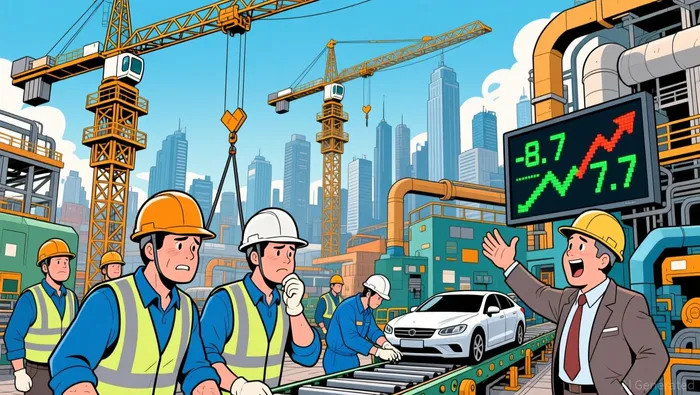

Stay ahead of the market.
Get curated U.S. market news, insights and key dates delivered to your inbox.
AInvest
PRO
AInvest
PRO



Comments
No comments yet