
Navigating the Emotional Storm: How Behavioral Biases Shape Market Volatility and What Investors Can Do
 Aime Summary
The recent market turbulence—marked by sharp swings in equities, rising bond yields, and geopolitical tensions—has once again laid bare the fragile interplay between human psychology and financial decision-making. Between July 7–11, 2025, U.S. stocks oscillated amid fears of trade wars and the fiscal fallout from the One Big Beautiful Bill Act (OBBBA), while bond markets grappled with deficit concerns and Fed policy uncertainty. Yet beneath the noise of daily headlines, a deeper truth emerges: investor behavior during volatility is often driven by cognitive biases that erode long-term returns.
The Psychology of Panic: Fear, Herd Mentality, and Regret
When markets falter, fear of loss takes center stage. The S&P 500's -0.22% weekly decline (despite hitting record highs) and the Dow's -1.04% drop illustrate how even minor setbacks can trigger irrational reactions. Behavioral economists call this the “loss aversion bias”—the tendency to feel the pain of losses more intensely than the pleasure of gains. During the July sell-off, investors focused disproportionately on headline risks like tariffs, while overlooking structural strengths in AI-driven sectors, such as NVIDIA's (NVDA) market cap milestone.
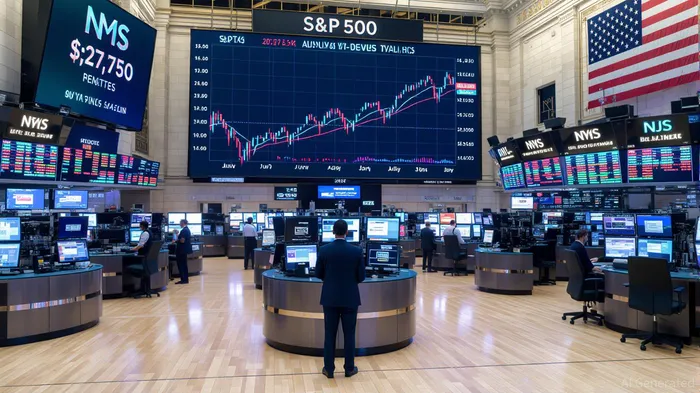
Meanwhile, herd behavior amplified the volatility. As European equities surged (with the FTSE 100 hitting an all-time high) and Asian markets like Taiwan outperformed, investors rushed to chase returns, ignoring risks. This “herding bias”—the inclination to follow the crowd—has historically led to overvaluation bubbles. For example, during the 2020 pandemic rally, similar herd dynamics inflated tech stocks to unsustainable levels before corrections.
Counteracting Bias: Three Strategies for Discipline
- Rebalance with Purpose
Portfolio rebalancing is a systematic antidote to emotional decision-making. Consider the stark divergence between U.S. equity and bond markets this month: while the S&P 500 flirted with highs, the 2-year Treasury yield surged 30 basis points. A disciplined rebalancer might trim overexposed tech holdings (like NVDA, which rose 8% YTD) and reinvest in undervalued sectors, such as utilities or bonds, to maintain risk parity.
Such rebalancing not only reduces risk but also captures gains in overlooked areas. Studies show that consistent rebalancing can boost long-term returns by 1–2% annually, even in volatile environments.
Dollar-Cost Average Through the Noise
Dollar-cost averaging (DCA)—investing fixed amounts periodically—neutralizes the urge to time the market. For instance, an investor who continued DCA contributions during the July sell-off would have bought dips in sectors like energy (up 2.69% weekly) and tech, positioning for recovery. Over the past decade, DCA outperformed lump-sum investing in 6 of 10 years, according to Fidelity data, precisely because it ignores short-term noise.Anchor to Long-Term Benchmarks
Emotional self-regulation requires anchoring decisions to time-tested metrics. The Federal Reserve's “wait-and-see” stance on rate cuts highlights the importance of ignoring hyperbole and focusing on fundamentals. Investors should monitor metrics like the 10-year Treasury yield (currently near 4.3%) and corporate earnings growth, not daily headlines.
By tying decisions to these stable benchmarks, investors avoid the “availability bias”—overestimating the impact of recent events simply because they're fresh in memory.
Expert Perspective: “Volatility Is the Price of Clarity”
Dr. Karen Lee, a behavioral finance professor at Columbia University, notes that volatility “exposes irrational biases but also creates opportunities for disciplined investors.” She emphasizes the importance of pre-committing to strategies: “If you wait until markets are falling to decide your plan, you've already lost.”
Conclusion: Embrace the Storm, Stay the Course
The July market swings underscore a timeless truth: volatility is inevitable, but panic is optional. By recognizing cognitive traps like loss aversion and herding, investors can deploy rebalancing, DCA, and benchmark anchoring to turn turbulence into advantage. As the 30-year Treasury yield stabilized near 4.8%, markets are sending a clear message: patience and discipline are the ultimate antidotes to fear.
In the words of the legendary investor Howard Marks, “The secret to investing isn't avoiding volatility—it's avoiding mistakes during volatility.” For now, that means staying focused on fundamentals and resisting the siren call of fear.

Stay ahead of the market.
Get curated U.S. market news, insights and key dates delivered to your inbox.
AInvest
PRO
AInvest
PRO



Comments
No comments yet