
Navigating Ecosystem-Driven Innovation in the Post-Pandemic Economy


 Aime Summary
In the post-pandemic era, the corporate landscape has shifted from isolated innovation to interconnected ecosystems. Leading firms are no longer competing on individual breakthroughs but on their ability to design, govern, and scale collaborative networks that drive resilience, sustainability, and technological agility. For investors, understanding how to identify and capitalize on these ecosystem-led strategies is critical to unlocking long-term value in an era of uncertainty.
The New Blueprint: Ecosystems as Strategic Assets
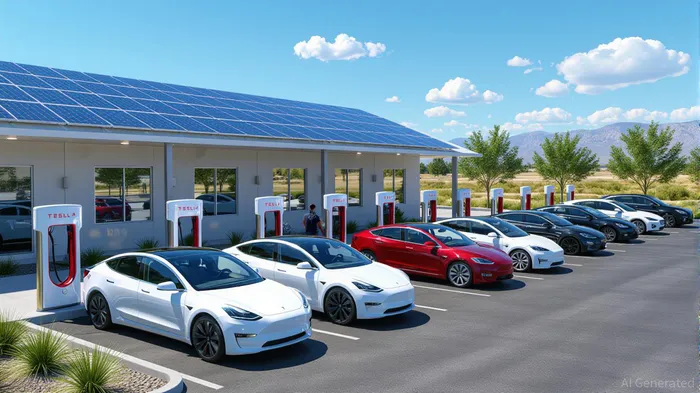
The most successful companies in 2025 have redefined innovation as a systemic endeavor. Bosch's Open Bosch program, for instance, exemplifies how strategic partnerships with startups and research institutions accelerate co-creation in mobility and industrial tech. By providing startups with mentorship and global access, Bosch reduces time-to-market while securing cutting-edge capabilities. Similarly, Tesla's modular ecosystem—spanning EVs, energy storage, and AI-driven manufacturing—has transformed the company into an orchestrator of cross-sector value. Its Supercharger network, now the dominant fast-charging standard in North America, generates revenue from both TeslaRACE-- and non-Tesla vehicles, illustrating how infrastructure can become a recurring revenue stream.
AI and data-driven decision-making are also reshaping innovation. Unilever's AI-powered platforms analyze startups and patents to identify trends ahead of competitors, while BMW's Innovation Radar tracks over 100 projects in real time, enabling dynamic resource allocation. These tools highlight a shift from intuition-based R&D to predictive, metrics-driven strategies.
Investor Metrics: Beyond Patents and R&D Spend
The Global Startup Ecosystem Report 2025 introduces the “Three A's” framework—Activities, Actors, and Architectures—as a lens for evaluating ecosystem-driven firms. Activities include R&D and customer engagement; Actors span startups, regulators, and end-users; and Architectures define the structural design (modular, hierarchical, or decentralized).
Apple's ecosystem, with its centralized governance and 1 billion active devices, creates a flywheel effect that boosts services revenue (up 13% year-over-year in Q3 2025). Tesla's modular architecture, meanwhile, allows it to integrate third-party innovations, such as its collaboration with NVIDIANVDA-- for AI enhancements. Investors should prioritize firms with scalable architectures and strong governance, as these traits correlate with sustained growth.
ESG Integration and Resilience-Driven Innovation
Sustainability is no longer a compliance checkbox but a core innovation driver. Patagonia's Worn Wear program turns circularity into a revenue model, while Standard Chartered's $982 million in sustainable finance income (2024) underscores the financial viability of ESG integration. Investors should look for companies with measurable sustainability targets, such as Delta Air Lines' 1% fuel-burn reduction (saving $110 million in 2025) or H&M's 41% reduction in Scope 1 & 2 emissions.
Resilience is another key metric. Pfizer's geographically distributed manufacturing model mitigates supply chain risks, while Nestlé's Henri@Nestlé program deploys cross-functional “innovation pods” to address regional challenges. These strategies highlight how decentralized, agile teams outperform traditional R&D labs in volatile markets.
Actionable Insights for Investors
- Target Ecosystem Orchestrators: Firms like Tesla and AppleAAPL-- act as central connectors, creating self-reinforcing networks. Investors should prioritize companies with strong governance and strategic partnerships.
- Focus on Emerging Ecosystems: São Paulo, Bengaluru, and Shenzhen are rising as hubs for climate-tech and AI-native innovation. Early-stage investments in these regions offer high-growth potential.
- Leverage AI-Native Ecosystems: Boston, Silicon Valley, and London are leading in AI-driven disruption. Startups in these ecosystems, such as Hinge HealthHNGE-- (50% revenue growth in Q1 2025), demonstrate the power of data-centric models.
- Diversify Across Sectors: Ecosystem-driven growth spans tech, AgriTech, and digital health. A diversified portfolio reduces risk while capturing multiple growth drivers.
Conclusion: The Future Belongs to Systemic Thinkers
The post-pandemic economy rewards firms that treat innovation as a networked, adaptive process. For investors, the challenge lies in identifying companies that can balance AI-driven foresight with human creativity, sustainability with profitability, and resilience with agility. By focusing on ecosystem orchestrators, ESG integration, and AI-native models, investors can position themselves to capitalize on the next wave of growth.
As the 2025 Global Startup Ecosystem Report underscores, the most successful companies are no longer lone innovators but architects of interconnected value. The question for investors is not just which firms to back, but which ecosystems they are building—and how those ecosystems will shape the future.

Delivering real-time insights and analysis on emerging financial trends and market movements.
Latest Articles
Stay ahead of the market.
Get curated U.S. market news, insights and key dates delivered to your inbox.




Comments
No comments yet