
Navigating the Earnings Crossroads: Energy's Surge and Consumer Staples' Resilience in a Shifting Economy
 Aime Summary
The U.S. real earnings landscape in Q4 2025 reveals a nuanced story of stagnation and divergence. While all employees saw flat real average hourly earnings and a 0.3% decline in weekly earnings, production and nonsupervisory workers faced a sharper 0.2% drop in real hourly pay. Over the year, however, real earnings for all employees rose 1.1%, and for production workers, 0.9%. These figures, though modest, signal a critical inflection point for investors: capital is shifting toward sectors where demand outpaces wage growth, while defensive plays in consumer staples are quietly positioning for a potential rebound.
Energy: The New Earnings Engine Amid AI-Driven Demand
The energy sector has emerged as a standout in Q4 2025, driven by structural shifts in electricity consumption. Global demand is projected to grow 3.3% in 2025 and 3.7% in 2026, with data centers and AI infrastructure accounting for a significant portion of this surge. The International Energy Agency (IEA) forecasts electricity consumption to hit 29,000 terawatt-hours by 2026, with Asian markets leading the charge. In the U.S., power load is expected to rise 2.1% annually through 2035, necessitating a blend of renewables, battery storage, and natural gas to meet demand.
However, the sector is not without challenges. Renewable energy growth has been revised downward due to policy reversals and regulatory hurdles, particularly in the U.S. Yet, the integration of AI and digital infrastructure is creating new opportunities. For instance, data centers are increasingly co-located with on-site renewable generation, meeting up to 70% of their energy needs. This trend, coupled with grid modernization efforts, positions energy utilities and infrastructure providers as prime beneficiaries of capital flows.
Investors should focus on companies with exposure to grid resilience and distributed energy solutions. Firms like NextEra EnergyNEE-- and Duke EnergyDUK--, which are expanding battery storage and smart grid capabilities, are well-positioned to capitalize on the widening gap between electricity demand and supply. Meanwhile, the push for AI-driven computing is creating tailwinds for power generation firms, even as renewables face short-term headwinds.
Consumer Staples: Defensive Positioning in a Stabilizing Macro Environment
While energy sectors are surging, consumer staples remain a critical anchor for portfolios. The sector's Q3 2025 performance was mixed, with Broadline Retailers like Etsy and Amazon reporting 34.8% earnings growth, while Household Durables faced a 20% decline. Discount retailers such as Walmart and Costco, however, demonstrated resilience, with same-store sales rising 3.8% and 5.7%, respectively.
The sector's defensive appeal is further bolstered by macroeconomic trends. The One Big Beautiful Bill Act, passed in July 2025, is expected to boost middle-income consumer spending in 2026, offsetting some of the drag from GLP-1 drug adoption and inflationary pressures. Additionally, the normalization of alcohol consumption trends and the deceleration of GLP-1 drug adoption suggest a more stable operating environment for food and beverage companies.
Valuation metrics also favor consumer staples. The sector trades at a discount to AI-driven growth stocks, with a forward P/E ratio of 14.2x compared to the S&P 500's 22.5x. This gap reflects undervaluation relative to its defensive characteristics and consistent cash flows. Companies like Procter & Gamble and Coca-Cola, with strong brand equity and pricing power, are poised to benefit from a potential mean reversion in 2026.
Strategic Allocation: Balancing Growth and Stability
The interplay between real earnings and sector performance underscores the importance of strategic rotation. Energy's growth is driven by inelastic demand from AI and electrification, while consumer staples offer downside protection amid macroeconomic uncertainty. Investors should consider overweighting energy utilities and infrastructure plays in the near term, while maintaining a core position in high-quality consumer staples.
For those seeking a more aggressive stance, energy transition ETFs and AI infrastructure providers could enhance returns. Conversely, a defensive tilt toward dividend-paying consumer staples and value retailers like Costco provides a hedge against potential economic slowdowns. The key is to align allocations with the trajectory of real earnings and macroeconomic signals, ensuring portfolios are both growth-oriented and resilient.
Conclusion
The U.S. real earnings data for Q4 2025 paints a picture of divergent opportunities. Energy's surge is a direct response to AI-driven demand, while consumer staples are quietly setting the stage for a rebound. By leveraging these trends, investors can navigate the earnings crossroads with confidence, balancing high-growth bets with defensive positioning to outperform in a shifting economic landscape.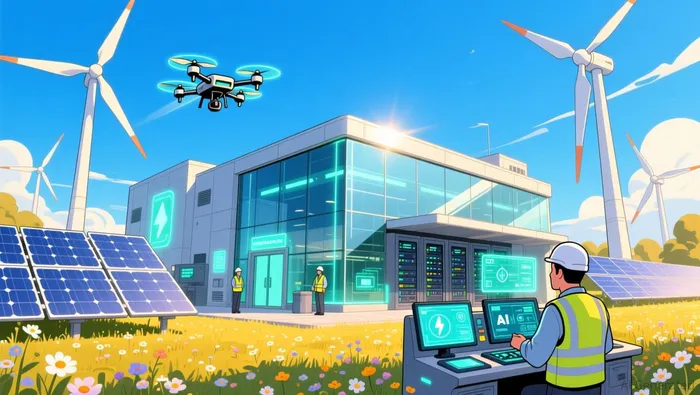

Stay ahead of the market.
Get curated U.S. market news, insights and key dates delivered to your inbox.
AInvest
PRO
AInvest
PRO



Comments
No comments yet