
Navigating the Dragon's Gate: U.S. Firms in China's Evolving Regulatory Landscape
 Aime Summary
In 2025, the U.S.-China relationship remains a volatile chessboard for global investors. The recent detention of a senior Wells FargoWFC-- executive in China—a case the Chinese government described as an “individual judicial matter”—has reignited fears about the risks of operating in a market where regulatory and geopolitical tensions are increasingly intertwined. This incident, coupled with a flurry of new laws and enforcement actions in Beijing, underscores a critical question for Western firms: How can investors hedge against regulatory uncertainty while capitalizing on China's enduring economic significance?
The New Normal: Regulatory Overhaul and Geopolitical Friction
China's 2025 legislative agenda, released by the State Council in May, signals a strategic shift toward tighter control over foreign participation in its economy. Key reforms include:
- A revised Foreign Trade Law with a negative list for cross-border services trade, granting Beijing broader powers to restrict or sanction foreign firms.
- Stricter Customs Law amendments, enhancing penalties for compliance lapses and leveraging AI-driven enforcement.
- A new Anti-Foreign Sanctions Law (AFSL), which now allows China to target companies deemed to harm its “development interests,” including through asset freezes and trade prohibitions.
These changes are not mere bureaucratic updates. They reflect a broader “fortress economy” strategy under President Xi Jinping, emphasizing self-reliance and national security. The Wells Fargo case—a managing director barred from leaving China—exemplifies how legal risks can escalate rapidly. For global investors, the message is clear: China's regulatory environment is no longer predictable.
Hedging Strategies: ETFs, Diversification, and Tactical Rebalancing
For investors seeking exposure to China's market without overexposure to its risks, the KraneShares CSI China Internet ETF (KWEB) has emerged as a favored vehicle. KWEB tracks a basket of Chinese internet firms, many of which are sensitive to U.S.-China trade dynamics. However, its volatility requires disciplined risk management.
Technical rebalancing using the Relative Strength Index (RSI) is one approach. By adding to KWEB positions when the RSI dips below 30 (oversold) and trimming when it exceeds 70 (overbought), investors can mitigate downside risks while participating in potential rebounds. Complementary strategies include:
- Covered call ETFs like KLIPKLIP--, which generate income by selling call options on KWEB.
- Defined outcome ETFs (KPRO, KBUF), offering structured returns with capped downside.
For broader diversification, the KraneShares Emerging Markets Consumer Technology ETF (KEMQ) extends the internet consumption theme beyond China, reducing geographic concentration risk.
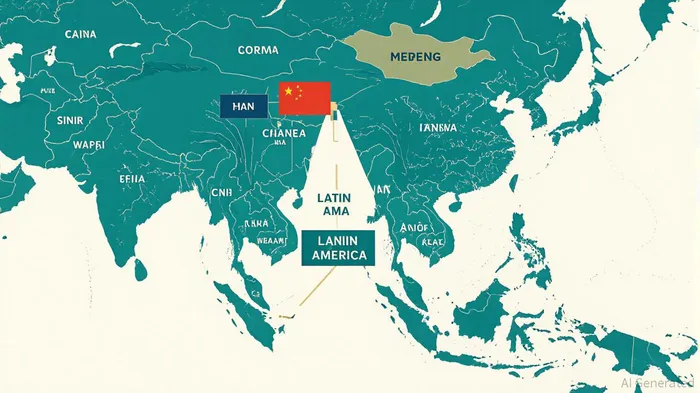
Resilient Sectors and Local Partnerships: The New Playbook
While regulatory risks are acute, certain sectors remain attractive for investors with the right risk profile. Chinese companies expanding into green energy, digital infrastructure, and advanced manufacturing are leveraging local partnerships to mitigate domestic constraints. For example:
- BYD's electric vehicle plant in Thailand allows it to access ASEAN markets under favorable trade terms while sidestepping U.S. tariffs.
- Huawei's 5G partnerships in Africa and Southeast Asia demonstrate how local alliances can insulate firms from geopolitical friction.
These strategies are bolstered by Chinese policy incentives, including tax rebates, low-interest loans, and political risk insurance. For Western investors, co-investing with these firms—via joint ventures or supply chain integration—can offer a buffer against regulatory shocks.
The Geopolitical Tightrope: Balancing Risk and Reward
The U.S.-China trade war has further complicated the calculus. U.S. export controls on advanced semiconductors and Chinese retaliatory tariffs have disrupted supply chains and eroded confidence. A 2025 U.S.-China Business Council survey revealed that over half of its members have no new investment plans in China, with 27% actively considering relocation.
Yet, as one executive put it, “You can't compete globally without China.” For sectors like electric vehicles and renewable energy, the Chinese market remains indispensable. The key is to localize operations and diversify supply chains across regions. Tesla's Shanghai Gigafactory, for instance, exemplifies how foreign firms can navigate the system by aligning with local priorities.
Conclusion: A Calculated Approach to the Dragon's Market
China's regulatory environment in 2025 is a double-edged sword. On one hand, it presents acute risks for foreign firms, amplified by geopolitical tensions. On the other, it offers opportunities for investors willing to adopt a nuanced strategy:
1. Use ETFs and technical tools like KWEB and RSI rebalancing to hedge volatility.
2. Diversify geographically via emerging market exposure (KEMQ) and Chinese ODI.
3. Partner with resilient sectors (green energy, tech) that align with China's long-term growth plans.
For U.S. firms, the path forward requires a blend of caution and agility. As the Wells Fargo case reminds us, the Dragon's gate is guarded—but not unscalable. The challenge lies in balancing prudence with the rewards of a market that, despite its turbulence, remains a linchpin of global commerce.

Stay ahead of the market.
Get curated U.S. market news, insights and key dates delivered to your inbox.
AInvest
PRO
AInvest
PRO



Comments
No comments yet