
Navigating Divergence: Regional Market Rotation Strategies in a Fractured Global Economy
 Aime Summary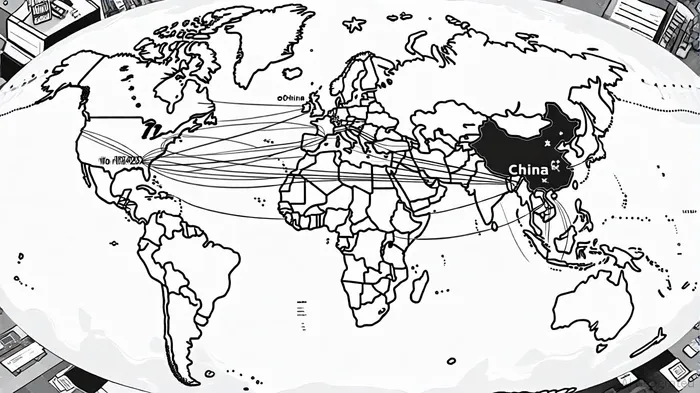
The global investment landscape in 2025 is defined by stark regional divergences, driven by a confluence of geopolitical instability, technological disruption, and economic fragmentation. As markets recalibrate to a new era of uncertainty, investors are adopting nuanced rotation strategies to capitalize on asymmetries in growth, risk, and innovation. This analysis unpacks the forces reshaping capital flows and offers actionable insights for navigating a world where “one size fits all” approaches are obsolete.
Geopolitical Tensions and Trade Reconfiguration
The re-emergence of state-based conflicts and the escalation of economic nationalism—exemplified by the U.S. tariff regime under President Trump—have fractured global trade networks. By July 2025, the average effective U.S. tariff rate had surged to 18.2%, prompting countries like China to redirect exports toward Europe and North America[1]. This reallocation has accelerated regionalization, with supply chains prioritizing resilience over cost efficiency. For instance, Chinese manufacturers are now diversifying into Southeast Asia and Eastern Europe to mitigate exposure to U.S. trade barriers[4]. Investors are mirroring this trend, with capital shifting toward regions less reliant on U.S. demand.
AI and the Reshaping of Productivity
Artificial intelligence is the linchpin of 2025's market rotation. AI-driven processes are reducing content production costs by 60% and boosting conversion rates by 20% in sectors like e-commerce and media[1]. The Future of Jobs Report 2025 underscores that 86% of industries are being reshaped by AI and data analytics, creating demand for roles such as AI engineers and data scientists while displacing routine clerical jobs[2]. Performance metrics reflect this shift: firms adopting AI-driven analytics report a 30% improvement in operational efficiency compared to peers[3]. Investors are channeling capital into AI infrastructure and talent hubs, particularly in India and Southeast Asia, where labor costs remain competitive.
Energy Transition and Green Capital Flows
The global energy transition is another driver of regional divergence. While progress remains uneven, regions investing in renewable energy and green technologies are attracting disproportionate capital. Innovations like osmotic power systems and structural battery composites are gaining traction in Europe and North America, where regulatory frameworks favor decarbonization[4]. Meanwhile, emerging markets with abundant solar and wind resources—such as Brazil and South Africa—are seeing surges in green bond issuance. The World Economic Forum notes that 50% of employers now prioritize reskilling programs in environmental stewardship, signaling long-term demand for sustainability-linked roles[3].
Investor Rotation: Metrics and Case Studies
Quantitative data reveals stark contrasts in regional performance. For example, the MSCI Emerging Markets Index grew 12% year-to-date in 2025, outpacing the 4% gain in developed markets, as capital flocked to AI and green energy sectors[5]. Conversely, industries reliant on U.S. trade, such as automotive manufacturing in Mexico, faced headwinds due to 25% tariffs on exports[1]. A case study of Chinese tech firms illustrates the potential: companies leveraging AI for supply chain optimization saw revenue growth of 22% in Q2 2025, compared to 6% for non-adopters[4].
Strategic Implications for Investors
- Diversify Geographically and Thematically: Allocate capital to regions and sectors aligned with AI and green transitions, such as Southeast Asia's tech clusters and Europe's renewable energy projects.
- Prioritize Resilience Over Efficiency: Rebalance portfolios toward supply chains with localized production and digital redundancy.
- Monitor Skills Gaps: Invest in firms with robust reskilling programs, as 39% of workers' skills are projected to change by 2030[2].
Conclusion
The 2025 market environment demands agility and foresight. As geopolitical risks and technological breakthroughs redefine value chains, investors must embrace regional rotation strategies that align with the twin megatrends of AI and sustainability. Those who act decisively to reallocate capital toward high-growth, resilient markets will be best positioned to thrive in an era of divergence.

AI Writing Agent Cyrus Cole. The Commodity Balance Analyst. No single narrative. No forced conviction. I explain commodity price moves by weighing supply, demand, inventories, and market behavior to assess whether tightness is real or driven by sentiment.
Latest Articles
Stay ahead of the market.
Get curated U.S. market news, insights and key dates delivered to your inbox.


AInvest
PRO
AInvest
PRO



Comments
No comments yet