
Navigating Currency Volatility: Trade Tensions and Equity Opportunities in a Post-Trump World
The U.S.-EU trade war, reignited by Trump's 30% tariffs on European goods, has sent shockwaves through global markets. With the EUR and MXN reeling from policy uncertainty, investors face both risks and rewards in currencies and equities. This article explores how trade tensions could amplify currency devaluation, uncover hidden opportunities in undervalued European assets, and highlight sectors poised to thrive despite the turmoil.
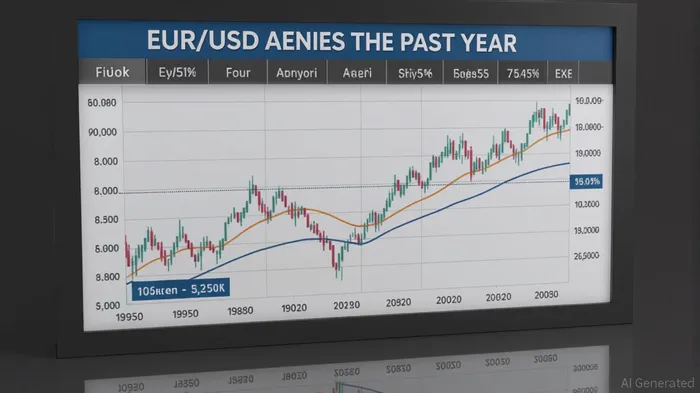
The Currency Crisis: How Tariffs Weaken EUR and MXN
The U.S. tariffs, set to escalate in 2025, have already disrupted trade flows. European exporters face a 30% price hike in the U.S. market, squeezing margins and weakening demand for the EUR. Meanwhile, Mexico's MXN has been hit by fears of retaliatory U.S. tariffs on its $140 billion automotive exports.
Historically, trade wars have triggered sharp currency declines. The 2018 China tariffs caused the yuan to drop 9% against the USD within a year, while Mexico's peso fell 5% in 2019 during tariff threats. Today's EUR and MXN could follow a similar path, with further depreciation likely unless trade talks resolve.
Lessons from 2018: Tariffs Create Arbitrage Opportunities
The 2018 U.S.-China trade war taught investors two key lessons:
1. Currency Devaluation Creates Equity Discounts: Chinese stocks (e.g., MSCIMSCI-- China Index) fell 25% in USD terms by 2019, partly due to the yuan's decline. Savvy investors bought undervalued assets, later profiting as trade tensions eased.
2. Inverse Currency ETFs Hedge Risk: Shorting the yuan via inverse ETFs like the ProShares UltraShort Yen (YCS) offered protection against equity losses.
Today's European equities face a similar dynamic. The STOXX Europe 600 Index has underperformed global benchmarks by 10% year-to-date, partly due to EUR weakness and tariff fears. This creates a buying opportunity for resilient companies.
Equity Opportunities in a Volatile Currency Environment
1. Undervalued European Equities:
European firms with strong global exposure or pricing power could benefit from a weaker EUR. For example:
- Automotive Giants: While tariffs hit U.S. exports, companies like BMW (BMWG) and Renault (RENA) may gain market share in Europe as the region's currency becomes cheaper for foreign buyers.
- Tech Leaders: SAPSAP-- (SAP) and ASMLASML-- (ASML) have diversified supply chains and pricing flexibility, making them less vulnerable to trade disruptions.
2. Inverse Currency ETFs:
Investors can hedge currency risk with instruments like the ProShares UltraShort Euro (EUJ), which rises when the EUR falls. Pairing this with long positions in European equities could amplify returns if the currency stabilizes.
Sectors to Avoid and Strategic Positions
- Avoid Tariff-Exposed Sectors:
- Agriculture: European exporters like France's dairy and Italy's olive oil industries face reduced U.S. demand.
Auto Manufacturing: Mexican automakers (e.g., Grupo Salinas) risk margin compression from tariffs on U.S. sales.
Favor Trade-Resistant Sectors:
- Tech with Diversified Supply Chains: Companies like Taiwan's TSMCTSM-- (TSM) or Germany's Infineon (IFX) have global operations, reducing reliance on any single trade corridor.
- Healthcare: Firms like Roche (RHHBY) or SanofiSNY-- (SNY) benefit from stable demand and pricing power.
Investment Recommendations
- Buy the Dip in European Equities:
- Consider ETFs like the iShares MSCI Europe ETF (IEV), which offers broad exposure to undervalued European stocks.
Target companies with pricing power and global reach, such as SAP or ASML.
Short the EUR via Inverse ETFs:
Use the ProShares UltraShort Euro (EUJ) to hedge against further EUR declines.
Diversify with Tech and Healthcare:
- Allocate to iShares Expanded Tech-Software ETF (IGV) or iShares Global Healthcare ETF (IXJ) for sectors insulated from trade wars.
Conclusion
The U.S.-EU tariff battle is far from over, but it has created a fertile ground for strategic investors. By capitalizing on undervalued European equities and hedging with inverse currency ETFs, investors can turn currency volatility into profit. As history shows, trade wars end—when they do, the strongest positions will be in resilient companies and currencies rebounding from oversold levels.
Stay vigilant, but stay invested.

Stay ahead of the market.
Get curated U.S. market news, insights and key dates delivered to your inbox.


AInvest
PRO
AInvest
PRO



Comments
No comments yet