
Navigating Currency Exchange Volatility in a Shifting Global Economy


 Aime Summary
The global economic landscape in 2025 is marked by heightened currency exchange rate volatility in emerging markets (EM), driven by a confluence of macroeconomic pressures, geopolitical uncertainties, and shifting investor sentiment. From the BRICS economies to frontier markets like Zimbabwe, businesses and investors face unprecedented challenges in managing foreign exchange (FX) risk. Yet, amid this turbulence lies an opportunity for strategic hedging and asset reallocation, as emerging markets demonstrate resilience and evolving policy frameworks. This article examines the drivers of currency volatility, evaluates evidence-based hedging techniques, and explores how investors are reshaping portfolios to capitalize on EM's dynamic environment.
The Drivers of Currency Volatility in Emerging Markets
Recent data
underscores a sharp increase in EM currency volatility, with the MSCIMSCI-- Emerging Market Currency Index hitting record levels in 2025. Key factors include divergent monetary policies, inflationary pressures, and global oil price swings. For instance, BRICS nations have
experienced heightened volatility due to interest rate differentials and trade imbalances. In Zimbabwe, hyperinflation and currency reforms have
exacerbated exchange rate instability, reducing export competitiveness and inflating import costs. Meanwhile, the weakening U.S. dollar-a result of waning confidence in U.S. fiscal sustainability-has
spurred capital inflows into EM currencies like the Hungarian forint, which gained 20% against the dollar in 2025.
The International Monetary Fund (IMF) has
raised concerns about systemic risks in currency markets, particularly the concentration of trading volumes in a few large banks, which could amplify instability during periods of stress. These dynamics highlight the need for robust hedging strategies to mitigate exposure while unlocking growth opportunities.
Strategic Hedging: From Derivatives to Machine Learning
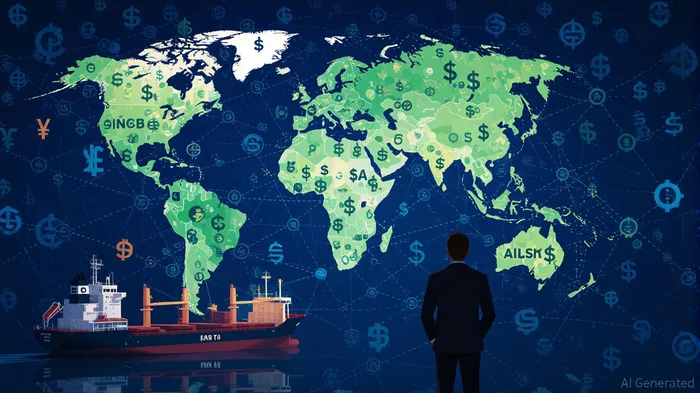 Effective hedging in EM requires a multifaceted approach. Traditional tools such as forwards, options, and swaps remain foundational. For example, multinational corporations (MNCs) like Coca-Cola and IBM have
leveraged diversified hedging strategies-combining financial derivatives with natural hedging (e.g., matching revenue and expenses in the same currency)-to manage FX risk. In contrast, under-hedging, as seen in Rolls-Royce's case, has
led to significant financial losses.
Emerging research also points to the value of advanced analytics. A 2024 study
demonstrated that machine learning models, which analyze factor components of currency returns, outperform traditional hedging methods by improving risk mitigation accuracy. For fixed-income investments, full or over-hedging is recommended for most EM currencies, with exceptions like the Australian Dollar requiring partial hedging
according to an empirical study. Canadian pension funds, for instance, have
adopted mean-variance optimization to maintain unhedged positions in U.S. dollars while taking net long positions in the Chinese yuan and short positions in the Brazilian real.
Asset Reallocation: Diversifying Beyond the Dollar
Investors are increasingly reallocating portfolios to capitalize on EM's structural strengths. Central banks in Latin America, the Middle East, and Asia have
shifted away from dollar-heavy reserves, incorporating US agency debt, equities, and investment-grade corporate bonds via ETFs. The Middle East, notably Egypt, Qatar, and the UAE, has
boosted gold reserves to diversify holdings. Asian central banks, meanwhile, have
adopted sophisticated liquidity operations and derivatives to protect reserves while retaining flexibility.
Currency-specific allocations are also gaining traction. The Hungarian forint and Brazilian real have
attracted inflows due to high interest rates and economic reforms. In 2025, China and India demonstrated resilience despite global headwinds, with China's market
outperforming amid domestic challenges. Investors are further diversifying into gold and macro hedge funds to
insulate against volatility.
The Road Ahead: Balancing Risk and Opportunity
While EM currencies remain volatile, their risk-return profiles are improving. Over the past decade, EM equity volatility has
converged with developed markets, driven by stronger governance and fiscal discipline. This trend has made EM equities an attractive diversification tool, with
lower correlations to developed markets. However, geopolitical risks and sovereign debt concerns persist, as seen in South Korea's case, where stock and bond volatility negatively impacted currency returns
according to a study.
For investors, the key lies in tailoring strategies to specific geographies and sectors. For example, Brazil's Novo Mercado and South Korea's corporate governance reforms have
enhanced transparency, narrowing the volatility gap. Similarly, frontier markets are
leveraging RMB holdings to deepen trade ties with China.
Conclusion
Currency exchange volatility in emerging markets is no longer a barrier but a catalyst for innovation in hedging and asset allocation. By combining traditional derivatives, machine learning, and strategic reallocation, investors can navigate risks while capitalizing on EM's growth potential. As the global economy continues to shift, those who adapt their strategies to the evolving EM landscape will be best positioned to thrive.

Stay ahead of the market.
Get curated U.S. market news, insights and key dates delivered to your inbox.
AInvest
PRO
AInvest
PRO



Comments
No comments yet