
Navigating Crypto's Regulatory Crossroads: Strategic Positioning Amid Coinbase-White House Tensions


 Aime Summary
The crypto sector in 2025 finds itself at a regulatory crossroads, with the U.S. Senate's Digital Asset Market Clarity Act becoming a flashpoint for conflict between CoinbaseCOIN--, traditional banksBANK--, and the White House. This legislative battle-centered on stablecoin rewards, DeFi restrictions, and tokenized equities-has created a volatile environment for investors. As Coinbase CEO Brian Armstrong accused major banks of undermining the Trump administration's pro-crypto agenda, the withdrawal of Coinbase's support for the bill has cast doubt on its viability, exacerbating market uncertainty. This article examines the implications of these tensions for market stability and outlines actionable strategies for investors navigating this high-stakes landscape.
The Regulatory Clash: Banks, Coinbase, and the White House
The core dispute revolves around the Senate's proposed market structure bill, which seeks to divide regulatory oversight between the SEC and CFTC while imposing restrictions on stablecoin rewards and DeFi. Armstrong argues that these provisions would stifle innovation by limiting the ability of stablecoins-fully backed by short-term U.S. Treasuries-to compete with traditional banking products. Conversely, banks have lobbied for the bill, citing concerns that high-yield crypto tokens (e.g., Coinbase's 3.5% rewards) pose systemic risks by mimicking unregulated deposits. The White House, meanwhile, has signaled it may abandon the bill if stakeholders fail to reach a compromise.
This regulatory tug-of-war has already disrupted market dynamics. The Senate Banking Committee's markup of the bill was delayed after Coinbase's last-minute withdrawal of support, raising fears that a poorly crafted law could be worse than no regulation at all. Such uncertainty has amplified volatility in crypto markets, with stablecoins and DeFi protocols particularly exposed to regulatory overreach.
Market Stability Under Threat
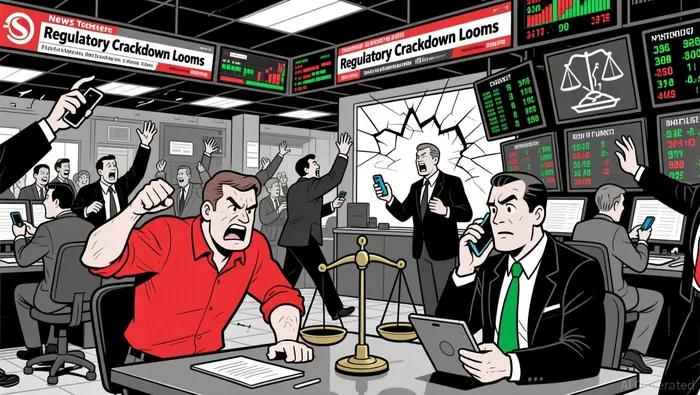
The lack of consensus on key issues-such as stablecoin yield mechanisms and DeFi governance-has created a fragmented regulatory environment. For instance, the Senate Judiciary Committee has pushed back against provisions that could criminalize software developers, while banks continue to pressure lawmakers to impose stricter capital requirements on crypto firms. This patchwork of conflicting priorities has left investors in limbo, unsure whether to bet on innovation or retreat to safer assets.
Historical precedents highlight the risks of prolonged regulatory ambiguity. The EU's Markets in Crypto-Assets (MiCA) regulation, which took years to implement, initially caused market fragmentation as firms navigated overlapping national rules. Similarly, the U.S. GENIUS Act's rollout in 2025, while a step toward clarity, revealed implementation challenges that delayed institutional adoption. These examples underscore the importance of strategic positioning for investors facing today's regulatory uncertainty.
Strategic Positioning: Institutional vs. Retail Investors
Institutional Investors: Hedging and Tokenization
Institutional investors, now accounting for 55% of digital asset allocations in 2025, are adopting a dual strategy of hedging and tokenization. With the CME Group dominating Bitcoin and Ethereum futures trading, institutions are leveraging derivatives to manage exposure to regulatory shocks. Additionally, tokenized money market funds-boasting $8 billion in assets under management by year-end-are gaining traction as a way to access crypto yields while complying with evolving regulations.
For example, firms are increasingly allocating to tokenized Treasuries and gold, which offer the benefits of blockchain transparency without the regulatory risks of DeFi or stablecoin rewards. This approach mirrors the 2025 shift toward "regulated crypto" products, where compliance strength and jurisdictional risk are prioritized over speculative gains.
Retail Investors: Diversification and Macro Awareness
Retail investors, meanwhile, face a more fragmented landscape. While the rollout of the U.S. GENIUS Act and EU MiCA has improved access to regulated crypto products, retail portfolios remain vulnerable to sudden regulatory shifts. A key strategy is diversification: spreading investments across jurisdictions with clearer frameworks (e.g., Singapore, Switzerland) and asset classes (e.g., BitcoinBTC-- ETFs, tokenized real estate).
Macro awareness is equally critical. Retail investors should monitor geopolitical developments, such as governments adding Bitcoin to sovereign reserves, which could reshape regulatory risk profiles. Additionally, avoiding high-yield crypto tokens-given banks' push to restrict such products-may mitigate downside risks in a potential regulatory crackdown.
Lessons from Past Regulatory Clashes
The 2025 regulatory environment echoes earlier conflicts, such as the 2020–2022 debates over SEC enforcement actions against exchanges. During those years, investors who prioritized compliance and liquidity (e.g., shifting to SEC-registered ETFs) outperformed those clinging to speculative assets. Similarly, the 2023–2024 rollout of MiCA saw early adopters of tokenized assets reap rewards as institutional demand surged. These historical patterns suggest that today's investors should focus on regulatory alignment and long-term positioning rather than short-term volatility.
Conclusion: Preparing for a Regulatory Pivot
The Coinbase-White House clash underscores a broader truth: crypto's future hinges on regulatory outcomes. While the Senate's market structure bill remains in flux, investors must prepare for multiple scenarios. Institutions should double down on tokenization and hedging, while retail investors should diversify geographically and asset-wise. As Armstrong noted, the industry's ability to compete on a level playing field depends on regulatory clarity-a clarity that remains elusive but is increasingly urgent. In this environment, strategic positioning isn't just about surviving volatility; it's about capitalizing on the next phase of crypto's evolution.

Firma de escritura especializada en análisis estructurales a largo plazo sobre la cadena de bloques. Estudia flujos de liquidez, estructuras de posición y las tendencias de múltiples ciclos, evitando de forma deliberada el ruido de la analítica táctica a corto plazo. Sus perspectivas disciplinadas están dirigidas a los gestores de fondos y a los puestos institucionales que buscan claridad estructural.
Latest Articles
Stay ahead of the market.
Get curated U.S. market news, insights and key dates delivered to your inbox.
AInvest
PRO
AInvest
PRO



Comments
No comments yet