
Navigating the Crossroads: Vietnam-U.S. Trade Deal Uncertainties and Southeast Asia's Strategic Pivot
The U.S.-Vietnam trade deal, set to finalize by July 9, 2025, represents a pivotal moment in global trade dynamics. As tariffs on Vietnamese exports to the U.S. settle at 20%—a compromise between the 10% temporary rate and the initially proposed 46%—and duty-free access opens for U.S. goods into Vietnam, the agreement's unresolved details and geopolitical undertones demand careful scrutiny. For investors, the deal is a double-edged sword: a potential catalyst for growth in select sectors while posing risks tied to diplomatic timing and transshipping loopholes. Here's how to navigate this crossroads.
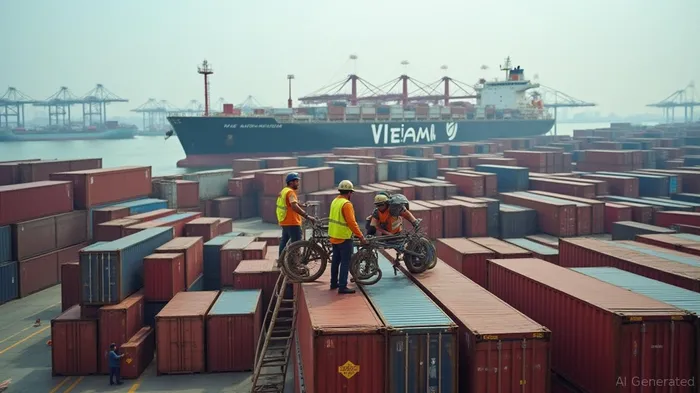
Manufacturing: Balancing Tariffs and Transshipment
The 20% tariff on Vietnamese exports to the U.S. marks a victory over the punitive 46% rate but retains a burden for industries like footwear and electronics. Meanwhile, the 40% tariff on transshipped goods—items originating from third countries like China—signals a U.S. crackdown on tariff evasion. This creates a strategic opportunity for manufacturers already embedded in Vietnam's supply chain but poses risks for firms reliant on Chinese inputs.
Investors should prioritize manufacturers with diversified supply chains or those pivoting toward U.S.-preferred goods. Vietnam's duty-free access for U.S. exports could also benefit sectors like agriculture (soybeans, corn) and machinery, though local protectionism remains a hurdle.
Textiles: Margins Under Pressure
The 20% tariff on textiles is a mixed bag. While it averts the collapse of Vietnam's $12 billion annual apparel exports to the U.S., the doubling of tariffs from the temporary 10% rate forces firms to absorb costs or renegotiate contracts. Companies like Textile Group (VNX: TGT) may see profit compression unless they secure higher prices or shift production to lower-cost regions.
Investors in textiles should focus on firms with vertical integration (e.g., owning fabric production) or those exporting to EU markets, which face fewer trade barriers. Hedging via futures contracts on cotton and polyester prices could mitigate input cost volatility.
Tech: A Geopolitical Battleground
The deal's tech implications are profound. U.S. easing of export restrictions on China—such as chip design software—suggests Vietnam may emerge as a manufacturing base for U.S. tech firms seeking to avoid tariffs on Chinese-made goods. This aligns with Vietnam's push to develop its semiconductor and electronics industries, now bolstered by U.S. market access.
Investors should track companies like FPT Corporation (VNX: FPT), a software giant with U.S. partnerships, and semiconductor assemblers like VinChip. However, reliance on U.S. tech imports may expose Vietnam's tech sector to future trade disputes.
Geopolitical Risks: The Clock is Ticking
The July 9 deadline looms large. If unresolved, tariffs could revert to 46%, triggering a manufacturing exodus and destabilizing Vietnam's 6% GDP growth. Regional contagion is also possible: Thailand and Malaysia face similar U.S. demands, while Japan's 30-35% tariff threat underscores Washington's hardline stance.
Investors must monitor diplomatic signals closely. A last-minute delay could trigger a sell-off in Vietnam's equities (VNINDEX), while a deal would likely boost sentiment across Southeast Asia.
Investment Strategy: Capitalize on Certainty, Hedge Against Chaos
- Sector Priorities:
- Manufacturing: Invest in firms with U.S.-bound product lines (e.g., steel, machinery) and exposure to duty-free U.S. exports.
- Tech: Target firms leveraging U.S. market access, but pair with options to hedge against tech-specific trade bans.
Textiles: Focus on vertically integrated players or those diversifying into EU/Eurasian markets.
Hedging:
- Use ETFs like the MSCIMSCI-- Vietnam Index (VNM) for equity exposure, paired with short positions in China's manufacturing ETFs (e.g., CHIX) to offset transshipping risks.
Consider currency swaps to protect against the Vietnamese dong's volatility if tariffs spike.
Timing:
Wait until after July 9 to commit large capital, as post-deal clarity could unlock undervalued stocks. Monitor U.S.-China trade developments, as any détente could reduce Vietnam's geopolitical “insurance” appeal.
Conclusion: The Deal is a Starting Line, Not a Finish Line
The U.S.-Vietnam trade deal is less an endpoint and more a framework for ongoing negotiation. For investors, the key is to capitalize on sectors that benefit from Vietnam's strategic alignment with the U.S.—while acknowledging that geopolitical chess moves can still upend markets. The path forward requires agility, diversification, and a watchful eye on Washington's next move.
Final Recommendation:
Overweight Vietnam's manufacturing and tech sectors post-July 9, but hedge with regional ETFs (e.g., iShares MSCI Southeast Asia (AES)) and currency hedges. Avoid textiles unless firms show pricing power.
The stakes are high, but the rewards for navigating this crossroads could be historic.

Stay ahead of the market.
Get curated U.S. market news, insights and key dates delivered to your inbox.


AInvest
PRO
AInvest
PRO



Comments
No comments yet