
Navigating the Crossroads: Sector Rotation Strategies Amid Philly Fed Manufacturing Index Downturns
 Aime Summary
The U.S. Philadelphia Fed Manufacturing Index has thrown a red flag. , the index has slipped into contractionary territory for the first time since April, signaling a weakening in the mid-Atlantic manufacturing sector. This isn't just a regional blip—it's a canary in the coal mine for the broader economy. When this index dips below zero, it's time to recalibrate your portfolio. Let's break down how to leverage sector-specific responses to these slowdowns for strategic reallocation.
The Index as a Barometer: What's Changed?
The isn't just a number—it's a barometer of manufacturing sentiment. In August, , . New orders and shipments indexes also faltered, , its first negative reading since April. , the sector's near-term outlook is clouded.
Historically, contractions in this index have preceded broader . For example, in October 2025, , a six-month low, as new orders and shipments indexes both turned negative. This pattern mirrors the 2020 pandemic crash, , a record low. The lesson? When the Philly Fed Manufacturing Index contracts, it's time to pivot.
Sector Rotation 101: Where to Go When the Siren Wails
During manufacturing slowdowns, the market's pendulum swings toward . Here's how to position your portfolio:
- Defensive Sectors: The Unshakable Anchors
- Healthcare and Utilities: These sectors thrive when the economy stutters. , as the Philly Fed CAPEX Index turned negative, healthcare and utilities outperformed, with healthcare ETFs (e.g., .
Consumer Staples: Even in downturns, people still need food and household goods. , Procter & Gamble (PG) and Coca-Cola (KO) held up better than the S&P 500, .
Cyclical Sectors: The High-Risk, High-Reward Play
- Industrials and Technology: These sectors are the first to crumble during manufacturing slowdowns. , . Tech stocks like Tesla (TSLA) and NVIDIA (NVDA) also faltered, .
- Fixed Income: The Ballast in Turbulent Waters
- High-Quality Corporate Bonds: When manufacturing contracts, investors flee equities for safer havens. , . However, central bank interventions (e.g., , making duration extension a viable strategy.
The Playbook: Strategic Reallocation in Action
Here's how to act on these signals:
- Trim Exposure to Cyclical Sectors: Reduce holdings in industrials, construction, and tech. For example, if you own Caterpillar (CAT) or Intel (INTC), consider locking in gains or hedging with puts.
- Boost Defensive Allocations: Increase exposure to healthcare, utilities, and consumer staples. .
- Balance with : Allocate 15-20% to long-duration bonds (e.g., .
- Monitor Price Pressures: Keep an eye on the Philly Fed's prices paid index. , inflation remains a threat, .
The Bottom Line: Don't Panic—Pivot
The isn't a crystal ball, but it's a powerful signal. When it turns negative, it's a heads-up to rotate into defensive sectors and high-quality bonds. The key is to act before the broader market catches on. Right now, the index is flashing amber—time to adjust your portfolio's gears.
In the end, the market's greatest strength lies in its adaptability. By aligning your strategy with the index's signals, you can turn a manufacturing slowdown into a setup for outperformance. Stay nimble, stay informed, and let the data guide your next move.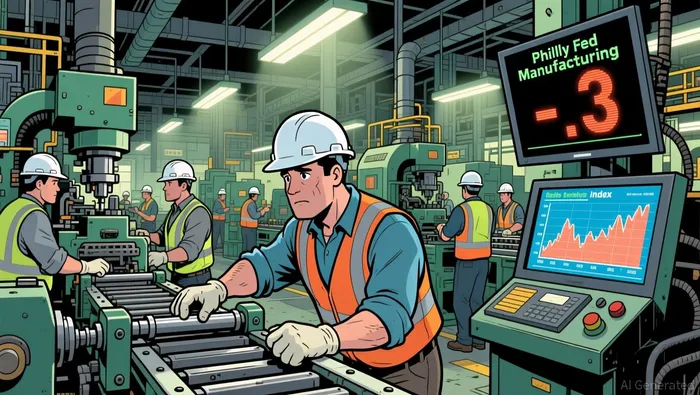

Stay ahead of the market.
Get curated U.S. market news, insights and key dates delivered to your inbox.


AInvest
PRO
AInvest
PRO



Comments
No comments yet