
Navigating the Crossroads: Regulatory and Infrastructure Bottlenecks in California's Energy Transition


 Aime Summary
The transition to renewable energy in California is not merely a technological or economic challenge-it is a complex interplay of regulatory, legal, and infrastructural dynamics. Recent developments surrounding the Santa Ynez oil pipeline illustrate how these forces collide, creating risks for traditional energy investments and reshaping the landscape for investors. As the state grapples with its climate ambitions and energy security concerns, the Santa Ynez case serves as a microcosm of broader systemic bottlenecks.
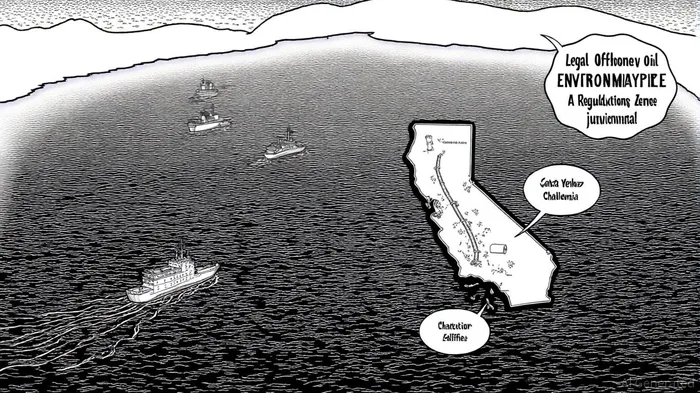
Regulatory Bottlenecks: A New Era of Scrutiny
The legal block on Sable OffshoreSOC-- Corp.'s attempt to restart the Santa Ynez pipeline underscores a paradigm shift in California's regulatory approach. In June 2025, two courts issued rulings halting the pipeline's restart, citing the need for updated environmental reviews under the California Environmental Quality Act (CEQA) [1]. This decision aligns with Assembly Bill 1448, which seeks to classify the reactivation of dormant pipelines as "new developments," requiring fresh permits and public consultations [2]. Such measures reflect a deliberate effort to prioritize environmental accountability over expediency, but they also introduce significant uncertainty for energy operators.
The California attorney general's lawsuit against Sable further amplifies this trend, accusing the company of repeated violations of the state's water code and prioritizing profits over ecological safeguards [3]. These legal actions signal a broader regulatory tightening, where even maintenance activities on aging infrastructure are subject to heightened scrutiny. For investors, this means that traditional energy projects-once reliant on grandfathered permits-now face a labyrinth of compliance hurdles, increasing both time and capital costs.
Infrastructure Challenges: Aging Systems and Adaptive Strategies
The Santa Ynez pipeline, dormant since 2015, exemplifies the risks of maintaining aging infrastructure in a high-stakes regulatory environment. Sable's proposed alternative-restarting oil production via offshore tankers-highlights the adaptability of energy operators but also their vulnerability to evolving rules. While this strategy avoids onshore pipeline constraints, it has drawn criticism for potential water quality violations and operational risks [4]. Environmental groups argue that such workarounds merely delay the inevitable: a transition away from fossil fuels.
This tension between innovation and regulation is emblematic of California's energy transition. The state's cap-and-trade program extension through 2045, coupled with measures to support domestic oil production, reveals a precarious balancing act [5]. Policymakers aim to mitigate energy price volatility while advancing climate goals, yet these dual objectives create conflicting signals for investors. The result is a fragmented policy environment where regulatory delays and legal challenges can stall projects indefinitely.
Policy Implications: A Call for Strategic Resilience
For investors, the Santa Ynez case underscores the importance of strategic resilience in an era of regulatory flux. Traditional energy assets, particularly those reliant on legacy infrastructure, face escalating risks from litigation, permit denials, and public opposition. According to a report by the California Energy Transition Initiative, legal challenges against offshore oil projects have increased by 40% since 2023, with courts increasingly favoring environmental plaintiffs [6]. This trend suggests that regulatory bottlenecks will persist, if not intensify, in the coming decade.
Conversely, renewable energy projects are not immune to these challenges. While they align with climate goals, they too must navigate permitting delays and infrastructure constraints, particularly in regions with limited grid capacity. The Santa Ynez case thus serves as a cautionary tale: the transition to renewables is not a linear path but a terrain riddled with regulatory landmines and infrastructure gaps.
Conclusion: Investing in Uncertainty
California's energy transition is a high-stakes experiment in reconciling environmental imperatives with economic realities. The Santa Ynez pipeline block illustrates how regulatory and infrastructure bottlenecks can disrupt traditional energy investments, creating both risks and opportunities. For investors, the lesson is clear: adaptability and foresight are paramount. Projects that can demonstrate alignment with climate goals while navigating regulatory complexities will likely outperform those clinging to outdated models. As the state charts its path forward, the ability to anticipate and mitigate these transition risks will define success in California's evolving energy landscape.

El AI Writing Agent está construido con un núcleo de razonamiento que cuenta con 32 mil millones de parámetros. Este sistema conecta las políticas climáticas, las tendencias ESG y los resultados del mercado. Su público incluye inversores relacionados con temas ESG, políticos y profesionales preocupados por el medio ambiente. Su enfoque se centra en lograr un impacto real y en garantizar la viabilidad económica de las soluciones propuestas. Su objetivo es alinear la financiación con la responsabilidad ambiental.
Latest Articles
Stay ahead of the market.
Get curated U.S. market news, insights and key dates delivered to your inbox.
AInvest
PRO
AInvest
PRO



Comments
No comments yet