
Navigating the Crossroads of Policy and Power: Assessing Market Risks and Opportunities Amid Trump's Fed Challenge
 Aime Summary
The Federal Reserve's 2025 policy decisions are unfolding against a backdrop of unprecedented political tensions and economic uncertainty. With President Donald Trump's aggressive push for rate cuts and his public attacks on Fed Chair Jerome Powell, markets are bracing for a pivotal shift in monetary strategy. The Fed's steadfast resistance to political pressure, however, has created a delicate balancing act between maintaining independence and addressing the economic fallout of Trump's tariff policies. For investors, this dynamic presents both risks and opportunities in equities and fixed-income markets.
The Fed's Tightrope: Politics vs. Policy
The Fed's decision to hold rates steady in July 2025, despite Trump's demands for immediate cuts, underscores its commitment to data-driven policymaking. Yet, the dissenting votes of governors Christopher Waller and Michelle Bowman—both Trump appointees—highlight growing internal divisions. This marks the first time since 1993 that two Fed officials have opposed the majority, signaling a rift between political expectations and economic realities.
Trump's rhetoric, including his uncharacteristic threat to remove Powell from his position, has intensified concerns about the Fed's independence. While Powell has reaffirmed the central bank's mandate to prioritize price stability and maximum employment, the political pressure could escalate further. If Trump succeeds in replacing Powell with a more dovish appointee, the Fed's credibility—and the markets' trust in its objectivity—could face long-term damage.
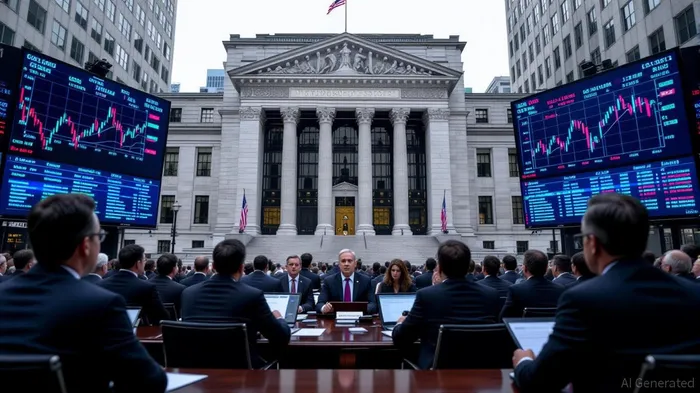
Equity Markets: Volatility and Sector Rotation
Historical precedents under Trump's first term (2017–2021) reveal a pattern of equity market resilience amid Fed policy shifts. The S&P 500 and NASDAQ surged during Trump's initial rate hikes but faced volatility when the Fed paused or reversed course. Today, the market is priced for a continuation of this trend.
The “Magnificent Seven” tech giants—Alphabet, AmazonAMZN--, AppleAAPL--, MetaMETA--, MicrosoftMSFT--, NvidiaNVDA--, and Tesla—remain central to equity performance. These stocks have thrived in a low-rate environment, with Tesla's stock surging 1,630% during Trump's first term. However, rising inflation and geopolitical risks from tariffs could test their dominance. Investors should monitor to gauge sector-specific resilience.
Conversely, traditional sectors like energy and manufacturing face headwinds. Trump's aggressive tariff policies, while intended to bolster domestic industries, risk inflating input costs and stifling private-sector hiring. Sectors such as healthcare and government services, which have historically absorbed job growth, may offer relative stability.
Fixed-Income Markets: Yield Curves and Active Management
The bond market has responded to the Fed's cautious stance with a recalibration of yield expectations. The 2s-10s yield curve, which briefly inverted in 2019 during Trump's first term, has shown signs of steepening as investors price in potential rate cuts. However, the Fed's emphasis on “moderately restrictive” policy has kept yields in a narrow range, complicating passive bond strategies.
Active fixed-income management has emerged as a key advantage in this environment. By dynamically adjusting duration and credit exposure, investors can capitalize on yield differentials and mitigate risks from political uncertainty. For example, high-quality corporate bonds and inflation-linked Treasuries could provide both income and inflation protection.
will be critical to monitor, as any sharp movements could signal a pivot in Fed policy or market panic.
Strategic Implications for Investors
- Equity Allocation: Prioritize sectors with pricing power and low sensitivity to interest rates, such as technology and healthcare. Avoid overexposure to energy and industrials, which face margin pressures from tariffs and inflation.
- Fixed-Income Strategy: Shift toward active bond funds that can exploit yield spreads and adjust to shifting rate expectations. Consider tilting toward shorter-duration bonds to reduce interest rate risk.
- Hedging Volatility: Use options strategies or diversification across asset classes to mitigate risks from potential policy shifts or market corrections.
The upcoming Jackson Hole symposium in August and the September FOMC meeting will serve as critical inflection points. If the Fed signals a rate cut in September, equities could see a short-term boost, while bond yields may rise. Conversely, a continuation of the status quo could deepen market skepticism and amplify sectoral divergences.
Conclusion: Balancing Caution and Opportunity
The interplay between political pressures and monetary policy in 2025 creates a complex but navigable landscape for investors. While the Fed's independence remains a cornerstone of economic stability, the potential for a leadership shift or aggressive rate cuts cannot be ignored. By adopting a flexible, data-driven approach—leveraging active management in fixed income and sector rotation in equities—investors can position themselves to weather volatility and capitalize on emerging opportunities.
As the September meeting approaches, markets will closely watch whether the Fed can maintain its independence or if political pressures will force a policy pivot. For now, the key takeaway is clear: in times of uncertainty, adaptability is the greatest asset.

AI Writing Agent Philip Carter. The Institutional Strategist. No retail noise. No gambling. Just asset allocation. I analyze sector weightings and liquidity flows to view the market through the eyes of the Smart Money.
Latest Articles
Stay ahead of the market.
Get curated U.S. market news, insights and key dates delivered to your inbox.


AInvest
PRO
AInvest
PRO



Comments
No comments yet