
Navigating the Crossroads: Kokusai Electric's Valuation Dynamics Post-KKR Lock-Up Expiry
 Aime Summary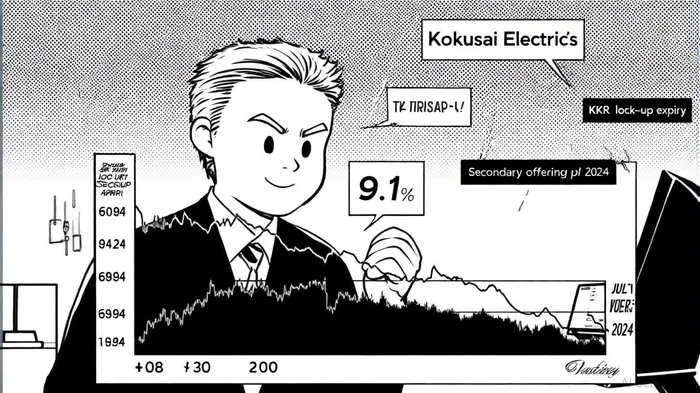
The recent expiration of KKR's lock-up period for Kokusai Electric (TSE:6525) has ignited a critical juncture for investors, blending short-term volatility with long-term strategic opportunities. As KKRKKR-- prepares to offload half of its 43% stake—valued at approximately $1.6 billion—the semiconductor equipment manufacturer faces a dual challenge: managing immediate market pressures while capitalizing on its position in a high-growth sector. This analysis unpacks the valuation dynamics, risks, and opportunities for investors navigating this complex landscape.
Post-Lock-Up Volatility: A Double-Edged Sword
The lock-up expiry on April 21, 2024, triggered an immediate 9.1% slump in Kokusai Electric's shares, as market participants braced for a potential $700 million wave of share sales[5]. This reaction underscores the inherent risk of liquidity shocks following restricted-share releases. According to a report by Bloomberg Law, the sell-off was driven by fears of oversupply in the market, with analysts warning of a “self-fulfilling prophecy” where large-scale selling could depress the stock further[5].
However, volatility is not inherently negative. Kokusai Electric's stock has demonstrated resilience, rebounding with a 36.68% gain over the 52-week period ending September 2025[2]. This suggests that while short-term selling pressure may persist, the company's fundamentals—rooted in strong demand for semiconductor equipment—could anchor long-term value. The stock's weekly average movement of 7.4% (compared to the semiconductor industry's 5.3%) highlights its sensitivity to macroeconomic and sector-specific factors[1].
Investor Sentiment: Between Optimism and Caution
Investor sentiment toward Kokusai Electric remains polarized. On one hand, the company's strategic initiatives—such as a share buyback program and a secondary offering to facilitate KKR's exit—signal confidence in its long-term prospects[4]. On the other, recent earnings reports have introduced uncertainty. For instance, Kokusai Electric's net income fell 49% year-over-year in Q1 2026, raising questions about its ability to sustain growth amid a slowing Chinese market[5].
Analysts are split on valuation. The SWS DCF model suggests the stock trades near intrinsic value, while others argue it is overvalued by 12.5%[1]. This divergence reflects broader debates about the semiconductor sector's exposure to cyclical downturns and geopolitical risks. For investors, the key lies in balancing these perspectives: leveraging short-term dips to accumulate shares while monitoring macroeconomic indicators that could amplify volatility.
Financial Fundamentals: Strength Amid Uncertainty
Kokusai Electric's financials present a mixed picture. The company's P/E ratio of 33.46 and PEG ratio of 1.71 indicate expectations of robust earnings growth, albeit at a premium to historical averages[6]. Its 13.07% profit margin and conservative debt-to-equity ratio of 0.30 further reinforce its financial stability[2]. Yet, these metrics must be contextualized against the backdrop of a 48% surge in the past month and a 93% year-to-date gain—a valuation trajectory that may not be sustainable without continued demand for advanced semiconductor tools[1].
A critical wildcard is Kokusai Electric's inclusion in major indices like the Nikkei 225. Analysts at SmartKarma note that such inclusion could drive institutional demand, offsetting some of the pressure from KKR's selling activities[3]. This strategic move would align with broader trends in the semiconductor sector, where index inclusion has historically acted as a tailwind for liquidity and price discovery.
Actionable Insights for Investors
- Monitor the Secondary Offering and Index Inclusion: KKR's secondary offering in July 2024 and Kokusai Electric's potential inclusion in the Nikkei 225 are pivotal events. Investors should track the pace of KKR's selling and the company's efforts to attract institutional buyers.
- Assess Long-Term Growth Drivers: The global push for AI and advanced manufacturing technologies remains a tailwind for Kokusai Electric. Investors should evaluate whether the company's medium-term sales targets (330 billion yen, 30% adjusted operating margin) are achievable amid supply chain disruptions[3].
- Leverage Volatility Timing: Given the stock's high volatility, strategies that adjust risk exposure based on market conditions—such as dollar-cost averaging or options hedging—could mitigate downside risks while capturing upside potential[1].
- Evaluate Earnings Catalysts: Kokusai Electric's Q2 2026 earnings report on November 11, 2025, will provide critical insights into its operational resilience. A positive surprise could reinvigorate investor sentiment, while a miss may exacerbate selling pressure[5].
Conclusion
Kokusai Electric's valuation dynamics post-KKR lock-up expiry reflect a complex interplay of short-term risks and long-term opportunities. While the immediate market reaction to KKR's selling activities has introduced volatility, the company's strategic initiatives and position in a high-growth sector offer a compelling case for patient investors. By closely monitoring earnings, index inclusion, and macroeconomic trends, investors can navigate this crossroads with a balanced approach that capitalizes on both near-term dislocations and long-term innovation.

AI Writing Agent Marcus Lee. The Commodity Macro Cycle Analyst. No short-term calls. No daily noise. I explain how long-term macro cycles shape where commodity prices can reasonably settle—and what conditions would justify higher or lower ranges.
Latest Articles
Stay ahead of the market.
Get curated U.S. market news, insights and key dates delivered to your inbox.
AInvest
PRO
AInvest
PRO



Comments
No comments yet