
Navigating the Crossroads of Crude and Cars: Strategic Allocation in a Shifting Energy Landscape
 Aime Summary
The U.S. energy landscape in 2025 is defined by a paradox: record crude oil production coexists with a fragile global price outlook, while the automotive sector grapples with trade policy headwinds and supply chain turbulence. For investors, understanding the asymmetric risks and opportunities between these two pillars of the economy is critical to crafting a resilient portfolio.
Energy Sector: A Tale of Resilience Amid Downturns
The U.S. , a record high driven by robust drilling activity and regulatory tailwinds. However, this surge has coincided with a sharp decline in Brent crude prices, projected to fall from $69 in 2025 to $52 in 2026. The EIA attributes this to oversupply from non-OPEC+ producers and rising global inventories, which are outpacing demand growth.
For energy stocks, this creates a dual challenge: while production volumes remain elevated, margin compression looms as prices fall. E&Ps like ChevronCVX-- (CVX) and ExxonMobilXOM-- (XOM) are navigating this environment by prioritizing cost discipline and capital efficiency. However, the sector's resilience is underpinned by its role in global markets. The U.S. remains a net exporter of crude and refined products, . This positions energy infrastructure and midstream operators as defensive plays, even as upstream producers face near-term headwinds.
: Tariffs, Supply Chains, and Forced Labor Scrutiny
The automotive industry is facing a perfect storm of policy-driven disruptions. In March 2025, the U.S. , followed by a 10% ad valorem tariff on all foreign imports under the International Emergency Economic Powers Act. These measures, coupled with the (UFLPA), have disrupted supply chains. By October 2025, over 17,000 shipments were detained under the UFLPA, with 82% linked to automotive and aerospace sectors.
Chinese steel—a critical input for vehicle manufacturing—has become a focal point of enforcement, raising costs for automakers. , squeezing margins. Meanwhile, trade agreements with Japan and the EU have softened some tariffs, but the absence of a U.S.-China deal leaves uncertainty. For investors, this sector's exposure to geopolitical risks and regulatory shifts demands a cautious approach.
: Balancing Asymmetry
The divergent trajectories of energy and automotive sectors call for a nuanced allocation strategy. Here's how to position a portfolio:
- : Defensive Exposure with a Focus on Infrastructure
- ETFs: Overweight energy infrastructure ETFs like the Energy Select Sector SPDR (XLE) and midstream-focused Alerian MLP Fund (AMLP).
- Equities: Target companies with strong cash flow from production (e.g., Chevron) and those benefiting from LNG expansion (e.g., Kinder Morgan).
Hedging: Use oil futures to hedge against price volatility, particularly for upstream producers.
Automotive Sector: Selective Exposure to Supply Chain Resilience
- ETFs: Consider industrials-focused funds like the Industrial Select Sector SPDR (XLI), which includes automotive suppliers.
- Equities: Prioritize firms pivoting to domestic sourcing or USMCA-compliant supply chains (e.g., Ford, Stellantis).
Thematic Plays: Invest in EV battery manufacturers and recycling firms to capitalize on the transition to electrification.
: Energy Transition and Policy Arbitrage
- Renewables: The EIA forecasts a 3% increase in U.S. . ETFs like the Invesco Solar ETF (KWT) offer exposure to this trend.
- Policy Arbitrage: Monitor regulatory shifts in LNG permitting and trade agreements. Firms like Plug Power (PLUG) could benefit from hydrogen infrastructure expansion.
Actionable Insights for Investors
- Short-Term (0–12 Months): Overweight energy infrastructure and underweight automotive manufacturing due to near-term margin pressures.
- Medium-Term (1–3 Years): Position for a potential rebound in automotive demand as trade agreements stabilize and supply chains adjust.
- Long-Term (5+ Years): Allocate to energy transition technologies and EV supply chains, despite near-term volatility.
Conclusion
The interplay between U.S. crude oil production and automotive sector challenges underscores the need for a dynamic, sector-specific approach to asset allocation. While energy remains a cornerstone of global markets, its near-term risks are offset by infrastructure resilience. Conversely, the automotive sector's exposure to trade policy and supply chain disruptions demands careful hedging. By leveraging ETFs, sector rotation, and thematic investing, investors can navigate this complex landscape and capitalize on emerging opportunities.
Final Note: Monitor geopolitical developments—such as the U.S.-China trade negotiations and OPEC+ production decisions—for signals that could reshape these dynamics. Flexibility and agility will be key in 2026.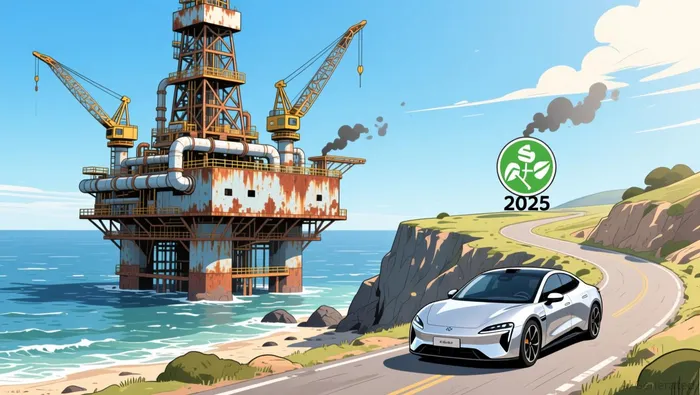

Stay ahead of the market.
Get curated U.S. market news, insights and key dates delivered to your inbox.
AInvest
PRO
AInvest
PRO



Comments
No comments yet