
Navigating Cross-Atlantic Trade: How the EU-US Deal Redefines Supply Chains and Investment Strategies
The EU and US stand at a pivotal juncture in their transatlantic trade relationship, with the emerging framework agreement poised to reshape global supply chains and investment landscapes. As negotiations near a July 9 deadline to avert catastrophic 50% tariffs on EU exports, the deal's provisions—particularly in technology, automotive, and renewable energy—present both opportunities and risks for investors. This article dissects the geopolitical and sector-specific dynamics of the trade framework, highlighting actionable investment themes.
Geopolitical Context: A New Transatlantic Alliance?
The EU-US Trade and Technology Council (TTC), now in its fourth year, has evolved into a cornerstone of Western economic strategy. By aligning on standards for AI, semiconductors, and clean energy, the deal aims to counter China's growing influence while strengthening cross-border supply chains. However, the framework's fragility—hanging on tariff reductions and unresolved regulatory disputes—adds uncertainty.

Sector Analysis: Winners and Losers in the New Trade Framework
1. Technology Sector: Semiconductors and AI Leadership
The deal's emphasis on semiconductorON-- supply chain resilience and AI governance creates a clear tailwind for companies in this sector. The EU's alignment with U.S. standards for digital identity and 6G research could accelerate innovation while reducing trade barriers for tech firms.
Key Opportunities:
- ASML Holding (ASML): The Dutch lithography giant is critical to global semiconductor production. The deal's push for resilient supply chains and joint R&D could boost its order backlog.
- Intel (INTC): U.S. incentives for domestic chip manufacturing, paired with EU collaboration, position IntelINTC-- to capture market share.
Risk: Regulatory fragmentation—such as differing AI safety protocols—could delay cross-border tech projects.
2. Automotive Sector: Tariff Relief vs. Regulatory Battles
Automotive manufacturers face immediate pressure: EU cars now face 25% tariffs in the U.S., with a 50% hike looming. A framework deal's success hinges on reducing these levies, which would benefit German automakers like BMW (BMW) and Daimler (DAI).
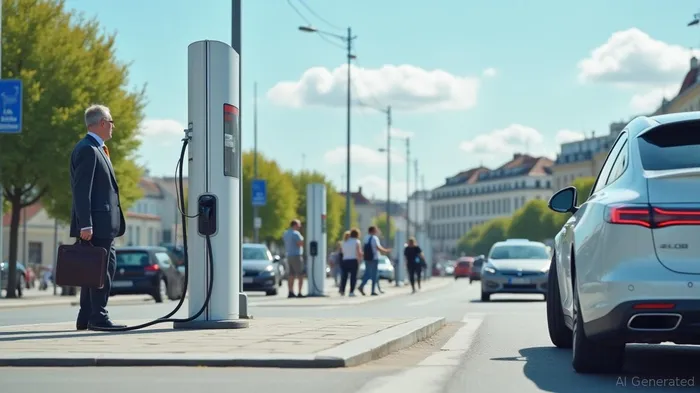
Key Opportunities:
- Volkswagen (VW): Its aggressive EV rollout and U.S. production plans align with the deal's climate goals.
- Tesla (TSLA): While U.S.-based, Tesla's dominance in EVs positions it to benefit from reduced supply chain disruptions via the deal's automotive clauses.
Risk: U.S. demands for exemptions from EU carbon taxes could strain negotiations.
3. Renewable Energy: A Transatlantic Green Alliance
The EU's “Green Deal” and U.S. Inflation Reduction Act (IRA) are merging under the trade framework, creating a unified market for solar, wind, and hydrogen technologies.
Key Opportunities:
- Siemens Gamesa (SGREN): A leader in offshore wind, poised to benefit from U.S. demand for clean energy infrastructure.
- NextEra Energy (NEE): The U.S. renewable giant could partner with EU firms to scale projects across the Atlantic.
Risk: Geopolitical tensions over rare earth mineral sourcing (critical for EV batteries) remain unresolved.
Investment Recommendations: Targeting Cross-Border Exposure
- Tech-Supply Chain Plays:
- ASML (ASML): Long-term exposure to semiconductor demand.
Applied Materials (AMAT): U.S.-based supplier to global chipmakers.
Automotive Sector:
- Volvo Cars (VOLCAR): A Swedish firm with strong EV credentials and U.S. market ties.
ETFs: Consider the iShares Global Automotive (CARS) for diversified exposure.
Renewables:
- Vestas Wind Systems (VWIND): Danish leader in wind turbines, capitalizing on U.S. IRA incentives.
- Brookfield Renewable (BEP): A global player in clean energy infrastructure.
Key Risks to Monitor
- Deal Collapse: A failure to agree on auto tariffs or carbon tax exemptions could reignite a trade war.
- Regulatory Disputes: Divergent standards on AI, pharmaceuticals, or food safety could erode trust.
- Geopolitical Volatility: Escalation in Ukraine or other regions could strain EU-U.S. unity.
Conclusion: A Fragile but Transformative Framework
The EU-US Trade Deal Framework is more than a tariff agreement—it's a geopolitical pivot to assert Western economic dominance. Investors should prioritize companies with cross-border supply chain integration and exposure to tech, EVs, and renewables. While risks remain, the deal's success could unlock trillions in transatlantic trade, rewarding those who position themselves in sectors aligned with its vision.
Final Take: Actively invest in the EU-US deal's core sectors, but keep a close watch on negotiations. Diversification across geographies and industries will be key to navigating this high-stakes landscape.
Data as of June 2025. Past performance does not guarantee future results.

Stay ahead of the market.
Get curated U.S. market news, insights and key dates delivered to your inbox.
AInvest
PRO
AInvest
PRO



Comments
No comments yet