
Navigating Consumer Goods Sector Volatility: Lessons from the 2025 Shredded Cheese Recall Crisis


 Aime Summary
The 2025 Shredded Cheese Recall Crisis, . states and Puerto Rico, has become a pivotal case study in the volatility of the consumer goods sector. This crisis, driven by potential metal contamination risks, underscores the fragility of modern food supply chains and the urgent need for robust risk management frameworks. For investors, the incident highlights how supply chain resilience, technological innovation, and regulatory compliance can determine a company's ability to weather such disruptions.
The FDA's Response and Recall Dynamics
The U.S. Food and Drug Administration (FDA)
escalated the recall , 2025, after routine testing confirmed the risk of metal fragments. The affected products, distributed by Great Lakes Cheese Co. and sold under private-label brands like Great Value and Borden, were linked to temporary health risks such as dental damage or intestinal perforation
according to reports. This recall, spanning retailers like WalmartWMT--, TargetTGT--, and Aldi, exemplifies the scale of systemic vulnerabilities in food manufacturing. The FDA's decision to classify the recall as Class II-indicating "temporary or medically reversible adverse health consequences"-
reflects a balancing act between public safety and economic impact.
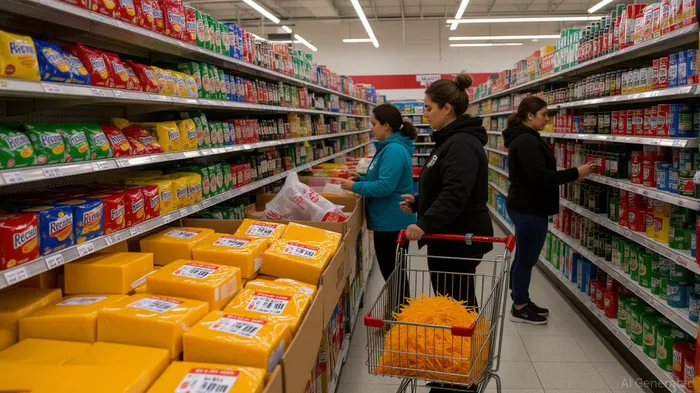
Consumer Behavior Shifts and Trust Erosion
The recall triggered significant shifts in consumer behavior, with
. These trends align with broader patterns observed in food safety crises, where trust erodes rapidly and recovery is slow.
A 2025 survey by Food Safety News revealed , signaling a demand for transparency that companies must address. For investors, this shift underscores the financial risks of reputational damage and the value of brands that proactively invest in consumer confidence.
Corporate Preparedness and Technological Innovations
The crisis has accelerated the adoption of advanced risk management strategies in food manufacturing. Companies are increasingly leveraging , , and AI to enhance traceability and contamination detection. For instance,
's blockchain platform enables rapid identification of contamination sources, while 's biosensors allow real-time pathogen monitoring. These technologies not only mitigate recall scope but also align with the FDA's Digital Food Traceability Rule, which
mandates detailed records for high-risk foods starting in 2026.
Startups like Trustwell and Plasma Fresh are further reshaping the landscape.
Trustwell's compliance platforms streamline labeling and regulatory alignment, while 's cold plasma technology reduces cross-contamination risks without chemical use. Such innovations are critical for companies aiming to meet evolving FDA standards and consumer expectations.
Regulatory Evolution and Supply Chain Resilience
The FDA's strategic focus on traceability is reshaping corporate preparedness frameworks.
The , effective in 2026, requires detailed tracking of Critical Tracking Events (CTEs) and Key Data Elements (KDEs) for high-risk foods like leafy greens and seafood. This regulatory push is driven by a
since 2018, with contamination and allergen mislabeling as primary causes. For investors, compliance with these rules is no longer optional-it is a competitive necessity.
Investment Implications and Future Outlook
The 2025 crisis offers clear lessons for investors. First, companies with robust traceability systems and proactive risk management are better positioned to minimize recall impacts and retain consumer trust. Second, the integration of AI, IoT, and blockchain is not just a technological trend but a strategic imperative. Third, regulatory compliance must be viewed as an investment rather than a cost.
However, challenges persist.
Economic pressures have led to cost-cutting in quality control, increasing the likelihood of severe recall events. Additionally,
global supply chain complexities and shifting regulations require continuous adaptation. Investors should prioritize firms that demonstrate agility in these areas, such as those adopting ERP systems for real-time batch tracking or investing in sustainable packaging to meet dual goals of efficiency and consumer demand.
Conclusion
The 2025 Shredded Cheese Recall Crisis serves as a wake-up call for the consumer goods sector. While the immediate fallout was significant, it also catalyzed a shift toward innovation and resilience. For investors, the path forward lies in supporting companies that embrace transparency, technology, and regulatory foresight. As the FDA's 2026 compliance deadlines loom and consumer expectations evolve, the ability to navigate volatility will define the next era of food manufacturing.

Stay ahead of the market.
Get curated U.S. market news, insights and key dates delivered to your inbox.
AInvest
PRO
AInvest
PRO



Comments
No comments yet