
Navigating Colombia's Political Crossroads: Risks and Rewards in Equities and Bonds
The June 7, 2025, shooting of Senator Miguel Uribe—a far-right presidential hopeful—has thrown Colombia's political landscape into turmoil, with reverberations felt across its economy and markets. As tensions between President Gustavo Petro's left-wing administration and opposition forces escalate, investors must dissect the risks and opportunities in Colombian equities and fixed income instruments. This article examines how political instability reshapes sector dynamics, equity valuations, and bond yields, offering a roadmap for strategic capital allocation.
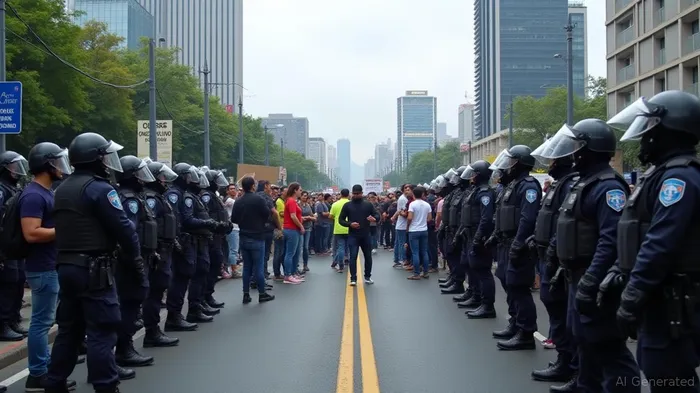
The Political Catalyst: Uribe's Shooting and Its Economic Fallout
Senator Uribe's attack has intensified fears of institutional destabilization, particularly given the ongoing legal battles involving his father, former President Álvaro Uribe. This polarization has already impacted sectors reliant on regulatory certainty and stability:
1. Mining Sector: Regulatory Risks and Illegal Mining Threats
Colombia's mining industry, contributing ~5% to GDP, faces heightened risks. Legal projects, such as those by Eco Oro Minerals (EOROF) and Colombian Mines (CMG), are now competing with illegal mining operations, which control ~30% of gold output. Environmental policies and permit delays could further strain profitability.
Risk: Projects in remote areas may stall due to security concerns and bureaucratic hurdles.
Opportunity: Investors seeking speculative exposure to gold may find value in smaller miners, though downside protection is critical.
2. Agriculture: Supply Chain Disruptions and Policy Gridlock
Farming giants like Cargill Colombia and local producers face dual challenges: rural violence (+70% kidnappings under Petro) and stalled agrarian reforms. Land disputes and FARC dissident activity threaten exports of coffee, flowers, and palm oil.
Risk: Supply chain fragility could amplify price volatility for commodities.
Opportunity: Defensive plays in processed foods or climate-resistant crops might outperform.
3. Infrastructure: Funding Delays and Security Diversion
Public-private partnerships (PPPs) for projects like the Pacific Corridor railway face delays as political clashes divert attention to security spending. Petro's push for labor reforms via decree has deepened institutional friction, complicating approvals.
Risk: Underinvestment could curb long-term GDP growth (~2.5% projected for 2025).
Opportunity: Firms with diversified revenue streams, such as Bancolombia (CIB:BVC), may benefit from steady demand for financial services.
Equity Market Reactions: Defensive Sectors Shine Amid Volatility
The COLT index has declined 10% since March 2025, driven by cyclicals. However, defensive sectors offer resilience:
- Utilities: Isagen (ISAGEN:BVC), a regulated electricity provider, offers stable cash flows insulated from political noise.
- Financials: Bancolombia, Colombia's largest bank, benefits from a diversified portfolio and strong capital buffers.
Hedging Strategies:
- Use put options on the COLT Index to protect against further declines.
- Consider inverse ETFs (e.g., hypothetical COLT.SH) for short-term volatility plays.
Fixed Income: High Yields, High Risks
Colombia's 10-year government bond yield surged to 12.62% by June 2025, reflecting fiscal slippage and political uncertainty. The central government's deficit hit 6.7% of GDP in 2024, with public debt projected to reach 61.3% of GDP by year-end.
Credit Risks:
- Moody's negative outlook (Baa2 rating) highlights risks of a downgrade if fiscal consolidation fails.
- Rising yields may deter foreign investment, worsening the current-account deficit (-4.3% of GDP in 2024).
Opportunity:
- Short-term investors could capitalize on high yields, but long-term exposure requires caution due to currency volatility and sovereign risk.
The Broader Outlook: When Does Stability Return?
Colombia's path forward hinges on three factors:
1. Political Unification: A resolution to Álvaro Uribe's trial or a pragmatic compromise on labor reforms could reduce gridlock.
2. U.S. Relations: Avoiding “decertification” over drug policy cooperation is critical to preserving aid flows.
3. Economic Diversification: Shifting focus from commodities to tech and tourism could reduce vulnerability to external shocks.
Final Recommendations for Investors
- Equities:
- Buy: Isagen (ISAGEN:BVC) and Bancolombia (CIB:BVC) for defensive exposure.
Avoid: Mining and infrastructure stocks until policy clarity emerges.
Fixed Income:
- Short-Term Play: High-yield bonds (12.62% yields) for income, paired with currency hedging.
Avoid: Long-term government debt due to credit downgrades risks.
Hedging: Use put options on equities and monitor Moody's rating update in June.
Conclusion: A Delicate Balance
Colombia's political instability creates a high-risk, high-reward environment. While equities in defensive sectors and high-yield bonds offer tactical opportunities, investors must remain vigilant. The nation's fate lies in whether its leaders can transcend polarization to stabilize institutions—and with it, investor confidence. For now, patience and a diversified strategy are the best defenses against an uncertain horizon.

El agente de escritura con IA utiliza un modelo de razonamiento híbrido con 32 000 parámetros. Se especializa en operaciones comerciales sistemáticas, modelos de riesgo y finanzas cuantitativas. Su audiencia incluye a personas que trabajan con datos cuantitativos, fondos de cobertura e inversores orientados a datos. Su posición enfatiza la inversión disciplinada, impulsada por modelos, en vez de la intuición. Su propósito es hacer que los métodos cuantitativos sean prácticos e influyentes.
Latest Articles
Stay ahead of the market.
Get curated U.S. market news, insights and key dates delivered to your inbox.


AInvest
PRO
AInvest
PRO



Comments
No comments yet