
Navigating U.S.-China Trade Turbulence: Strategic Portfolio Moves Amid Policy Shifts
The escalating U.S.-China trade conflict, now entering its eighth year, has evolved into a defining economic battleground of the 21st century. Treasury Secretary Scott Bessent's recent remarks signaling a renewed emphasis on tariffs as a strategic lever—coupled with central banks' efforts to stabilize markets—create both risks and opportunities for investors. This article explores how portfolio managers can position assets to navigate this high-stakes environment, leveraging insights from historical trade deadline impacts, sector vulnerabilities, and hedging tools.
Bessent's Policy Pivot: A New Era of Trade Realism
Bessent's framing of tariffs as a tool to “reindustrialize” the U.S. economy marks a departure from earlier multilateral approaches. His emphasis on reshoring manufacturing, reducing trade deficits, and addressing national security gaps (e.g., semiconductor shortages during the pandemic) underscores a shift toward unilateralism. This strategy, however, carries dual implications:
- Tariff Revenue as Fiscal Tool: The administration's $300B–$600B annual tariff revenue target could fund tax cuts for middle-class households, potentially boosting consumer sentiment.
- Geopolitical Risks: Bessent's confidence in direct diplomacy with China hinges on Xi's willingness to rebalance trade—a fragile assumption given Beijing's reliance on exports.
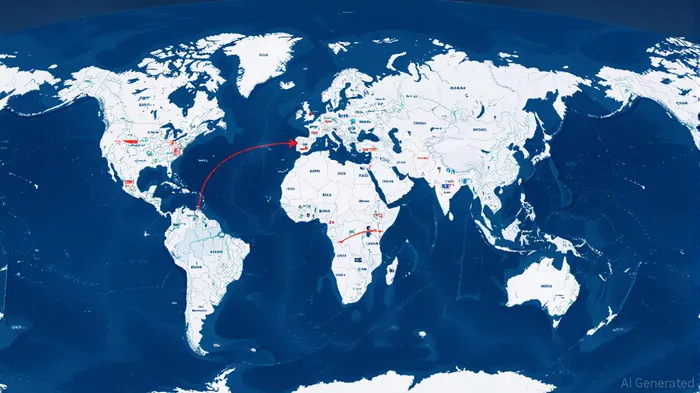
Sector Impact: Historical Patterns Inform Today's Risks
Past trade deadlines offer clues about sector vulnerabilities. For instance:
Tech & Semiconductors: In 2018, U.S. tariffs on Chinese imports caused global chip stocks to drop 15% in two months. Today's 70% tariffs on advanced semiconductors could pressure firms like Taiwan Semiconductor Manufacturing (TSM) and ASMLASML-- (ASML).
Manufacturing: Steel tariffs (now at 50%) have inflated costs for CaterpillarCAT-- (CAT) and BoeingBA-- (BA), though reshoring incentives may later benefit U.S. industrial firms.
Commodities: Rare earth metals—critical for EV batteries—have seen prices surge 40% since mid-2024 amid U.S.-China supply chain decoupling.
Hedging Strategies: ETFs to Mitigate Sector Exposure
Investors can structure portfolios to capitalize on these dynamics while mitigating downside risks:
1. Inverse ETFs for Overexposed Sectors
- Tech Vulnerabilities: The iShares PHLX Semiconductor ETF (SOXX) has underperformed the Nasdaq by 20% since tariffs on Chinese imports were doubled in May 2025. Consider short positions via the ProShares Short QQQ ETF (SQQQ).
- Automotive Sector: The iShares Global Automotive ETF (CARS) faces headwinds from 50% tariffs on non-USMCA imports. A short position in CARS could hedge against further declines.
2. Buffered ETFs for Volatility
The NEOS Nasdaq-100 Hedged Equity Income ETF (QQQH) offers downside protection through options-based strategies, while generating a 9.74% yield. Its put spread collar structure limits losses to 15% while capping upside gains at 15%, making it ideal for tech-heavy portfolios.
3. Commodity Plays for Inflation and Supply Gaps
- Rare Earth Metals: The Global X Rare Earth & Strategic Metals ETF (REMX) is up 35% YTD as China's export controls tighten.
- Gold as a Safe Haven: The SPDR Gold Shares ETF (GLD) has surged 18% since May 2025, benefiting from geopolitical uncertainty and central bank easing.
4. Reshoring Plays
ETFs tracking U.S. industrial firms, such as the iShares U.S. Industrial Metals ETF (IMOC), may outperform if reshoring accelerates.
Central Banks: Anchoring Stability in Volatile Markets
Central banks are countering trade-driven volatility through coordinated easing:
- Federal Reserve: While pausing rate hikes at 4.5%, the Fed's revised inflation forecast (3.1% in 2025) suggests caution. Investors should prepare for 1–2 rate cuts by year-end.
- ECB: Aggressive rate cuts (to 2.00% by June 2025) aim to offset eurozone growth risks. The ECB's analysis shows Chinese trade diversion boosted European imports by 2%–3%, but domestic exporters gained no U.S. market share.
- PBOC: China's 1.4% policy rate and RRR cuts aim to stabilize growth amid falling exports.
Valuation Gaps and Contrarian Opportunities
- Tech Valuation Disparity: Semiconductors trade at 12x forward earnings versus the Nasdaq's 25x, reflecting tariff fears. A resolution in U.S.-China talks could unlock upside.
- Emerging Markets: The iShares MSCIMSCI-- Emerging Markets ETF (EEM) trades at a 40% discount to its 10-year average P/E, offering value if trade tensions ease.
Investment Recommendations
- Hedge Tech Exposure: Pair long positions in reshoring beneficiaries (e.g., TSMCTSM--, Caterpillar) with inverse ETFs like SQQQ.
- Leverage Commodity Funds: Add 5%–10% allocations to REMX and GLD for inflation and supply gap protection.
- Embrace Hedged Income Tools: QQQH provides downside cushioning while generating yield in a low-rate environment.
- Monitor Central Bank Signals: Position for Fed cuts by overweighting rate-sensitive sectors like utilities (XLU) and REITs (IYR).
Conclusion
The U.S.-China trade war has evolved into a prolonged strategic competition with no clear end in sight. Investors must balance short-term risks—such as sector-specific volatility and geopolitical flare-ups—with long-term opportunities in reshoring, commodities, and hedged income strategies. As Bessent's policies reshape trade flows and central banks navigate the fallout, portfolios that blend tactical hedging with selective value plays will be best positioned to navigate this turbulent landscape.

Stay ahead of the market.
Get curated U.S. market news, insights and key dates delivered to your inbox.
AInvest
PRO
AInvest
PRO



Comments
No comments yet