
Navigating the U.S.-China Trade Truce: Strategic Opportunities in Emerging Markets
 Aime Summary
The U.S.-China trade truce extension through October 2025 has injected a dose of stability into a global economy teetering on the edge of renewed chaos. By delaying the re-imposition of tariffs that could have reached 145% on U.S. imports and 125% on Chinese goods, the 90-day pause has created a window for investors to reassess risk exposure and identify tactical entry points in emerging markets. This article examines how the truce reshapes trade flows, stabilizes commodity prices, and offers strategic opportunities in logistics, manufacturing, and export-driven economies.
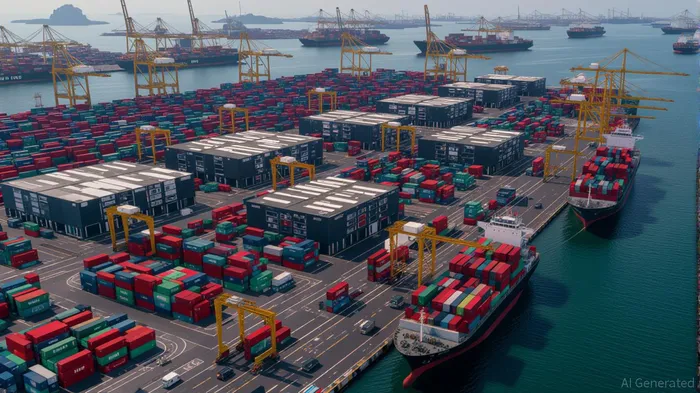
Trade Flows: From Uncertainty to Tactical Diversification
The truce has temporarily alleviated the specter of a full-blown trade war, but its broader impact lies in how it accelerates supply chain diversification. Multinational corporations are no longer merely reacting to tariffs—they're proactively restructuring. Vietnam and India, for instance, have seen a surge in manufacturing relocations as firms hedge against future volatility. Foxconn's recent expansion in Vietnam underscores this trend, with the country's logistics sector reporting a 25% increase in warehouse utilization in Q2 2025.
Investment Insight: Investors should target logistics infrastructure in Southeast Asia and South Asia. Companies like DB Schenker and DHL are expanding regional hubs, while local players such as Vietnam Post and Delhivery (India) are capitalizing on increased freight volumes. A reveals a 15% outperformance, reflecting growing demand for cross-border logistics services.
Commodity Markets: Stabilization Amid Lingering Risks
The truce has provided a temporary buffer for commodity prices, particularly in sectors like rare earth minerals and copper. China's resumption of rare earth exports has eased bottlenecks for tech manufacturers, while U.S. imports of copper—critical for EVs and renewables—have stabilized. However, the underlying risk remains: if the truce collapses, tariffs on copper could spike, triggering a 10-15% price swing.
Strategic Repositioning: Investors should hedge against this risk by allocating to diversified commodity producers with exposure to both U.S. and Chinese markets. Codelco (Chile) and Zamia (Zambia) are prime examples. A highlights a strong correlation, suggesting that stable demand could bolster margins.
Manufacturing: Automation as a Buffer
The truce has also spurred a shift toward automation in emerging markets. As labor costs rise in China, companies are investing in robotics to maintain competitiveness. ABB and Fanuc have reported a 30% increase in orders for industrial robots in Q2 2025, driven by clients in Vietnam and India. This trend is particularly evident in sectors like textiles and electronics, where nearshoring is gaining traction.
Tactical Entry Points: Automation providers and their emerging market partners present compelling opportunities. For instance, Foxconn's joint ventures in Vietnam are integrating AI-driven quality control systems. A shows a consistent 8% allocation, signaling long-term commitment to automation.
Export-Driven Economies: Balancing Growth and Risk
Countries like Vietnam and India are reaping the rewards of the truce, but they face a dual challenge: capitalizing on current demand while preparing for potential disruptions. Vietnam's exports to the U.S. rose by 18% in June 2025, but its reliance on U.S. markets makes it vulnerable to renewed tariffs. Similarly, India's manufacturing sector, buoyed by the “Make in India” initiative, must navigate rising input costs and infrastructure bottlenecks.
Risk Mitigation Strategy: Investors should prioritize companies with diversified export markets and strong domestic demand. Samsung's Vietnam operations, for example, have expanded into the EU and ASEAN markets, reducing U.S. dependency. A reveals a strategic shift toward non-U.S. markets, mitigating exposure to trade tensions.
Conclusion: A Window of Opportunity
The U.S.-China trade truce is not a permanent solution but a tactical pause that offers investors a unique opportunity to reposition. Emerging markets, particularly in logistics and manufacturing, are poised to benefit from near-term stability, but long-term success will depend on adaptability. Automation, supply chain diversification, and strategic hedging against commodity price swings are key themes.
For investors, the message is clear: act now, but with caution. The truce buys time, but the clock is ticking. As the October 2025 deadline approaches, the ability to pivot quickly will separate winners from losers in this high-stakes game of global trade chess.
Final Investment Takeaway: Allocate 10-15% of emerging market portfolios to logistics and automation equities, while maintaining a 5% position in diversified commodity producers. Monitor the U.S.-China negotiations closely—every delay in the truce extension is a green light for tactical entry, but every escalation is a red flag.

Stay ahead of the market.
Get curated U.S. market news, insights and key dates delivered to your inbox.


AInvest
PRO
AInvest
PRO



Comments
No comments yet