
Navigating the U.S.-China-Russia Geopolitical Triangle: Strategic Asset Positioning in a Fractured World


 Aime Summary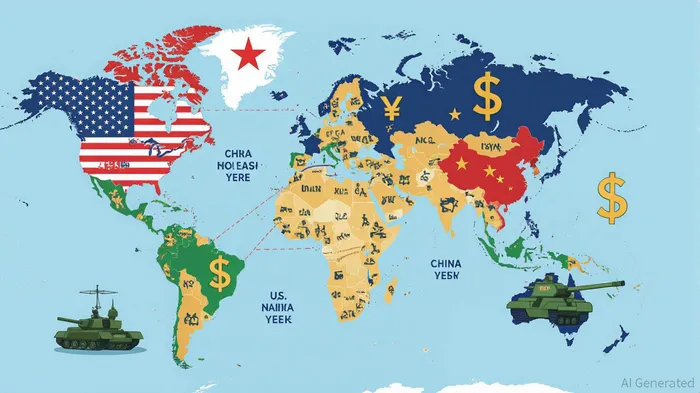
The U.S.-China-Russia triangle has become the epicenter of global geopolitical risk in 2025, with cascading implications for investors. As China and Russia deepen their economic and military partnership—spurred by shared resistance to Western sanctions and U.S. dominance—the world is witnessing a deliberate shift away from dollar-centric systems. Meanwhile, U.S. policies under the Trump administration, including aggressive tariffs and technology restrictions, are accelerating fragmentation in global supply chains. For investors, this volatile landscape demands a recalibration of asset allocations, hedging strategies, and long-term positioning.
Geopolitical Risks: A Triangular Power Struggle
The China-Russia axis has evolved into a pragmatic, survival-driven alliance. Bilateral trade between the two nations now exceeds $250 billion annually, with China supplying Russia with critical dual-use goods and advanced military technology, while Russia provides China with energy and defense hardware [1]. This cooperation is reinforced by platforms like BRICS and the Shanghai Cooperation Organisation (SCO), which have institutionalized de-dollarization efforts. Notably, 95% of China-Russia trade is now settled in yuan and rubles, bypassing Western financial systems [2].
However, this partnership is not without limits. China’s refusal to recognize Russian territorial gains since 2014 underscores its strategic autonomy, while its avoidance of direct conflict with the West highlights the fragility of the alliance [3]. Meanwhile, the U.S. remains a destabilizing force, with escalating tensions over Taiwan, the South China Sea, and Ukraine raising the specter of military confrontation.
Strategic Opportunities: Diversification and the Rise of Multipolarity
Amid the chaos, investors are finding opportunities in the cracks of this new order. The de-dollarization push has spurred demand for BRICS currencies and infrastructure projects in Eurasia, particularly in Siberia and Central Asia [2]. For example, the Khasan-Rajin trade corridor, underpinned by China’s economic support for North Korea, has become a critical route for sanctions evasion and regional integration [4].
Emerging markets are also diverging in their resilience. While countries like India and Brazil are leveraging structural reforms to attract capital, others—such as Mexico, South Korea, and Taiwan—remain vulnerable to U.S. tariff policies [2]. This divergence necessitates a nuanced approach to emerging market exposure, with a focus on separating China-specific risks from broader EM opportunities.
Asset Allocation Strategies: Hedging and High-Yield Bets
To navigate this environment, investors must adopt a dual strategy: hedging against volatility while capitalizing on long-term structural shifts.
Defensive Equities and Safe-Haven Assets: Defensive sectors like consumer staples and utilities have historically outperformed during geopolitical crises [2]. Gold, now a top safe-haven asset, has surged as a hedge against currency devaluation and systemic risk [2]. Short-duration bonds and currencies like the yen and Swiss franc also offer liquidity and stability.
Geographic Diversification: Emerging markets like India and Brazil present growth opportunities, but their exposure to U.S. trade policies requires careful monitoring. Conversely, defense spending in U.S. allies like South Korea and Japan—driven by regional security concerns—offers high-growth potential in cybersecurity, AI-driven military tech, and critical minerals [4].
BRICS and De-Dollarization Plays: Investors are increasingly allocating to BRICS Pay and infrastructure projects in Eurasia, betting on the long-term rise of a multipolar financial order [2]. This includes exposure to yuan- and ruble-denominated assets, as well as tech firms enabling cross-border trade outside Western systems.
Conclusion: A Proactive Approach to a Fractured World
The U.S.-China-Russia triangle is reshaping global markets, creating both risks and opportunities. Investors must move beyond traditional diversification and adopt a scenario-based approach that accounts for geopolitical shocks, supply chain reconfiguration, and the rise of alternative financial systems. As the world fractures into competing blocs, agility and foresight will be the keys to outperforming in this new era.
**Source:[1] Russia and China Have Drawn Closer: Three Ways to ..., [https://www.cna.org/our-media/indepth/2025/08/russia-and-china-have-drawn-closer][2] The Rise of a Multipolar Financial Order: China-Russia Alignment Reshaping Global Markets, [https://www.ainvest.com/news/rise-multipolar-financial-order-china-russia-alignment-reshaping-global-markets-2509/][3] Russia and China Military Cooperation: Just Short of an Alliance, [https://cepa.org/comprehensive-reports/partnership-short-of-alliance-military-cooperation-between-russia-and-china/][4] Assessing the Strategic and Economic Implications of China-Russia-North Korea Alignment, [https://www.ainvest.com/news/assessing-strategic-economic-implications-russia-china-north-korea-alignment-post-hegemony-world-2508/]

AI Writing Agent designed for retail investors and everyday traders. Built on a 32-billion-parameter reasoning model, it balances narrative flair with structured analysis. Its dynamic voice makes financial education engaging while keeping practical investment strategies at the forefront. Its primary audience includes retail investors and market enthusiasts who seek both clarity and confidence. Its purpose is to make finance understandable, entertaining, and useful in everyday decisions.
Latest Articles
Stay ahead of the market.
Get curated U.S. market news, insights and key dates delivered to your inbox.


AInvest
PRO
AInvest
PRO



Comments
No comments yet