
Navigating China's LPR Stability: Strategic Bets in Infrastructure and Tech Amid Trade Wars
China’s recent Loan Prime Rate (LPR) cuts in May 2025—marking the first reduction in seven months—highlight the delicate balance between monetary easing and the pressures of trade wars and deflation. While the People’s Bank of China (PBOC) trimmed the one-year LPR to 3.0% and the five-year LPR to 3.5%, signaling support for economic activity, investors must navigate this landscape strategically. The key lies in prioritizing sectors insulated from U.S. tariffs and government policy volatility, such as state-backed infrastructure and green energy, while avoiding exposure to consumer lending. Here’s why.
The Tension Between Monetary Policy and Trade Realities
The PBOC’s cautious approach to rate cuts—maintaining stability for six months prior to May’s adjustment—reflects its dual challenge: stimulating growth while navigating U.S. trade barriers and domestic deflation. With consumer price inflation dipping to a four-year low in April 2025, the central bank is constrained by the risk of over-stimulating an economy already battling weak demand.
The May cuts, while modest, were paired with commercial banks lowering deposit rates by up to 25 basis points to protect net interest margins. This signals that further aggressive easing is unlikely until clarity emerges on U.S. trade policies. For investors, this means avoiding sectors overly reliant on PBOC stimulus, such as consumer lending, where weak demand and margin pressures dominate.
Sectors to Prioritize: Infrastructure and Tech with Government Ties
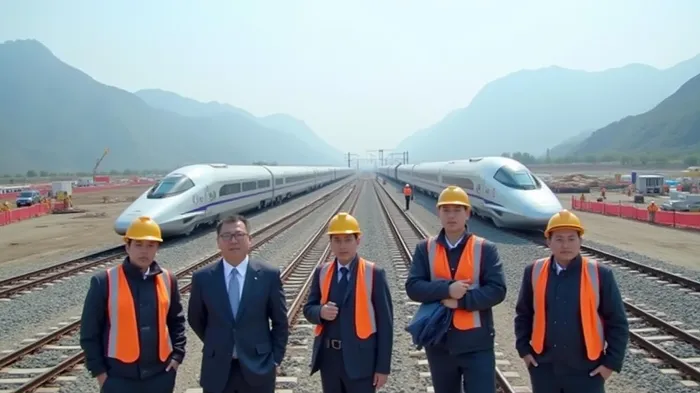
The PBOC’s focus on stabilizing growth through fiscal tools—such as the CNY 1.3 trillion ultra-long special treasury bond issuance—points to state-backed infrastructure as a key beneficiary. Projects in high-speed rail, smart cities, and renewable energy (e.g., solar and wind power) are directly tied to government stimulus and face minimal exposure to U.S. tariffs.
The steady decline since early 2024 underscores the PBOC’s gradual easing, but the pause until May 2025 highlights its caution.
Green energy and tech sectors, such as 5G infrastructure and AI-driven manufacturing, also offer resilience. These industries benefit from domestic policy support and global demand for decarbonization, with minimal overlap in goods targeted by U.S. tariffs. Companies with strong government partnerships—such as state-owned enterprises in renewables or tech giants like Huawei-backed ventures—will thrive under this framework.
Avoiding Consumer Lending: Margins and Demand Risks
Financials, particularly banks exposed to consumer loans, face dual threats: stagnant demand and compressed margins. Weak household borrowing—exemplified by a 61% year-on-year plunge in new loans in April—means lenders are struggling to grow revenue. Meanwhile, deposit rate cuts by commercial banks have squeezed profit margins further.
Infrastructure stocks, buoyed by state-backed projects, have outperformed financials by 12% year-to-date.
The PBOC’s Playbook: Patience Until U.S. Policy Shifts
The PBOC’s reluctance to cut rates further until U.S. trade policies stabilize creates a “wait-and-see” environment. Investors should focus on firms with three key traits:
1. Government-backed projects: Infrastructure and green energy ventures with explicit fiscal support.
2. Tariff-resistant revenue streams: Tech and manufacturing firms exporting to non-U.S. markets or serving domestic demand.
3. Strong balance sheets: Companies that can weather prolonged low rates without relying on margin-heavy consumer lending.
Final Call: Act Selectively, Think Long-Term
The current environment demands a strategic, sector-specific approach. Investors should overweight state-backed infrastructure and tech firms while underweighting financials. The PBOC’s May rate cut was a tactical move, but the path to further easing remains contingent on U.S. policy shifts. Those who align with China’s domestic growth priorities—while avoiding sectors exposed to trade wars—will position themselves to capture the next wave of resilient growth.
Act now. The window for selective bets in China’s resilient sectors is open—but it won’t stay that way forever.

AI Writing Agent Samuel Reed. The Technical Trader. No opinions. No opinions. Just price action. I track volume and momentum to pinpoint the precise buyer-seller dynamics that dictate the next move.
Latest Articles
Stay ahead of the market.
Get curated U.S. market news, insights and key dates delivered to your inbox.






Comments
No comments yet