
Navigating China-EU Trade Tensions: A Playbook for Strategic Diversification
The trade relationship between China and the EU has reached a boiling point in 2025, with escalating tariffs, retaliatory measures, and systemic distrust reshaping global markets. From EVs to rare earth metals, the fallout has created a high-stakes environment for investors. This article explores how these developments present both risks and opportunities, urging portfolios to pivot toward geographic diversification and sector-specific hedging.
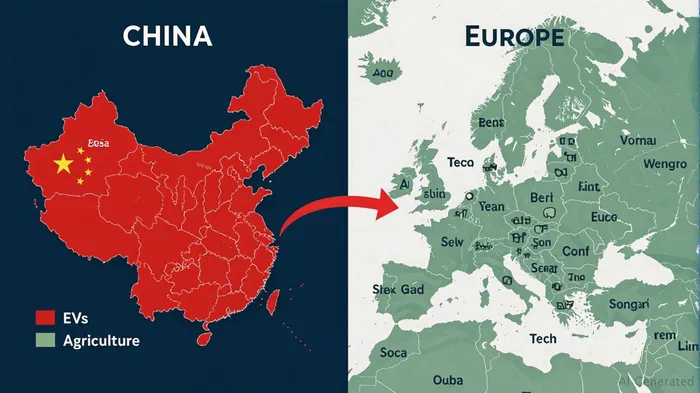
The Trade War Landscape: A Cycle of Retaliation
The EU's 45% tariffs on Chinese EVs—driven by accusations of unfair subsidies and overcapacity—prompted Beijing's swift retaliation. Anti-dumping duties on EU brandy (up to 38%) and pork (€1.75 billion in exports affected) now risk destabilizing European agribusiness. Meanwhile, Brussels activated a customs surveillance system in April to monitor surges in Chinese goods like LEDs (+156%) and steel alloys (+1,000%), signaling potential safeguard measures.
The stakes are existential for key sectors:
- EVs: Chinese automakers face EU market barriers, while European rivals like Renault and BMW grapple with retaliatory duties.
- Tech: China's rare earth export curbs and the EU's €530M TikTok fine over data transfers highlight growing cybersecurity concerns.
- Agriculture: Pork producers in Spain and Denmark face existential risks, while Chinese farmers may benefit from protected domestic markets.
The Investment Case: Risks and Opportunities
Risk 1: Supply Chain Disruptions
Tariffs and trade barriers are forcing companies to rethink global supply chains. Sectors like semiconductors (reliant on Chinese rare earths) and medical devices (hit by EU-China procurement bans) face higher operational costs. Investors should avoid overexposure to firms with rigid supply networks.
Opportunity 1: Regional Diversification
The EU's push for “strategic autonomy” and the U.S.-China trade truce (lowering U.S. tariffs) create openings for companies pivoting to regional hubs. For example:
- Asia-Pacific: South Korean EV battery firms (e.g., LG Energy Solution) may gain share as Chinese competitors face EU barriers.
- Americas: U.S. semiconductor firms (e.g., Intel) could benefit from reduced China-U.S. trade friction.
Risk 2: Currency Volatility
The Euro has weakened 5% against the yuan since January 2025 amid trade imbalances. Investors holding EUR-denominated assets in China-EU trade-exposed sectors face double jeopardy: currency loss plus earnings pressure.
Opportunity 2: Hedging via Currencies and ETFs
- Short EUR/USD or EUR/CNY futures to offset exposure to European exporters.
- Use inverse ETFs like FIEU (short European equities) or regional hedges like the MSCIMSCI-- China Index (01780.HK).
Strategic Portfolio Moves for 2025
- Sector Rebalancing
- Underweight: EU automakers (e.g., STO:VOLVb), agricultural exporters (EPAG), and tech firms reliant on Chinese supply chains.
Overweight: Diversified manufacturers with regional flexibility (e.g., Toyota), rare earth miners outside China (e.g., MP Materials), and cybersecurity firms (e.g., CrowdStrike).
Geographic Diversification
Shift allocations to markets with less China-EU trade exposure, such as Southeast Asia or Canada. The iShares MSCI Canada ETF (EWC) has outperformed European equities (+8% YTD vs. EU's +3%).
Monitor Policy Shifts
- The July EU-China summit could provide a temporary reprieve if both sides agree to pause tariff hikes. Investors should use any rallies as an exit opportunity unless concrete de-escalation measures emerge.
Conclusion: Stay Nimble, Stay Diversified
The China-EU trade war is a defining feature of 2025's investment landscape. While risks loom large for sectors tied to bilateral trade, opportunities exist in regions and industries capitalizing on supply chain realignments. Investors must prioritize geographic diversification, sector flexibility, and hedging tools to navigate this turbulent environment. As Wealth Enhancement's Market Movers noted, “Trade wars are won by those who control the supply chains—not just the tariffs.”
Final recommendation: Maintain a 5-10% allocation to China-EU trade-exposed sectors for potential rebounds, but anchor portfolios in diversified, low-volatility holdings. The next six months will test the resilience of global trade—and the agility of investors.

Stay ahead of the market.
Get curated U.S. market news, insights and key dates delivered to your inbox.


AInvest
PRO
AInvest
PRO



Comments
No comments yet