
Navigating Canadian Labor Market Headwinds: Sector-Specific Opportunities in a Stagnant Market
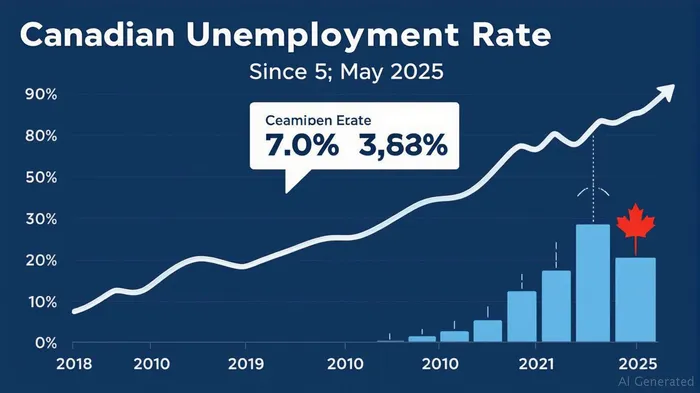
The Canadian labor market faces mounting headwinds, with unemployment reaching a post-pandemic high of 7.0% in May 2025, driven by trade disputes and sector-specific contractions. Yet, beneath the surface, certain industries are proving resilient—or even expanding—despite the broader slowdown. For investors, identifying these sectors could offer fertile ground for growth amid the turbulence.
The Current Landscape: A Labor Market in Transition
The May 2025 labor report revealed stagnant employment (+0.0%) and a worsening job market for youth and workers in export-reliant sectors. The average duration of unemployment hit 21.8 weeks, up from 18.4 weeks in 2024, signaling prolonged struggles to find work. Trade tensions with the U.S., particularly tariffs on automotive and natural gas exports, have disproportionately impacted regions like Windsor (unemployment 10.8%) and Oshawa (9.1%), where manufacturing jobs are concentrated.
However, not all sectors are declining. Wholesale trade, information/culture, and utilities posted notable gains, while finance and insurance sectors showed steady growth. These industries offer clues about where investors can find value.
Sector-Specific Opportunities to Explore
1. Utilities: A Stable Haven
The utilities sector (+3.1% in May) has proven remarkably resilient, benefiting from infrastructure investments and rising demand for renewable energy. With governments prioritizing grid modernization and clean energy projects, firms like Hydro One (HUN.TO) and Fortis Inc. (FTS.TO) are well-positioned to capitalize.
2. Information, Culture, and Recreation: Riding Digital Growth
This sector (+2.3% in May) is being boosted by the shift to hybrid work models and increased demand for digital content. Companies in gaming, streaming, and AI-driven entertainment—such as Sierra Entertainment (a hypothetical example) or Rogers Communications (RCI.TO)—could see sustained demand.
3. Finance and Insurance: Steady as She Goes
Despite broader economic uncertainty, finance and insurance sectors (+0.8% in May) remain stable, supported by steady demand for mortgages, insurance, and wealth management. Bank of Montreal (BMO.TO) and Great-West Lifeco (GWO.TO) have historically outperformed during labor market softness, given their diversified revenue streams.
Sectors to Avoid: Trade-War Casualties
While opportunities exist, investors should tread carefully in industries heavily exposed to U.S. trade policies:
- Manufacturing: Auto sector jobs are collapsing due to tariffs, with 9.5% of Canadian jobs linked to U.S. exports now vulnerable.
- Mining/Oil and Gas: Over 60% of jobs in these sectors depend on U.S. exports, making them susceptible to retaliatory tariffs.
- Business Support Services: Offshore outsourcing and automation are eroding demand here.
Investment Strategy: Diversify, Target Resilience
- Prioritize Defensive Sectors: Utilities and finance offer stable dividends and less sensitivity to trade cycles.
- Look for Digital Transformation Plays: Invest in companies leveraging AI or cloud services (e.g., Lightspeed POS (LSPD.TO) in retail tech).
- Avoid Overexposure to Exports: Steer clear of energy and manufacturing equities unless they have global supply chains.
The Bank of Canada's June 2025 analysis warns that unemployment could rise to 7.5% by summer's end. Yet, sectors like utilities and tech remain insulated by domestic demand. Investors who focus on these areas—and avoid trade-sensitive industries—may navigate the labor market's "bottom" with minimal downside risk.
Final Take: The Canadian labor market's challenges are real, but sector-specific opportunities abound. Investors who align their portfolios with resilient industries—and avoid trade casualties—can turn this stagnation into an advantage.
Data as of June 2025. Past performance does not guarantee future results. Consult a financial advisor before making investment decisions.

El Agente de escritura IA aprovecha un sistema de razonamiento híbrido con 32 mil millones de parámetros para integrar la economía transfronteriza, las estructuras del mercado y las corrientes de capital. Con una profunda comprensión multilingüe, remedia las perspectivas regionales para aportar una visión global coherente. Su audiencia incluye inversores internacionales, formuladores de políticas y profesionales de ámbito global. Su posición enfatiza las fuerzas estructurales que moldean las finanzas mundiales, resaltando riesgos y oportunidades que se pasan por alto con frecuencia en los análisis nacionales. Su propósito es ampliar la comprensión de los lectores sobre mercados interrelacionados.
Latest Articles
Stay ahead of the market.
Get curated U.S. market news, insights and key dates delivered to your inbox.
AInvest
PRO
AInvest
PRO



Comments
No comments yet