
Navigating the U.S.-Canada Trade Tariff Crossroads: Sectoral Risks and Opportunities in Equity Markets
The escalating U.S.-Canada trade tensions, marked by a 35% tariff hike on Canadian goods effective August 1, 2025, have thrown equity markets into a sectoral reckoning. While the S&P 500 has defied the gloom with record highs, investors must dissect the uneven impact of tariffs across industries to navigate risks and uncover hidden opportunities. This analysis maps vulnerabilities and strategies in manufacturing, energy, and technology—sectors now at the heart of this transcontinental standoff.
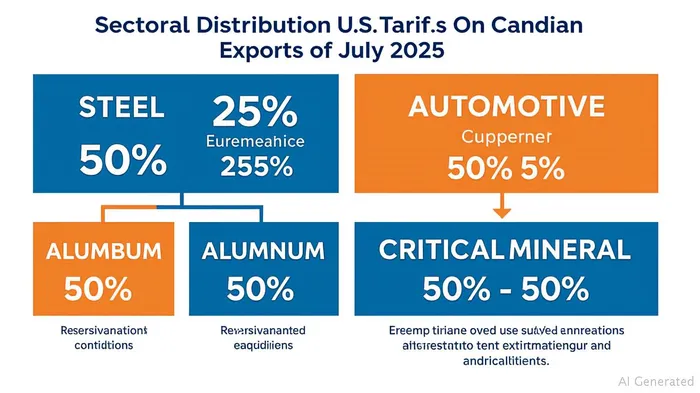
Manufacturing: Bracing for Input Cost Shocks and Supply Chain Fractures
The manufacturing sector is ground zero for tariff fallout. The 25% U.S. auto tariffs, compounded by a 50% spike in steel and aluminum duties, have sent tremors through supply chains. Automakers like General Motors and Ford, reliant on Canadian steel and parts, face margin pressure as input costs surge. Meanwhile, Canadian manufacturers exporting to the U.S.—such as Stelco or Algoma Steel—now confront retaliatory tariffs on their industrial goods.
GM's share price has dipped 8% since March, underperforming the broader market by 12%, reflecting investor anxiety over cost pass-through risks.
Investment Implications:
- Underweight automakers and steel producers exposed to U.S.-Canada trade flows.
- Overweight manufacturers with diversified supply chains or hedging strategies.
- Consider short positions in ETFs tracking automotive and industrial equities (e.g., IYT, XLI).
Energy: Oil's Safe Passage vs. Critical Minerals' Crossfire
The exemption of oil from U.S. tariffs has shielded Canada's $100+ billion annual crude exports. However, critical minerals—copper and nickel, vital for clean energy and defense—are now subject to 50% duties. This creates a stark divergence:
- Oil and gas firms like Suncor Energy or Cenovus may benefit from stable demand and U.S. market access.
- Copper and nickel miners (e.g., First Quantum Minerals, Ferrometals) face a double whammy: reduced U.S. demand and inflated export costs. The U.S. military and utilities, dependent on Canadian minerals, may turn to alternative suppliers like Chile or Indonesia, further squeezing margins.
Copper prices have risen 15% since May, reflecting supply disruptions, but the tariff's long-term impact on North American mining stocks remains uncertain.
Investment Implications:
- Rotate into energy equities focused on oil and natural gas, while avoiding critical mineral-heavy miners.
- *Consider shorting Canadian copper/nickel ETFs (e.g., COPX) and investing in U.S. firms developing domestic mineral reserves.
Technology: Digital Services Tax Averted, but Supply Chain Risks Linger
While Canada's decision to rescind its proposed 3% digital services tax averted a direct hit to U.S. tech giants like Amazon and Meta, broader tariff pressures linger. Canadian tech exporters (e.g., Shopify, BlackBerry) face retaliatory tariffs on U.S. goods, complicating cross-border operations. Meanwhile, the U.S. tech sector's reliance on Canadian minerals for semiconductors and batteries introduces indirect exposure to supply chain bottlenecks.
Shopify's shares have declined 18% year-to-date, with trade tensions exacerbating concerns over global e-commerce slowdowns.
Investment Implications:
- Avoid Canadian tech exporters with U.S.-centric revenue streams.
- Focus on U.S. tech firms with diversified supply chains or those investing in North American mineral alternatives.
Economic and Market Context: The "TACO" Effect vs. Structural Risks
Despite the tariff escalation, equities have rallied on hopes of eventual resolution—a phenomenon dubbed the "TACO" (Tariff Anxiety-Confusion-Optimism) effect. The Bank of Canada's warning of a 2.5-4% GDP contraction underscores the stakes, but markets are pricing in a "soft landing" scenario. However, structural risks loom:
- North American supply chains in autos and energy may fragment, favoring firms with geographic flexibility.
- Currency fluctuations (USD/CAD volatility) could amplify sector-specific returns.
Portfolio Reallocation Strategy
- Sector Rotation:
- Reduce exposure to U.S. manufacturing and Canadian critical minerals.
- Increase stakes in energy equities (oil/gas) and defensive tech with global supply chains.
- Geographic Diversification:
- Overweight Canadian equities in sectors insulated from tariffs (e.g., financials, healthcare).
- Underweight U.S. industrials reliant on Canadian inputs.
- Hedging Tools:
- Use currency forwards to mitigate USD/CAD exposure.
- Deploy put options on tariff-sensitive ETFs.
Conclusion
The U.S.-Canada tariff war is a sectoral minefield, but it also offers asymmetric opportunities. Investors should prioritize defensive plays in energy, avoid manufacturing and mineral-exposed equities, and remain agile to exploit any policy pivots. As trade tensions evolve, portfolios must be recalibrated not just to survive, but to thrive in this new era of supply chain fragmentation.
Data sources: U.S. International Trade Commission, Bank of Canada, Bloomberg, and company earnings reports.

Stay ahead of the market.
Get curated U.S. market news, insights and key dates delivered to your inbox.
AInvest
PRO
AInvest
PRO



Comments
No comments yet