
Navigating U.S.-Canada Tariff Turbulence: How to Invest in a Trade-War Era
The escalating tariff war between the U.S. and Canada, set to intensify with a 35% levy on non-USMCA-compliant imports effective August 1, 2025, has created significant headwinds for energy and manufacturing sectors. For investors, this environment demands a sharp focus on companies with geographic flexibility, diversified revenue streams, or hedging strategies to withstand supply chain disruptions. Here's how to navigate the risks—and find opportunities.
Energy Sector: USMCA Compliance Shields Some, Copper Risks Loom
The energy sector faces a split outcome. Canadian firms compliant with the U.S.-Mexico-Canada Agreement (USMCA) retain a competitive edge, while non-compliant players grapple with tariffs. Pipelines like EnbridgeENB-- (ENB) and TC EnergyTRP-- (TRP) remain largely insulated due to their cross-border operations meeting USMCA rules. However, Canadian oil producers such as Cenovus EnergyCVE-- (CVE) and Petroliam Canada (PCZ) face higher costs unless U.S. buyers absorb tariffs via reduced pricing or CAD weakness offsets the burden.
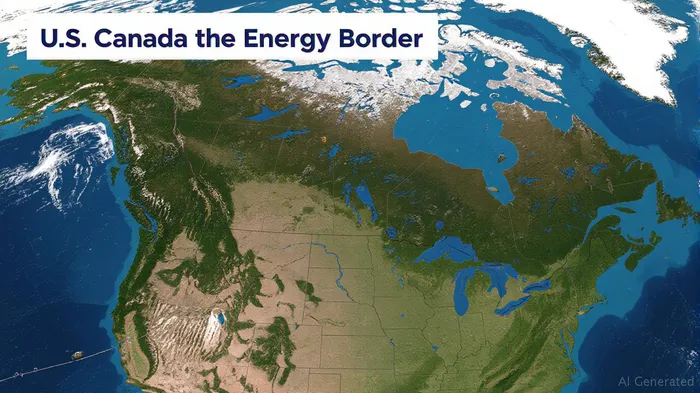
Copper's Double-Edged Sword: The 50% tariff on Canadian copper imports adds a new layer of risk. U.S. firms reliant on Canadian copper for power grids, defense, and data centers—like General Electric (GE) and BoeingBA-- (BA)—may face higher input costs. Meanwhile, Canadian miners like First Quantum Minerals (FM) could see demand shift to lower-cost suppliers like Chile or China, though geopolitical risks complicate that pivot.
Manufacturing Sector: Automakers and Industrial Firms at Crossroads
The automotive and industrial sectors are ground zero for tariff fallout. Non-USMCA-compliant auto parts now face 35% tariffs, pushing manufacturers to restructure supply chains or shift production to compliant regions. Firms like Magna InternationalMGA-- (MGA), which meets USMCA's regional value content (RVC) rules, benefit from stability. Conversely, U.S. competitors like American Axle & Manufacturing (AXL) could gain market share by displacing Canadian imports.
Diversification Pays: Companies with global supply chains or hedging tools—such as 3MMMM-- (MMM), which sources materials from multiple countries—can mitigate risks. Others, like CaterpillarCAT-- (CAT), may leverage U.S.-based production to avoid tariffs altogether.
Investment Strategies for Tariff Resilience
- Prioritize USMCA-Compliant Firms: Look for companies explicitly meeting USMCA rules, as they avoid the brunt of tariffs.
- Hedge with Currency Exposure: CAD weakness could offset tariffs for U.S. buyers of Canadian goods. ETFs like iShares MSCI Canada ETF (EWC) offer exposure to Canadian equities while hedging against currency swings.
- Focus on Diversified Supply Chains: Stocks like 3M (MMM) and General Electric (GE) exemplify firms with global flexibility.
- Avoid Tariff-Exposed Materials: Steer clear of copper-heavy equities unless prices stabilize or geopolitical alternatives emerge.
ETF and Stock Recommendations
- Energy Plays:
- iShares U.S. Energy ETF (IYE): Tracks U.S. energy firms, including those less reliant on Canadian imports.
- Enbridge (ENB): A USMCA-compliant pipeline operator with steady dividends.
Manufacturing Resilience:
- iShares U.S. Industrials ETF (IYJ): Includes diversified industrial firms like 3M and Caterpillar.
Magna International (MGA): Benefits from USMCA compliance and automotive demand.
Hedging Tools:
- Inverse CAD ETFs: Options like IQ CAD Currency Inverse ETF (CDN) can hedge against CAD depreciation.
- Global Infrastructure ETFs: iShares Global Infrastructure ETF (IGF) offers exposure to cross-border projects.
Conclusion: Prepare for Volatility, but Stay Strategic
The U.S.-Canada tariff war underscores the fragility of North American supply chains and the need for investors to prioritize resilience. While the energy and manufacturing sectors face near-term turbulence, companies with diversified operations, hedging tools, or USMCA compliance are positioned to outperform. Monitor trade negotiations closely—any resolution before August 1 could trigger a rally—but assume the worst and build portfolios to withstand prolonged tensions.
In this volatile landscape, ETFs offering broad sector exposure and individual stocks with proven flexibility will be key to navigating the storm. Stay vigilant, but stay invested—opportunities lie where others see chaos.

Delivering real-time insights and analysis on emerging financial trends and market movements.
Latest Articles
Stay ahead of the market.
Get curated U.S. market news, insights and key dates delivered to your inbox.
AInvest
PRO
AInvest
PRO



Comments
No comments yet