
Navigating Brazil's Port Renaissance: Strategic Opportunities in Sustainable Infrastructure Development
Brazil's port infrastructure is undergoing a transformative phase, driven by ambitious projects aimed at unlocking the Amazon's economic potential and boosting trade with Asia. These developments present strategic investment opportunities, but they also require careful scrutiny of sustainability risks and regulatory compliance. Below, we dissect the key projects, their environmental implications, and the investment landscape.
The Amazon as a Logistics Hub
Brazil's Northern Arc (Arco Norte) initiative and the Pacific trade corridor exemplify its vision to position the AmazonAMZN-- as a global logistics powerhouse. The Chancay Port in Peru, a $3.4 billion project led by China's COSCO, stands out as a linchpin for this strategy. Set to become South America's largest port, it will serve as a critical endpoint for Brazil's Amazon-Pacific routes, slashing shipment times to Asia.
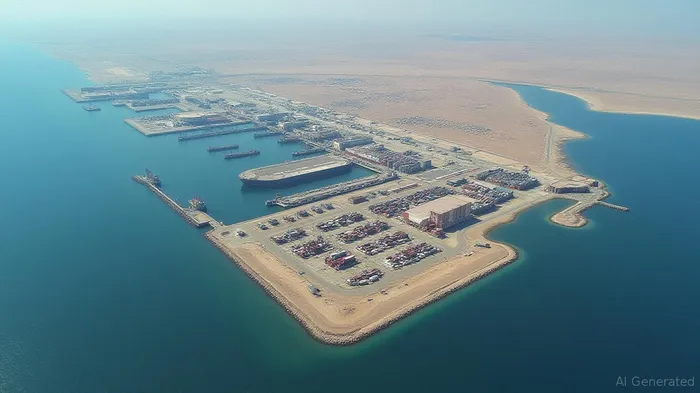
These routes, including the Solimões River dredging and Ferrogrão railway, aim to reduce logistics costs by up to 30% for commodities like soy. By 2026, Brazil's port system could handle over 14 million TEUs annually, up from 13.9 million in 2024.
Sustainability: A Double-Edged Sword
While these projects promise economic gains, their environmental footprint is contentious. The Amazon's deforestation rate has surged near infrastructure corridors, with 95% of forest loss occurring within 5.5 km of roads—a pattern linked to illegal land-grabbing. The Ferrogrão railway, for instance, faces opposition from Indigenous groups like the Kayapó, who warn of irreversible harm to the Cerrado and Amazon biomes.
To mitigate risks, investors should prioritize projects that align with Brazil's PPCDAM zero-deforestation target and adhere to the three-stage environmental licensing process under CONAMA Resolution 237/1997. Companies like Santos Brasil, which invested $116 million in 2024 to expand terminal capacity while minimizing ecological disruption, offer a blueprint for sustainable growth.
Regulatory and Financial Tailwinds
Brazil's revised Ports Law (Bill 733/2025) and partnerships with regional banks like FONPLATA are accelerating private-sector participation. The upcoming Tecon Santos 10 terminal auction (December 2025) exemplifies this shift, with a $940 million investment expected to boost container capacity by 50%.
Investors in infrastructure funds or equity stakes should also monitor greenfield projects such as Suape (PE) and Itapoá (SC), where APM Terminals and Maersk are expanding low-emission terminals.
Investment Considerations
- Opportunities:
- Sustainable Logistics: Back projects integrating renewable energy (e.g., solar-powered cranes) and digital tracking systems to reduce emissions.
- Government-Backed Concessions: Bid for port leases in the Arco Norte, where transparency and compliance are enforced.
- Asian Partnerships: Leverage China's Belt and Road Initiative (BRI) for funding but diligence on environmental clauses in contracts.
- Risks:
- Deforestation Penalties: Non-compliance with PPCDAM could lead to fines (up to $10 million) or license revocation.
- Social Opposition: Delays or cancellations, such as those faced by the Tocantins-Araguaia Waterway, highlight reputational risks.
Conclusion: A Balanced Playbook
Brazil's port boom offers compelling returns for investors willing to navigate its complexities. Focus on projects with:
1. Strong ESG frameworks that align with PPCDAM and CONAMA standards.
2. Transparent financing from institutions like the Brazilian Development Bank (BNDES) or multilateral funds.
3. Technological innovation to enhance efficiency while minimizing ecological impact.
The Chancay Port and Ferrogrão railway are early indicators of Brazil's ambitions, but their long-term success hinges on balancing growth with sustainability. For investors, this is a high-reward, high-stakes frontier—requiring vigilance as much as vision.
Final Note: Monitor Brazil's 2025 auctions for Arco Norte leases and the Tecon Santos 10 terminal for entry points into this dynamic sector.

Delivering real-time insights and analysis on emerging financial trends and market movements.
Latest Articles
Stay ahead of the market.
Get curated U.S. market news, insights and key dates delivered to your inbox.


AInvest
PRO
AInvest
PRO



Comments
No comments yet