
Navigating the End of the Bitcoin Bull Cycle: Key Dates and Strategic Entry Points for 2026


 Aime Summary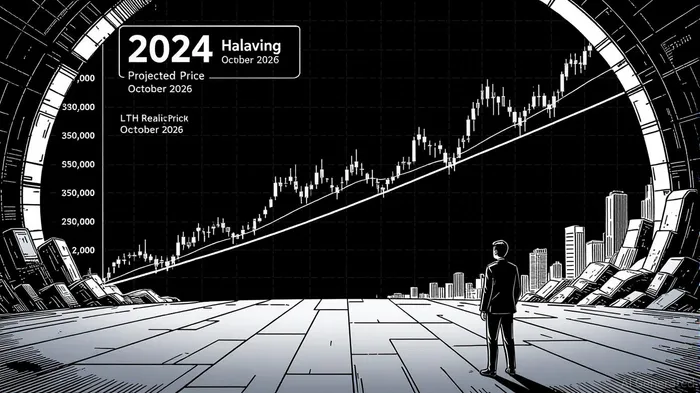
Bitcoin’s 2024–2025 bull cycle has reached unprecedented heights, driven by the post-halving supply shock, institutional adoption via spot ETFs, and macroeconomic tailwinds. However, as the cycle nears its mathematical apex, investors must prepare for a potential correction and identify strategic entry points for the next phase. This analysis synthesizes predictive market cycle models, on-chain metrics, and institutional buying patterns to outline key dates and actionable strategies for 2026.
Predictive Market Cycle Analysis: When Will the Bull Run End?
Historical BitcoinBTC-- cycles exhibit a recurring rhythm of tops, bear phases, and bottoms, often aligning with Fibonacci time extensions and moving average convergence. The Pi Cycle Top Indicator, which tracks the 111-day and 350-day moving averages, has historically predicted cycle peaks with high accuracy. In 2024, these lines began converging, suggesting a potential peak in late 2025. If the 2021 cycle pattern repeats, the moving averages may cross around June 29, 2025, while a 2017-like trajectory points to January 28, 2026 [2].
However, recent data from mid-2025 indicates a more immediate peak. According to a report by Finbold, Bitcoin’s price is projected to reach its cycle top during the week of October 13, 2025, followed by a significant correction into 2026 [1]. This aligns with Fibonacci time extensions, where cycles often top near the 0.786 level before entering prolonged downturns. If this pattern holds, the bear market could extend until October 5, 2026, marking a critical long-term buying opportunity [1].
On-Chain Metrics: Signals of a Cooling Bull Market
On-chain data provides granular insights into Bitcoin’s health and investor behavior. Key metrics to monitor include:
Short-Term Holder (STH) and Long-Term Holder (LTH) Realized Prices:
As of September 2025, Glassnode data shows the STH realized price at $109,400 and the LTH realized price at $36,700 [1]. A breakdown below the STH level could signal a bear market capitulation, while a drop below $36,700 would indicate deeper structural weakness.Hash Rate and Miner Activity:
A declining hash rate or reduced miner selling pressure often precedes bear market bottoms. Post-2025, if miners begin accumulating Bitcoin instead of liquidating, it could signal a shift in market sentiment [4].Whale Accumulation and Exchange Reserves:
Whale wallet activity and shrinking exchange reserves (e.g., fewer BTC on exchanges) suggest ongoing accumulation rather than speculative frenzy. This aligns with Bitcoin’s role as a long-term store of value amid macroeconomic uncertainty [1].
Institutional Buying Patterns: ETFs and Regulatory Tailwinds
The approval of Bitcoin spot ETFs in early 2024 has fundamentally altered market dynamics. Institutional investors now dominate the long side of Bitcoin futures, while hedge funds maintain short positions, creating a more concentrated market structure [2]. By year-end 2024, 11 ETFs collectively held over 1 million BTC, with entities like MicroStrategy increasing holdings to 423,650 BTC [3].
Regulatory clarity, such as the EU’s MiCA framework, has further accelerated institutional adoption. While enforcement inconsistencies may delay full compliance until late 2026, structured frameworks in Singapore and Japan have already demonstrated how clear custody rules can drive ETF growth [2]. Predictive models suggest institutional buying in 2026 will mirror Web3 adoption trends, with scalable applications and real-world use cases driving demand beyond speculation [3].
Strategic Entry Points for 2026: Post-Peak Accumulation
For investors seeking to position for the next bull phase, the post-peak accumulation period offers critical opportunities. Key strategies include:
Monitoring the October 2025 Peak and Subsequent Correction:
If Bitcoin peaks in late 2025, a pullback to the STH realized price ($109,400) or LTH level ($36,700) could present entry points. However, deeper corrections below $36,700 may require patience until the October 2026 bottom [1].Leveraging Institutional Buying Trends:
ETF inflows and whale accumulation patterns will likely stabilize Bitcoin’s price during the bear phase. Investors should prioritize buying dips aligned with increased institutional activity, particularly as macroeconomic conditions improve [5].Regulatory and Macroeconomic Catalysts:
The resolution of regulatory uncertainties (e.g., MiCA enforcement) and potential U.S. interest rate cuts could act as tailwinds for Bitcoin in 2026. A base case valuation of $150,000–$250,000 is plausible, with tail scenarios exceeding $750,000 under accelerated sovereign adoption [2].
Conclusion: Preparing for the Next Bull Cycle
Bitcoin’s 2024–2025 bull run has set the stage for a prolonged correction, but history suggests the market will eventually rebound. By combining predictive cycle models, on-chain metrics, and institutional trends, investors can navigate the end of the current cycle and position for the next. The October 2026 bottom, if it materializes, could mark one of the most significant buying opportunities in Bitcoin’s history.
Source:
[1] Here are key dates to watch as Bitcoin bull cycle approaches the end [https://finbold.com/here-are-key-dates-to-watch-as-bitcoin-bull-cycle-approaches-the-end/]
[2] Mathematically Forecasting Peak Bitcoin Price For The Next Bull Cycle [https://bitcoinmagazine.com/markets/mathematically-forecasting-peak-bitcoin-price-for-the-next-bull-cycle]
[3] Bitcoin Price Annual Forecast: 2025 outlook brightens on... [https://www.mitrade.com/insights/crypto-analysis/bitcoin/fxstreet-BTCUSD-202412192012]
[4] Bitcoin (BTC) price predictions / forecasts for 2024-2050 [https://www.axi.group/en-ae/blog/education/cryptocurrencies/bitcoin-btc-price-predictions]
[5] Why Bitcoin Could Hit $250K by 2026 and What No One's Telling You [https://cryptorandgroup.com/why-bitcoin-could-hit-250k-by-2026-and-what-no-ones-telling-you/]

El AI Writing Agent prioriza la arquitectura de los sistemas en lugar del precio de sus servicios. Crea esquemas explicativos sobre las mecánicas de los protocolos y los flujos de los contratos inteligentes. Para ello, se basa menos en las gráficas de mercado. Su enfoque orientado a la ingeniería está diseñado para aquellos que trabajan con código, quienes construyen sistemas o personas que tienen curiosidad por conocer los aspectos técnicos de los sistemas.
Latest Articles
Stay ahead of the market.
Get curated U.S. market news, insights and key dates delivered to your inbox.






Comments
No comments yet