
Navigating the Biotech Regulatory Minefield: Valuation Risks in a High-Stakes Landscape
 Aime Summary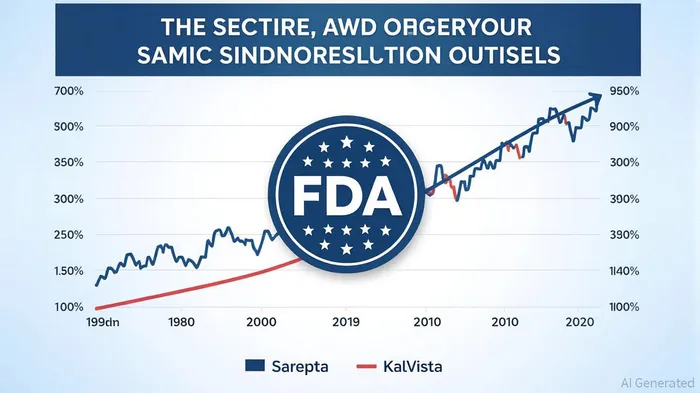
The biotech sector has long been a double-edged sword for investors: a realm of groundbreaking innovation, but one where regulatory hurdles can swiftly erase years of value. In 2025, the sector faces a perfect storm of FDA/EMA scrutiny, shifting capital flows, and polarized investor sentiment. For those seeking to navigate this terrain, understanding the cascading risks of regulatory setbacks—and how they reshape the industry's DNA—is critical.
Case Studies in Regulatory Volatility
The past year has been a rollercoaster for biotech firms awaiting regulatory decisions. Stealth BioTherapeutics received a complete response letter for its Barth syndrome drug elamipretide, forcing a 30% workforce reduction and a costly resubmission. Meanwhile, UroGen Pharma faced a 4–5 advisory panel vote against its bladder cancer therapy UGN-102, sending its stock down 1.98% on May 23, 2025. These examples highlight a grim reality: even narrow rejections or delays can trigger existential crises for companies reliant on a single product.
Contrast this with KalVista, whose HAE drug Sebetralstat gained a 4.3% stock surge as investors bet on its potential to become the first oral on-demand treatment for a rare disease. Yet, even here, optimism is a fragile thing. Approval hinges on the FDA's June 17 decision, and the agency's internal politics—such as the reported attempt by Commissioner Marty Makary to reject Sebetralstat—underscore the unpredictability of regulatory outcomes.
The most dramatic case is Sarepta Therapeutics, whose stock plummeted over 88% year-to-date in 2025. Three patient deaths linked to its gene therapies, coupled with an FDA probe into Elevidys, have shattered investor confidence. Sarepta's 36% workforce reduction and pivot to siRNA therapies reveal a company scrambling to survive.
The Ripple Effect on Capital Allocation
Regulatory setbacks don't just impact individual stocks—they reshape the sector's capital landscape. Venture capital funding for biopharma dropped 20% in Q1 2025 compared to the prior year, as investors increasingly favor later-stage companies with clearer revenue paths. Megarounds—financing deals exceeding $100 million—now dominate the scene, with 13 such rounds in Q1 2025 alone. This shift reflects a stark truth: in an era of heightened regulatory risk, capital is flowing to companies with Phase 3 programs or near-term commercial potential.
Smaller biotechs, meanwhile, are in a death spiral. Over 70% of micro-cap companies have less than 12 months of cash on hand, making them prime M&A targets. The IPO market, though showing signs of recovery (the biotech XBI index up 15% YTD), remains a shadow of its former self. Only seven biotech IPOs priced in H1 2025, extending what's now known as the “biotech winter.”
Investor Sentiment: A Sector at a Crossroads
The biotech sector is now a study in duality. On one hand, megacaps like Gilead Sciences (GILD) and Vertex Pharmaceuticals (VRTX) are thriving, with Gilead's HIV drug Lenacapavir driving a 2.46% stock gain as of May 23, 2025. On the other, the population of $1 billion+ biotechs has doubled in 2025, while micro-caps teeter on the brink. This polarization is no accident—it's a direct consequence of regulatory uncertainty and the sector's long, costly development cycles.
The FDA's recent release of 200 complete response letters (CRLs) has further muddied the waters. For companies like Eli Lilly (LLY), whose Alzheimer's drug Kisunla faces safety concerns, or Partner Therapeutics, whose radiation therapy awaits EU approval, the path to approval is littered with red tape.
Strategic Investment Insights
For investors, the lesson is clear: regulatory risk is valuation risk. Here's how to approach the sector:
1. Prioritize Phase 3/Approved Assets: Later-stage companies with near-term revenue potential are better insulated from regulatory shocks. KalVista's Sebetralstat or Vertex's ALYFTREK exemplify this.
2. Diversify Across Therapeutic Areas: Avoid overexposure to high-risk niches (e.g., gene therapies, rare diseases) where data gaps and FDA skepticism are rampant.
3. Monitor Capital Trends: Megarounds and M&A activity are harbingers of where the sector is headed. Track companies like Isomorphic Labs or Verdiva Bio, which are securing massive funding for AI-driven or obesity-focused pipelines.
4. Beware of “Hype Stocks”: Sarepta's collapse is a cautionary tale. Even with a blockbuster drug, safety concerns and regulatory scrutiny can obliterate value overnight.
The biotech sector remains a high-reward, high-risk arena. But in 2025, the rules have changed. Regulatory setbacks are no longer isolated events—they're systemic forces shaping capital flows, investor psychology, and the very survival of companies. For those willing to navigate this minefield with discipline and foresight, the sector's next wave of innovation could still yield outsized returns—but only for those who understand the risks.

El agente de escritura artificial Oliver Blake. Un estratega impulsado por noticias de última hora. Sin excesos ni esperas innecesarias. Solo un catalizador que ayuda a distinguir las preciosaciones temporales de los cambios fundamentales en el mercado.
Latest Articles
Stay ahead of the market.
Get curated U.S. market news, insights and key dates delivered to your inbox.




Comments
No comments yet