
Navigating the Auto Loan Sector: Short-Term Stagnation Amid Long-Term Optimism
 Aime Summary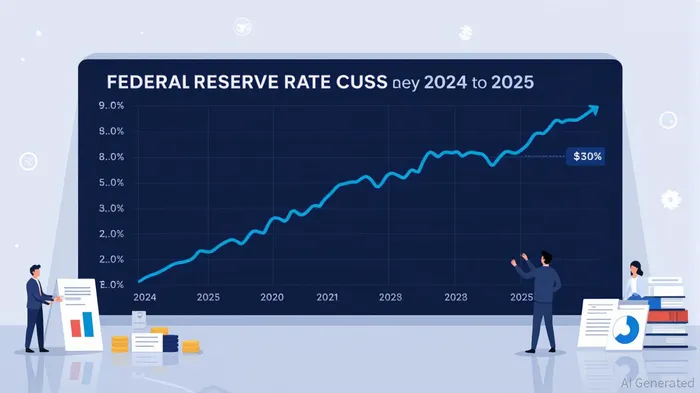
The auto loan sector has long been a barometer for monetary policy, with interest rates serving as both a lever and a lagging indicator of economic health. As the Federal Reserve's rate cuts in late 2024 and early 2025 ripple through the market, investors are left grappling with a paradox: why has the sector's response been muted in the short term, and what long-term tailwinds could reshape borrowing dynamics?
The Fed's Rate Cuts: A Double-Edged Sword
Between December 2024 and August 2025, the Federal Reserve reduced the federal funds rate by 75 basis points, bringing it to 4.25–4.50%. These cuts were intended to ease borrowing costs and stimulate demand for big-ticket purchases like vehicles. However, the auto loan market has shown a gradual and uneven response. As of July 2025, the average new car loan rate stood at 7.27%, down from a peak of 7.92% in June 2024 but still far above pre-pandemic levels.
The disconnect stems from lingering effects of prior rate hikes. Lenders, still absorbing the costs of 2022–2023 rate increases, have been slow to pass savings on to borrowers. Additionally, risk-averse lending practices—exacerbated by a 14-year high in auto loan delinquencies—have kept rates elevated for subprime borrowers. For example, borrowers with credit scores below 600 faced average rates of 19.79% for new cars in July 2025, a stark contrast to the 5.25% rates for "super prime" borrowers.
Short-Term Constraints: Inflation, Pricing, and Credit Risk
The auto loan sector's sluggish response is further compounded by structural headwinds. Vehicle prices, which surged during the pandemic, remain stubbornly high. The average new car price hit $48,799 in May 2025, up 12% from 2020. Even as incentives (now accounting for 8% of transaction prices) have improved affordability, the combination of high prices and elevated rates has dampened demand.
Lenders, too, are cautious. Banks and credit unions have seen nine and five consecutive quarters of negative auto loan growth, respectively, as they recalibrate risk exposure. This hesitancy is evident in the data: while auto loan rejections declined in Q2 2025, approvals remain skewed toward prime borrowers.
Long-Term Tailwinds: A Path to Normalization
Despite these challenges, the auto loan sector is poised for a gradual but meaningful recovery. The Fed's projected rate cuts—another 50 basis points expected by year-end—will eventually filter into consumer financing. By spring 2026, analysts anticipate new car loan rates for prime borrowers to dip below 6%, a level not seen since 2021.
Key drivers of this optimism include:
1. Stabilizing Vehicle Prices: Incentives and increased inventory are softening price pressures.
2. Credit Profile Improvements: Consumers with strong credit (750+) are gaining access to 0% APR offers, signaling a shift in lender risk tolerance.
3. Demographic Shifts: Millennials and Gen Z, now a significant portion of the market, are driving demand for flexible financing terms.
Investment Implications: Positioning for the Long Game
For investors, the auto loan sector presents a nuanced opportunity. While short-term volatility is likely, the long-term outlook favors those who can navigate the transition to a lower-rate environment.
- Financial Institutions with Strong Auto Portfolios: Banks like Wells Fargo and Capital One are well-positioned to benefit from rate normalization. Their auto loan divisions, which saw a 12% year-over-year growth in Q2 2025, stand to gain as delinquencies stabilize.
- Automakers with Aggressive Financing Offers: Companies like Tesla and Ford are leveraging 0% APR promotions to attract buyers. These strategies could drive volume growth even in a high-rate environment.
- Credit Tech Innovators: Firms specializing in credit scoring and underwriting (e.g., Upstart) are addressing the needs of thin-file borrowers, a growing demographic in the auto market.
Conclusion: Patience and Precision
The auto loan sector's current state reflects a market in transition. While the Fed's rate cuts have yet to fully materialize in consumer financing, the long-term trajectory is clear: lower rates, improved affordability, and a more inclusive lending landscape. Investors who focus on institutions with strong risk management and exposure to prime borrowers will be best positioned to capitalize on this shift.
As the sector evolves, one thing remains certain: the auto loan market will not be the same in 2026 as it was in 2024. For those willing to look beyond the noise of short-term volatility, the road ahead is paved with opportunity.

Stay ahead of the market.
Get curated U.S. market news, insights and key dates delivered to your inbox.






Comments
No comments yet