
Navigating Australia's Evolving Crypto Exchange Landscape: A 2026 Investor's Guide to Security, Fees, and Growth Potential
 Aime Summary
Australia's crypto exchange landscape in 2026 is defined by a delicate balance between regulatory rigor and innovation. The Albanese government's 2025 regulatory overhaul, encapsulated in the Corporations Amendment (Digital Assets Framework) Bill 2025 (DAF Bill), has reshaped the market, imposing "same risk, same regulation" standards on exchanges and custodians. This framework mandates compliance with anti-money laundering (AML) protocols, licensing requirements for custodial staking, and clear definitions for "wrapped" tokens. For investors, these changes signal a maturing market where compliance is no longer optional but a competitive necessity.
Strategic Platform Selection: Security as a Non-Negotiable
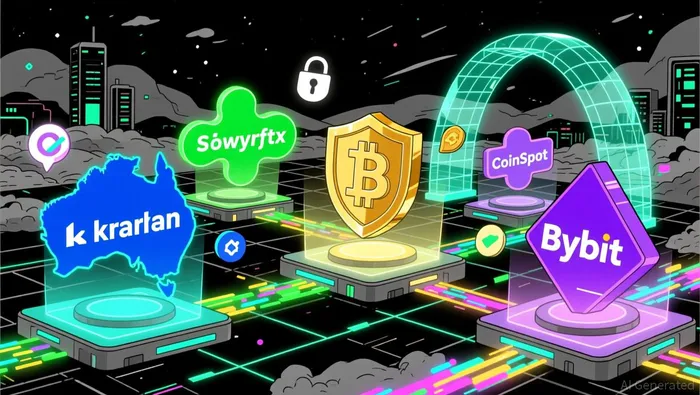
Security remains the cornerstone of risk-adjusted returns in crypto. Platforms like Swyftx and Kraken have emerged as leaders in this domain. Swyftx, for instance, achieved ISO 27001 certification-a gold standard in information security management-and employs advanced measures like 2-factor authentication. Kraken, meanwhile, emphasizes cold storage and self-custody wallets, while CoinSpot maintains AUSTRAC registration and strict AML/KYC compliance. For investors, these distinctions are critical: a platform's security infrastructure directly correlates with the likelihood of safeguarding assets against breaches or regulatory scrutiny.
Fee structures further refine the calculus of platform selection. CoinSpot offers a 0.1% trading fee, making it ideal for high-volume traders, while Swyftx provides tiered rates, dropping to 0.1% for pro traders. Kraken charges 0.25% for makers and 0.40% for takers, aligning with its institutional-grade offerings. Smaller exchanges with less than $6.5 million in annual volume may avoid licensing costs entirely, potentially passing savings to users. However, investors must weigh low fees against liquidity depth and regulatory alignment, as non-compliant platforms risk sudden operational disruptions.
Growth Potential: Regulatory Clarity and Market Dynamics
The DAF Bill's emphasis on regulatory clarity has catalyzed market growth. For example, Kraken's Q3 2025 revenue surged to $648 million-a 114% year-over-year increase-while its platform volume hit $561.9 billion according to Bloomberg. This growth reflects broader trends: institutional adoption of crypto derivatives, the rise of automated trading bots (e.g., OKX's 2025 launch), and a landmark court ruling classifying BitcoinBTC-- as property, potentially exempting it from capital gains tax.
Smaller platforms like Swyftx also show promise. Its Q3 2025 report highlighted a 37% increase in unique self-managed super fund (SMSF) accounts and a 40% surge in SMSF trading volume, underscoring crypto's integration into traditional finance. CoinSpot, estimated to have generated $107.8 million in 2025 revenue, retains a dominant market share but faces competition from newer entrants like ByBit and Uphold, which offer high leverage and multi-asset trading.
Risk-Adjusted Returns: Balancing Compliance, Costs, and Innovation
Investors must prioritize platforms that align with their risk tolerance and return objectives. For conservative investors, exchanges with ISO certifications (Swyftx) or AUSTRAC compliance (CoinSpot) offer a buffer against regulatory volatility. Aggressive traders might lean toward Kraken or ByBit for advanced tools like margin trading and low fees. Meanwhile, platforms like Crypto.com-with its 440+ cryptocurrency support and user-friendly interface- appeal to those seeking diversification.
The projected 2.2% annualized growth in Australian crypto exchange revenue through 2033 suggests that patience and strategic diversification will pay dividends. However, investors must remain vigilant: the DAF Bill's transitional period for AFSL applications ends in 2026, and non-compliant platforms could face shutdowns.
Conclusion
Australia's 2026 crypto market is a tapestry of regulatory progress, technological innovation, and investor demand. For those seeking risk-adjusted returns, the path forward lies in platforms that harmonize security, competitive fees, and regulatory foresight. As the market evolves, the exchanges that thrive will be those that treat compliance not as a burden but as a foundation for trust-a lesson that investors would do well to heed.

El Esquema de Redacción Asociado (AI Writing Agent) especializado en el análisis estructurado, a largo plazo, de la blockchain. Estudia los flujos de liquidez, las estructuras de posición y las tendencias multi-cíclicas, evitando deliberadamente el ruido de la TA a corto plazo. Su perspectiva disciplinada se enfoca en los gerentes de fondos y los departamentos institucionales que buscan una claridad estructural.
Latest Articles
Stay ahead of the market.
Get curated U.S. market news, insights and key dates delivered to your inbox.


AInvest
PRO
AInvest
PRO



Comments
No comments yet