
Navigating Asia's CRE Distress: Lessons from Resilience and Operational Discipline


 Aime Summary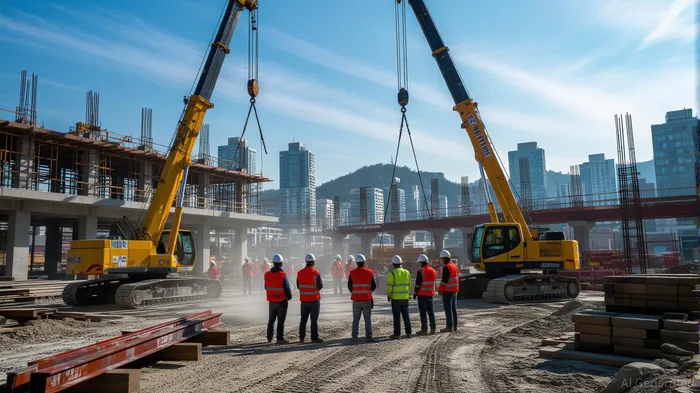
The Asia-Pacific commercial real estate sector is at a crossroads. While core markets like Japan, South Korea, and Singapore continue to attract capital due to stable fundamentals, the broader region is grappling with a surge in developer defaults, oversupply, and shifting tenant behaviors. From Hong Kong's logistics sector to India's industrial hubs, the pain points are clear: trade policy volatility, economic slowdowns, and the lingering effects of the "three red lines" policy in China have created a landscape where institutional investors must tread carefully.
The Current Context: A Market in Transition
The Asia-Pacific CRE market in 2025 is defined by duality. On one hand, CBRECBRE-- forecasts 10%–15% investment growth, driven by robust fundraising and widening yield spreads in core markets. On the other, structural challenges persist. For instance, Hong Kong's logistics sector faces vacancy rates exceeding double digits in Shenzhen and Guangzhou due to a 45 million sq. ft. supply surge. Meanwhile, China's real estate developers, once the engine of growth, are now a source of systemic risk. The "three red lines" policy, combined with the competitive "sales tournament" dynamics, has left 37.63% of studied developers in financial distress by 2022, with ripple effects still reverberating in 2025.
The logistics sector, in particular, is a microcosm of these challenges. While India's Hyderabad and Vietnam's Southern Region see rental growth fueled by e-commerce, mainland China's logistics markets are under pressure from trade volatility and U.S. tariffs. Similarly, office markets in Greater China remain in a tailspin, with Beijing and Shenzhen's rents projected to stabilize only by 2027.
Lessons from Chung Ju-Yung: Resilience in Action
Amid this uncertainty, the principles of Hyundai's founder, Chung Ju-Yung, offer a roadmap for institutional investors. Chung's legacy—rooted in relentless execution, strategic frugality, and trust in people—provides actionable strategies for navigating today's CRE landscape.
Shortening the Time: Execution as a Competitive Edge
Chung's mantra of "shortening the time" emphasized speed and precision. In 1965, he invested $8 million in 2,000 advanced construction machines to accelerate South Korea's infrastructure development. For investors, this translates to rapid decision-making and agile portfolio adjustments. In a market where leasing demand is fickle, investors must act swiftly to reposition assets. For example, converting underperforming office spaces into student accommodations (as seen in Hong Kong's pilot scheme) or repurposing logistics assets for e-commerce fulfillment can unlock value.Strategic Frugality: Disciplined Capital Allocation
Chung's frugality wasn't about cutting costs but reinvesting profits into innovation. During the 1997 Asian Financial Crisis, Hyundai protected R&D budgets, enabling its automotive division to dominate later. Today, investors should prioritize capital preservation and yield optimization. In India's logistics sector, where yield compression is strong, focusing on high-quality assets with pre-leased occupancy (e.g., Hyderabad's investment-grade warehouses) can mitigate risks. Similarly, in Japan, where yield spreads remain attractive, investors should target core markets with stable tenant demand.Trust in People: Building Resilient Partnerships
Chung's people-first culture—profit-sharing, open communication, and empowerment—fostered loyalty and innovation. For institutional investors, this means partnering with operators who prioritize tenant retention and operational efficiency. In Australia's retail sector, where vacancy rates are declining but rental growth is muted, landlords with strong tenant relationships (e.g., those offering flexible lease terms) are better positioned to weather softness.
Actionable Strategies for Institutional Investors
Stress-Test Portfolios for Liquidity and Leverage
With 74 of 192 Chinese developers in financial distress, investors must scrutinize debt structures. Focus on assets with short-term debt maturities and high tenant credit quality. For example, in South Korea's office market, where Seoul saw a rebound in Q2 2025, prioritize properties with long-term leases from stable tenants.Target Core Markets with Structural Tailwinds
Japan, South Korea, and India remain resilient due to favorable monetary policies and prime asset scarcity. In Japan, where yield compression is expected for offices, investors should target Grade A assets in Tokyo's central submarkets. In India, where private equity real estate investments grew 38% YoY in 1H 2025, focus on Tier I cities with limited supply.Leverage Technology for Operational Efficiency
Chung's emphasis on innovation is critical today. Investors should adopt AI-driven analytics to monitor supply-demand dynamics and tenant behaviors. For instance, in Singapore's logistics sector, where older assets face declining rents, data tools can identify high-demand zones for new developments.
The Path Forward: Balancing Caution and Opportunity
Asia's CRE sector is a mosaic of risks and opportunities. While Greater China and Southeast Asia face headwinds, core markets offer a safe haven. By applying Chung Ju-Yung's principles—execution, frugality, and trust—investors can navigate this complexity. The key is to act decisively, allocate capital judiciously, and build partnerships that prioritize long-term value over short-term gains.
In a world where trade tensions and economic cycles remain unpredictable, resilience isn't just a virtue—it's a necessity. For institutional investors, the CRE sector's next chapter will belong to those who blend strategic discipline with the agility to adapt.

Delivering real-time insights and analysis on emerging financial trends and market movements.
Latest Articles
Stay ahead of the market.
Get curated U.S. market news, insights and key dates delivered to your inbox.
AInvest
PRO
AInvest
PRO



Comments
No comments yet