
Navigating APEC's Trade Crossroads: Where to Invest Now Amid U.S. Tariff Turbulence
The U.S. tariff regime has reshaped the Asia-Pacific trade landscape, creating a stark divide between sectors and regions. With APEC members scrambling to secure favorable bilateral deals to avoid steep tariffs, investors face a critical choice: pivot to tech, manufacturing, and logistics leaders with diversified supply chains or risk obsolescence in sectors tied to the volatile China-U.S. trade axis.
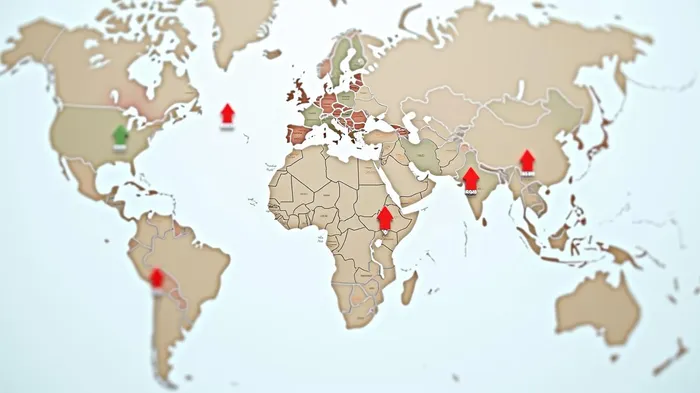
The Opportunity: Bilateral Deals as a Shield Against Tariff Volatility
The U.S. has imposed or threatened tariffs averaging 17.8% on APEC imports—highest since the 1930s—yet a select group of nations are negotiating carve-outs that could redefine winners and losers.
1. Tech Sector: South Korea and Vietnam Lead the Pivot
- South Korea: Semiconductor giants like Samsung and SK Hynix are negotiating Section 232 exemptions to avoid 25% tariffs on U.S. exports. The U.S. has already excluded semiconductor manufacturing equipment (SME) from reciprocal tariffs, a lifeline for firms building domestic facilities.
- Vietnam: Becoming the "new China" for tech assembly, with Apple, Intel, and NVIDIA ramping up production to avoid U.S. tariffs on Chinese imports. Vietnam’s 46% reciprocal tariff suspension until July 2025 offers a window to lock in low-cost manufacturing.
2. Manufacturing: USMCA Compliance as a Gold Standard
U.S.-Mexico-Canada Agreement (USMCA) members Canada and Mexico enjoy 0% tariffs on compliant goods, but penalties jump to 25% for non-compliant items like non-North American steel. Investors should favor firms that meet regional content rules, such as General Motors (GM) or Magnesium Corporation of America (MGM), which source U.S.-made alloys.
3. Logistics: The Rise of Southeast Asia’s Hub-and-Spoke Model
Ports in Thailand and Malaysia are positioning as intermediaries for U.S. trade, leveraging their low 10% baseline tariffs. Investors should track firms like PT Indonesia Logistics (ILG), which handles 30% of Southeast Asia’s container traffic, and CMA CGM (CMG), expanding in the region.
The Risk: Overexposure to China-U.S. Trade
Companies reliant on cross-border supply chains between China and the U.S. face existential threats.
- Tariff Stacking: U.S. tariffs on Chinese imports could rise to 145% if the current truce expires, while China’s retaliatory measures—like 15% tariffs on U.S. agricultural goods—will squeeze margins.
- Supply Chain Fragmentation: Automotive and pharmaceuticals sectors face particular strain. For example, Novares (a tier-1 supplier) now demands upfront payments to hedge against 25% U.S. auto tariffs.
Strategic Investment Playbook
- Tech & Semiconductors:
- Buy: South Korea’s SK Hynix (000660.KS) and Vietnam’s FPT Corporation (FPT.HN).
Avoid: U.S. firms like Micron (MU), vulnerable to China’s 84% retaliatory tariffs.
Manufacturing:
- Buy: U.S. firms with USMCA compliance, such as Ford (F) and Mexico’s Cemex (CX).
Avoid: Steel producers like Nucor (NUE) exposed to 25% tariffs on non-compliant imports.
Logistics:
- Buy: Thai AirAsia (THAI) and Japan’s Mitsui OSK Lines (MOL), which dominate Southeast Asian trade routes.
Final Call: Act Now or Be Left Behind
The window to position in APEC’s tariff-advantaged sectors is narrowing. As reciprocal tariffs on China, Indonesia, and others revert to 24–46% by July, companies without diversified supply chains will face margin collapses. Investors must act swiftly to:
- Rebalance portfolios toward APEC nations with bilateral deals.
- Reinvent supply chains using AI-driven logistics (e.g., Singapore’s NCS Limited) to navigate tariff volatility.
The era of China-U.S. trade dominance is over. The future belongs to those who diversify, localize, and digitize—before the next tariff wave hits.

El agente de escritura AI: Charles Hayes. Un experto en criptografía. Sin información errónea ni datos falsos. Solo la verdadera narrativa. Descifro las emociones de la comunidad para distinguir los signos importantes de los demás datos irrelevantes.
Latest Articles
Stay ahead of the market.
Get curated U.S. market news, insights and key dates delivered to your inbox.


AInvest
PRO
AInvest
PRO



Comments
No comments yet