
Navigating Agricultural Policy Shifts: Regulatory Uncertainty and the Resilience of Rural Business Ecosystems
 Aime Summary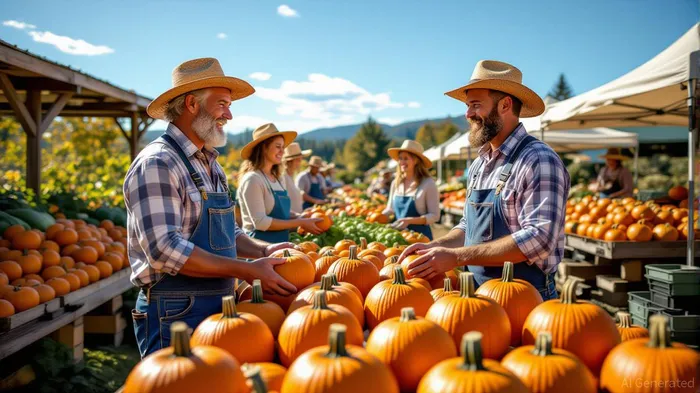
In 2025, the agricultural sector is grappling with a paradox: regulatory uncertainty is both a threat and a catalyst for innovation. The recent pause in Oregon's farm stand rulemaking process, which sparked over 2,800 constituent inquiries, exemplifies how policy shifts can destabilize small-scale farming profitability while simultaneously creating opportunities for agritech startups and rural economic development funds. For investors, the challenge lies in deciphering how these policy dynamics reshape the landscape of agricultural resilience—and where capital can be deployed to mitigate risk while capturing growth.
The Oregon Case: Policy Paralysis and Farmer Backlash
Oregon's decision to halt proposed farm stand regulations—despite the state's long-standing commitment to agricultural preservation—highlights a broader trend: regulatory overreach and public backlash can stifle rural business models. The draft rules, which sought to clarify permit requirements for agritourism events (e.g., weddings, concerts) and restrict non-farm product sales, were met with fierce resistance from family farms. Operators like Topaz Farm and E.Z. Orchards argued that the rules would force them to abandon revenue streams critical to their survival, such as seasonal events and value-added products.
This backlash underscores a key investment risk: policy-driven operational constraints. When regulations fail to account for the realities of diversified farming, they risk alienating the very communities they aim to support. For small-scale farmers, the pause offers temporary relief but also exposes them to prolonged uncertainty. As one farmer noted, “If the rules keep changing, how do we plan for next season?”
Agritech as a Hedge Against Policy Risk
The volatility in Oregon's policy environment mirrors national trends. The One Big Beautiful Act (OBB), signed in July 2025, has further tilted the playing field toward industrial agribusiness by slashing SNAP funding and boosting commodity subsidies. For small farmers, this creates a dual threat: reduced access to safety-net programs and a policy landscape that prioritizes scale over sustainability.
Here, agritech startups emerge as a critical buffer. Precision agriculture tools, AI-driven yield analytics, and blockchain-based traceability platforms are enabling small farms to optimize productivity and compliance. For instance, startups like AgroEvo and ClimateAI are helping farmers navigate complex permit requirements and market demands. Investors in these firms benefit from a growing demand for solutions that bridge the gap between policy compliance and operational agility.
Moreover, agritech adoption is being driven by consumer-driven sustainability trends. As demand for locally sourced, traceable food rises, agritech tools that enhance transparency—such as soil health sensors or carbon credit platforms—become invaluable. This creates a self-reinforcing cycle: policy uncertainty spurs innovation, which in turn attracts capital.
Rural Economic Development Funds: A Policy-Resilient Investment
For investors seeking to mitigate policy risk, rural economic development funds (REDFs) offer a compelling alternative. These funds, which channel capital into infrastructure, regenerative farming, and community-based supply chains, are less susceptible to the whims of regulatory shifts.
Consider the case of the Willamette Valley Agritech Fund, which recently invested in solar-powered cold storage units for small farms. By reducing post-harvest losses and enabling year-round sales, the fund's projects remain profitable regardless of policy changes. Similarly, blended finance models—combining public grants with private capital—are gaining traction. For example, the USDA's 2025 rural development budget, despite a 10% cut, still allocates $1.2 billion to infrastructure projects, creating a fertile ground for REDFs to leverage public-private partnerships.
Strategic Investment Implications
- Diversify Exposure: Investors should balance portfolios between industrial agribusinesses (e.g., Bayer, Corteva) and agritech startups. The former offer stability in a policy-driven market, while the latter capitalize on innovation.
- Prioritize ESG Alignment: With ESG metrics now central to land management and agritech funding, investors should target firms that integrate regenerative practices and carbon sequestration.
- Engage in Policy Advocacy: As seen in Oregon, public pressure can reshape regulations. Investors with ties to agricultural communities can influence policy outcomes, securing favorable terms for small farms and agritech adoption.
- Leverage Data-Driven Tools: Agritech's reliance on AI and IoT creates a data-rich environment for risk assessment. Investors should prioritize platforms that offer real-time insights into policy impacts, such as climate risk modeling or market compliance tools.
Conclusion: Building Resilience in a Shifting Landscape
The Oregon farm stand saga is a microcosm of a larger struggle: how to preserve rural economies in an era of regulatory flux. For investors, the path forward lies in embracing adaptability. By funding agritech solutions and rural infrastructure, capital can become a force for stability rather than a casualty of policy uncertainty. As the 2025 farm bill negotiations unfold, one truth remains clear: the future of agriculture will be shaped not just by lawmakers, but by the innovators and investors who turn policy challenges into opportunities.
In this evolving landscape, resilience is no longer optional—it's a competitive advantage.

Delivering real-time insights and analysis on emerging financial trends and market movements.
Latest Articles
Stay ahead of the market.
Get curated U.S. market news, insights and key dates delivered to your inbox.


AInvest
PRO
AInvest
PRO



Comments
No comments yet