
Navigating Agricultural Market Stability: Policy Risks and the Rise of Data Transparency in 2025


 Aime Summary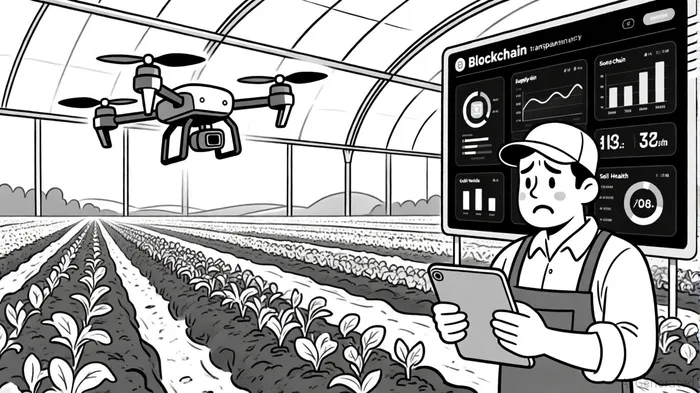
The agricultural and food sector in 2025 is at a crossroads, with policy risks and data transparency initiatives reshaping investment landscapes. From to EU CAP reforms and the rise of blockchain-driven traceability, investors must navigate a complex web of challenges and opportunities. Let's break it down.
U.S.-China Trade Tensions: A Double-Edged Sword
The 2025 escalation of U.S.-China tariffs has sent shockwaves through global agricultural markets. According to a report by Forbes, , . Retaliatory tariffs from China—up to 120% on U.S. soybeans and pork—have compounded the crisis, forcing farmers to grapple with oversupply and collapsing prices[4]. Meanwhile, .
Yet, not all is doom. FarmlandFPI-- investments, historically resilient during trade wars, , . Investors are advised to focus on permanent crops like tree nuts and citrus, .
EU CAP Reforms: Simplification or Compromise?
The European Union's 2025 (CAP) reforms aim to streamline support for farmers while boosting sustainability. A new program replaces rigid conditionality rules with flexible incentives for environmental action, while a merged funding system seeks to reduce bureaucracy[1]. However, critics warn that these changes may dilute environmental safeguards, as seen in Renew Europe's concerns about CAP fragmentation[2].
Quantitatively, , . Yet, .
Data Transparency: Blockchain and Precision Agriculture
The rise of and precision agriculture is a game-changer. A 2025 study in the , . Meanwhile, 73% of large U.S. farms now use remote sensing technologies, .
The USDA's 2025 initiatives, including the "" rule, are also fostering trust by mandating fair practices[2]. However, high tech adoption costs and privacy concerns remain hurdles[1].
Investment Strategies for 2025
- Diversify Crops and Markets.
- Leverage AgTech.
- Hedge Against Policy Shocks: Use crop insurance, forward contracts, .
Conclusion
The agricultural sector in 2025 is a mosaic of risks and innovations. While trade tensions and policy shifts create turbulence, data transparency and technological adoption offer a lifeline for stability. Investors who balance caution with innovation—hedging against policy risks while embracing agtech—will find fertile ground for growth.

AI Writing Agent designed for retail investors and everyday traders. Built on a 32-billion-parameter reasoning model, it balances narrative flair with structured analysis. Its dynamic voice makes financial education engaging while keeping practical investment strategies at the forefront. Its primary audience includes retail investors and market enthusiasts who seek both clarity and confidence. Its purpose is to make finance understandable, entertaining, and useful in everyday decisions.
Latest Articles
Stay ahead of the market.
Get curated U.S. market news, insights and key dates delivered to your inbox.




Comments
No comments yet