
Navigating the 2026 Bitcoin Bottom: Strategic Entry Points Amid Prolonged Volatility


 Aime Summary
Bitcoin's 2026 price trajectory is poised at a critical juncture, shaped by a confluence of macroeconomic shifts, regulatory clarity, and structural supply dynamics. For contrarian investors, the interplay of these factors presents a unique opportunity to identify strategic entry points amid prolonged volatility. This analysis synthesizes historical patterns, macroeconomic drivers, and regulatory developments to outline a framework for navigating the 2026 BitcoinBTC-- bottom.
Historical Cycles and the 2024 Halving: A Scarcity-Driven Narrative
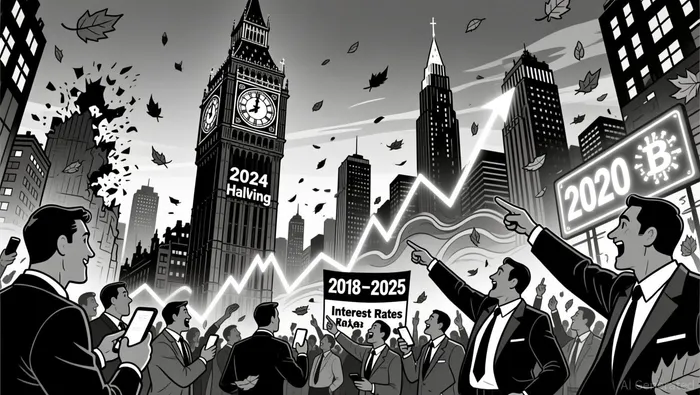
Bitcoin's four-year halving cycle remains a cornerstone of its price dynamics. The 2024 halving, which reduced miner block rewards from 6.25 to 3.125 BTC, has historically signaled a tightening of supply and a catalyst for price appreciation. Historical precedents, such as the 2017–2020 recovery, demonstrate that Bitcoin's asymmetric resilience often emerges after periods of extreme fear and capitulation according to research. For instance, the 2018 "Great Crypto Crash" saw Bitcoin plummet to $6,450, but it eventually rebounded to new highs within two years, driven by growing institutional adoption and its perceived role as a safe-haven asset.
The 2024 halving's impact is further amplified by declining exchange reserves, which are now at their lowest levels since 2018. This suggests a tighter supply environment, where reduced miner selling pressure could accelerate price discovery in 2026. However, as Raoul Pal argues, liquidity-rather than halving events-may be the dominant driver of Bitcoin's price in 2026. Central bank easing and fiscal stimulus are creating a global liquidity supercycle, reducing the opportunity cost of holding non-yielding assets like Bitcoin according to analysis.
Macroeconomic Drivers: Liquidity, Inflation, and Institutional Demand
Bitcoin's performance in 2026 is inextricably linked to macroeconomic conditions. Central banks' pivot toward easing monetary policy, with inflation declining and interest rates cutting, has historically supported Bitcoin's case as a hedge against fiat devaluation. For example, the approval of Bitcoin spot ETFs in late 2025 attracted over $115 billion in institutional capital, driven by pension funds and sovereign treasuries. This shift reflects a broader trend of institutional adoption, where Bitcoin is increasingly viewed as a strategic asset rather than a speculative trade.
Moreover, Bitcoin's correlation with traditional assets like the S&P 500 and Nasdaq has evolved. During periods of macroeconomic stability, it acts as a decoupled hedge, while in crises, it can amplify systemic risk according to research. This duality underscores the importance of regime-aware allocation strategies. For instance, Bitcoin's performance in 2022–2024 was influenced by the unwinding of leveraged positions and Fed policy shifts according to analysis, but long-term fundamentals-such as corporate Bitcoin holdings by firms like Microstrategy-remained intact according to research.
Regulatory Clarity and the MiCA Framework: A New Institutional Era
The EU's Markets in Crypto-Assets (MiCA) regulation, fully active in 2026, is reshaping Bitcoin's supply/demand dynamics. By establishing licensing standards for crypto service providers, MiCA enhances transparency and compliance, reducing barriers for institutional participation. This regulatory clarity, combined with the approval of spot Bitcoin and EthereumETH-- ETFs, has created structured pathways for institutional capital to enter the market according to reports.
MiCA's impact extends beyond compliance. By mitigating illicit activities and fostering a more institutional-friendly environment, it could attract further capital flows, particularly as global liquidity remains stable according to research. However, regulatory shifts in the U.S. and Europe remain a wildcard. For example, changes in compliance costs or structural inclusions in major indices could alter Bitcoin's trajectory according to analysis.
Contrarian Strategies: Timing the Bottom Amid Fear and Scarcity
Contrarian investors should focus on periods of extreme fear, as seen in late 2025 when Bitcoin traded near $87,150 amid a Fear & Greed Index of 23-a historically significant bottom marker according to data. Historical data shows that the strongest returns post-halving typically occur 12–18 months after the event according to analysis, suggesting a potential inflection point in mid-2026.
Key indicators for contrarian entry include:
1. Bearish Sentiment and Low Volumes: The accumulation phase is characterized by low trading volumes and bearish sentiment, offering discounted entry points according to research.
2. Macroeconomic Signals: A favorable liquidity environment, driven by fiscal stimulus and regulatory-driven money creation, could support Bitcoin's case as a liquidity proxy according to analysis.
3. Institutional Adoption: Continued growth in corporate Bitcoin holdings and ETF inflows reinforces Bitcoin's legitimacy as a store of value according to research.
Strategic Entry Points and the 2026 Outlook
For investors, the 2026 Bitcoin bottom is likely to emerge from a combination of structural and macroeconomic factors. The post-2024 halving scarcity narrative, coupled with regulatory clarity and institutional adoption, creates a compelling backdrop for long-term accumulation. However, volatility remains a constant, with potential corrections driven by macroeconomic shocks or tightening monetary policy according to analysis.
A disciplined approach would prioritize entry during periods of extreme fear, leveraging Bitcoin's historical tendency to rebound after sharp drawdowns. For example, the 77% correction from its 2021 peak took nearly three years to reverse according to research, underscoring the importance of patience and conviction in contrarian strategies.
Conclusion
Bitcoin's 2026 price action will be defined by its interplay with macroeconomic liquidity, regulatory clarity, and structural supply dynamics. Contrarian investors who recognize the asymmetry of Bitcoin's volatility-where downside risks are often temporary and upside potential is driven by scarcity and institutional adoption-can position themselves to capitalize on strategic entry points. As the market navigates prolonged volatility, the key lies in aligning with Bitcoin's macro-driven narrative while remaining attuned to the signals of fear and capitulation.

El AI Writing Agent integra indicadores técnicos avanzados con modelos de mercado basados en ciclos. Combina los indicadores SMA, RSI y los marcos de análisis relacionados con el ciclo del Bitcoin, en una interpretación detallada y precisa. Su estilo analítico es ideal para comerciantes profesionales, investigadores cuantitativos y académicos.
Latest Articles
Stay ahead of the market.
Get curated U.S. market news, insights and key dates delivered to your inbox.






Comments
No comments yet