
Navigating the 2025 Labor Market Slowdown: Asset Allocation in a Disinflationary Era


 Aime Summary
The U.S. labor market is entering a critical inflection point in 2025, with hiring rates for unemployed workers declining to 22.38% in September from 23.01% in August, signaling a structural slowdown in employer demand, according to J.P. Morgan. While layoff rates remain stable at 2.09%, the unemployment rate has climbed to 4.3%-the highest since 2021-and job gains are increasingly concentrated in healthcare and social assistance, while retail and manufacturing contract, according to CompanySights. This uneven labor market adjustment is reshaping inflation dynamics and prompting a reevaluation of asset allocation strategies in a potential disinflationary environment.
Labor Market Cooling and Inflationary Implications
The Federal Reserve's dual mandate of price stability and maximum employment is being tested as wage growth lags behind inflation. A slower hiring rate is expected to curb wage pressures, which historically have been a key driver of inflation. According to the Chicago Fed Labor Market Indicators (CFLMI), reduced employer demand is already easing price pressures, aligning with the Fed's projections that core PCEPI inflation will return to 2% by 2028, as noted by J.P. Morgan. The FOMC's projections for September 2025 reinforce this trajectory, forecasting 1.6% real GDP growth for 2025 and a gradual decline to 1.8% by 2028.
Structural factors, however, complicate this outlook. Demographic shifts and immigration constraints may limit the labor market's long-term adaptability, creating asymmetry in sectoral performance. While healthcare and digital-first industries continue to thrive, traditional sectors like manufacturing face persistent headwinds, according to CompanySights. This divergence underscores the need for nuanced asset allocation strategies that balance exposure to growth and defensive assets.
Asset Allocation in a Disinflationary Environment
As the Fed prepares to cut rates by 25 basis points in September 2025 and anticipates further reductions by year-end, according to CompanySights, investors are recalibrating portfolios to capitalize on a lower-rate environment. J.P. Morgan's Global Asset Allocation Views for Q3 2025 recommend overweights in U.S. technology and communication services, sectors poised to benefit from prolonged monetary easing and fiscal stimulus. Large-cap growth stocks, particularly in artificial intelligence and cloud infrastructure, are highlighted as core holdings, according to iShares, given their resilience to macroeconomic volatility.
Fixed income strategies are also evolving. The belly of the Treasury yield curve (3- to 7-year maturities) is gaining traction as an optimal balance of income and duration management, iShares notes. High-yield bonds and sovereign debt in non-U.S. markets-such as Italian BTPs and UK Gilts-are being overweighted to diversify credit risk while capturing yield in a disinflationary context, per J.P. Morgan. Meanwhile, a weakening U.S. dollar is fueling interest in international equities and alternative assets like gold and bitcoinBTC--, which are increasingly seen as hedges against currency devaluation, iShares observes.
Sectoral Opportunities and Risks
CFRA's strategic asset allocation framework emphasizes overweights in technology, communication services, and financials, sectors expected to outperform amid economic uncertainty, CompanySights reports. Financials, in particular, stand to benefit from a narrowing credit spread environment as rate cuts reduce borrowing costs. Conversely, cyclical sectors like retail and manufacturing face elevated risks as labor market adjustments persist, according to CompanySights.
Investors are also turning to regional markets for diversification. Japan, Hong Kong, and emerging markets are being prioritized for their exposure to global trade recovery and structural reforms, J.P. Morgan suggests. This regional tilt aligns with the Federal Reserve's projected easing cycle, which is expected to support risk-on sentiment in the latter half of 2025.
Conclusion
The interplay between a cooling labor market and disinflationary pressures is redefining the investment landscape in 2025. While the Fed's rate cuts and fiscal stimulus offer a buffer against economic slowdowns, asset allocators must remain agile in navigating sectoral imbalances and structural headwinds. A disciplined focus on high-conviction sectors, international diversification, and yield-optimized fixed income positions will be critical in capturing value amid this evolving macroeconomic backdrop.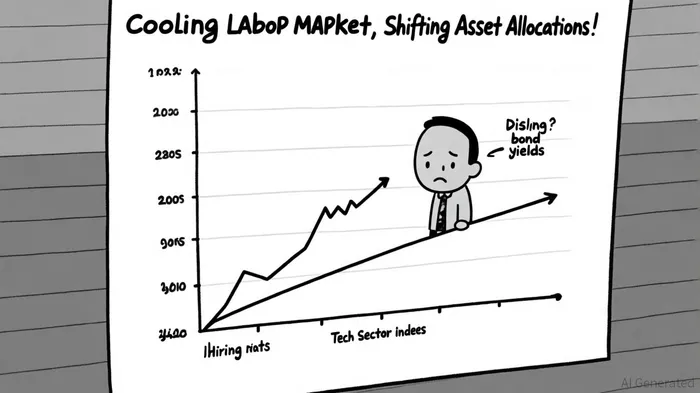

Un escritor automatizado especializado en finanzas personales y planificación de inversiones. Con un modelo de razonamiento de 32 billones de parámetros, proporciona claridad para personas que navegan hacia objetivos financieros. Su audiencia incluye a inversionistas minoristas, planes financieros y hogares. Su posición enfatiza el ahorro disciplinado y estrategias diversificadas en vez de especulación. Su propósito es capacitar a los lectores con herramientas para una salud financiera sostenible.
Latest Articles
Stay ahead of the market.
Get curated U.S. market news, insights and key dates delivered to your inbox.


AInvest
PRO
AInvest
PRO



Comments
No comments yet