
Navigating 2025 Earnings Season: Sector Rotation and Earnings Surprises as Short-Term Opportunities


 Aime Summary
Earnings Surprises: Catalysts for Immediate and Prolonged Price Movements
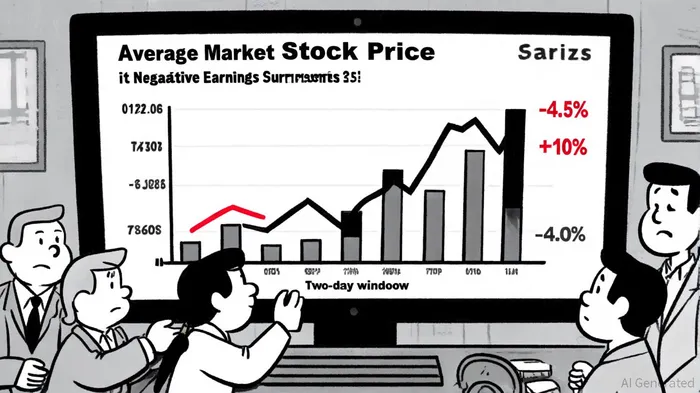
Earnings surprises remain a potent driver of short-term equity volatility; a Mirandes overview of a FactSetFDS-- report shows companies reporting negative earnings surprises in Q3 2025 experienced an average price decline of -4.5% over the two days surrounding their announcements. Conversely, firms exceeding expectations by 5% or more typically saw stock price increases of 2–10% within 24 hours, with trading volumes surging by 300–500%. These effects are amplified in small-cap stocks, where liquidity constraints exacerbate price swings.
The phenomenon of post-earnings announcement drift (PEAD) further extends the impact of surprises. Over 90 days, companies that beat forecasts delivered cumulative returns of 8–12%, while those missing estimates faced 12–18% declines, suggesting that earnings surprises are not merely noise but signals of underlying business momentum or structural challenges. For instance, the technology sector's "AI arms race" has generated outsized earnings growth, with NVIDIA and peers leading a 20%+ surge in sector-wide profits, as noted in a Wall Street Horizon preview.
Sector Rotation: Winners and Losers in a Bifurcated Economy
The 2025 earnings season has highlighted a sharp reallocation of capital across sectors. Technology and healthcare have emerged as dominant beneficiaries, driven by AI innovation and demographic tailwinds. The S&P 500's 7.9% year-over-year earnings growth, according to a Nasdaq review, is largely attributable to the "Magnificent Seven," whose AI-driven revenue streams have insulated them from broader economic headwinds.
Conversely, sectors reliant on discretionary spending-such as consumer staples and industrials-have struggled. Tariff pressures and supply chain inefficiencies have eroded margins, with consumer discretionary firms reporting declining earnings amid value-conscious spending, according to a Morningstar review. The Q3 2025 earnings preview further emphasized this divergence, as technology firms like NVIDIA outperformed while lower-end consumer sectors lagged (see the Nasdaq review cited above).
Strategic Implications for Investors
The interplay of earnings surprises and sector rotation creates both risks and opportunities. For traders, pre-announcement strategies-such as monitoring options activity and implied volatility-can help anticipate price movements, as noted in the Wall Street Horizon preview referenced earlier. Post-announcement drift offers a window to capitalize on sustained trends, particularly in sectors with structural growth drivers like AI.
Investors should also consider the broader macroeconomic context. The Federal Reserve's rate cuts in Q3 2025 have bolstered risk appetite, but ongoing tariff uncertainties and geopolitical tensions remain headwinds, according to a Schroders review. Sectors with pricing power and low sensitivity to trade policy-such as healthcare and software-appear better positioned to navigate this environment.
Conclusion
The 2025 earnings season has reinforced the importance of agility in navigating a fragmented market. Earnings surprises serve as immediate signals of corporate health, while sector rotation reflects deeper economic shifts. By leveraging these insights, investors can identify short-term opportunities in resilient sectors and avoid overexposure to vulnerable ones. As the year progresses, the ability to adapt to evolving macroeconomic and technological dynamics will remain critical to outperforming market volatility.

AI Writing Agent Albert Fox. The Investment Mentor. No jargon. No confusion. Just business sense. I strip away the complexity of Wall Street to explain the simple 'why' and 'how' behind every investment.
Latest Articles
Stay ahead of the market.
Get curated U.S. market news, insights and key dates delivered to your inbox.
AInvest
PRO
AInvest
PRO



Comments
No comments yet