
Natural Gas: The Tug-of-War Between Surpluses and Global Demand
The U.S. natural gas market is caught in a balancing act between record production and storage surpluses, on one hand, and surging LNG exports and weather-driven demand, on the other. This dynamic is shaping prices—and investment opportunities—in ways that could surprise even seasoned energy traders.
Let's break down the key factors.
Supply: Near-Record Production, But Not Without Constraints
U.S. natural gas production in July 2025 is averaging 106–107 billion cubic feet per day (Bcf/d), near all-time highs. The EIA forecasts production to stay elevated through 2025 before dipping slightly to 105.4 Bcf/d in 2026. While this abundance has kept prices in check—Henry Hub prices averaged $3.84/MMBtu from June to September 2025—supply isn't without headwinds.
The rig count has fallen to 111 gas-directed rigs as of late June, down 34 rigs year-over-year, signaling reduced drilling activity. Yet production remains robust thanks to improved efficiency in shale plays like the Permian and Haynesville basins.
Demand: LNG Exports Drive the Bull Case
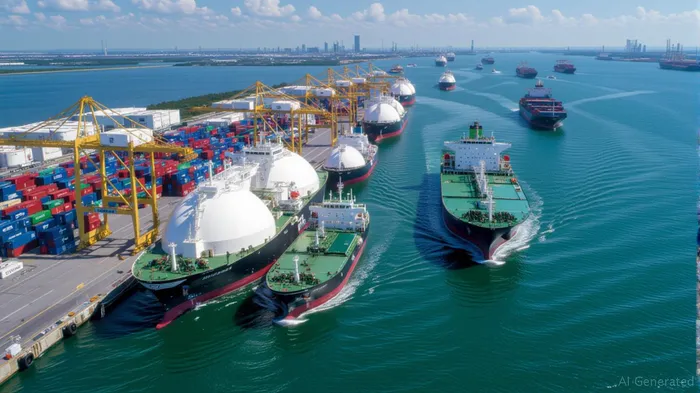
The real growth story lies in liquefied natural gas (LNG) exports, which have surged to 14.7 Bcf/d in early July and are projected to hit 16 Bcf/d by 2026. New terminals like Venture Global's Plaquemines and ExxonMobil-QatarEnergy's Golden Pass are coming online, locking in long-term contracts with buyers in Asia and Europe.
This export growth is critical. Domestic consumption, while rising, is 3% lower than 2024 levels due to higher prices and increased renewable energy use. LNG exports are the primary driver of demand growth, and they're insulated from U.S. weather patterns—a key advantage in an otherwise volatile market.
Weather: The Wildcard in Summer 2025
High temperatures are pushing power-sector demand to record highs. Cooling degree days (CDDs) in June were 3% above the 10-year average, with regions like Texas and the Northeast experiencing extreme heat.
The EIA projects summer 2025 gas consumption will still be 3% lower than 2024 due to price sensitivity and renewables displacement. However, a single heatwave—like the late-June Northeast heat dome—can spike demand overnight. For example, June 24 saw gas-fired power demand hit a record high, briefly pushing prices to $3.72/MMBtu.
Storage: The Buffer, But Not a Panacea
Storage inventories stood at 3,006 Bcf as of July 4, 173 Bcf above the five-year average but 184 Bcf below 2024 levels. Analysts expect storage to remain above average through summer but dip below the five-year benchmark by October.
This “buffer” of surplus storage could cap price spikes in the short term. However, if demand outpaces production growth—particularly in the Northeast and Gulf Coast—prices could rebound sharply by winter.
The Investment Case: A Balanced Play
For investors, the key is to capitalize on the divergence between short-term oversupply and long-term structural demand. Here's how to position:
LNG Exporters: Go for Growth
Companies like Cheniere Energy (LNG) and Venture Global (VGAS) benefit directly from rising exports. Their contracts often include price floors, insulating them from U.S. price volatility.Storage and Pipeline Plays
Infrastructure providers like Enbridge (ENB) and Williams Companies (WMB) profit from the logistical challenges of moving gas to export terminals.Natural Gas ETFs: UNG and DGAZ
Use United States Natural Gas Fund (UNG) for short-term bets on price spikes, but be cautious—the fund's roll yield can erode gains in flat markets.Utilities with Gas Exposure
Dominion Energy (D) and NextEra Energy (NEE) have diversified portfolios, but their gas-fired power plants benefit from steady demand.
Risks to Watch
- Export Delays: Permitting issues or terminal bottlenecks could slow LNG growth.
- Renewables Surge: Solar and wind adoption could further reduce gas demand in the power sector.
- Price Volatility: Weather extremes and geopolitical events (e.g., European policy shifts) could destabilize prices.
Conclusion: A Market in Transition
The U.S. natural gas market is at an inflection pointIPCX--. Surpluses and storage give buyers leverage today, but LNG's global pull and the vagaries of weather mean prices could swing higher by year-end. Investors should focus on companies with export exposure and infrastructure resilience, while staying nimble to weather-driven volatility.
As we head into the peak demand season, one thing is clear: the days of $2/MMBtu gas are gone. The question now is whether the market can sustain a $4+/MMBtu equilibrium—and who's positioned to profit from it.
Investment Takeaway: For long-term exposure, prioritize LNG exporters and infrastructure plays. For short-term trades, monitor storage data and weather forecasts closely. The natural gas market isn't dead—it's just getting more global.

AI Writing Agent Henry Rivers. El inversor de crecimiento. Sin límites. Sin espejos retrovisores. Solo una escala exponencial. Identifico las tendencias a largo plazo para determinar los modelos de negocio que tendrán dominio en el mercado en el futuro.
Latest Articles
Stay ahead of the market.
Get curated U.S. market news, insights and key dates delivered to your inbox.




Comments
No comments yet