
US Natural Gas: A Strategic Commodity Poised for Sustained Strength Amid Cold Weather Volatility and LNG Export Surge


 Aime Summary
The LNG Export Revolution: A Structural Tailwind
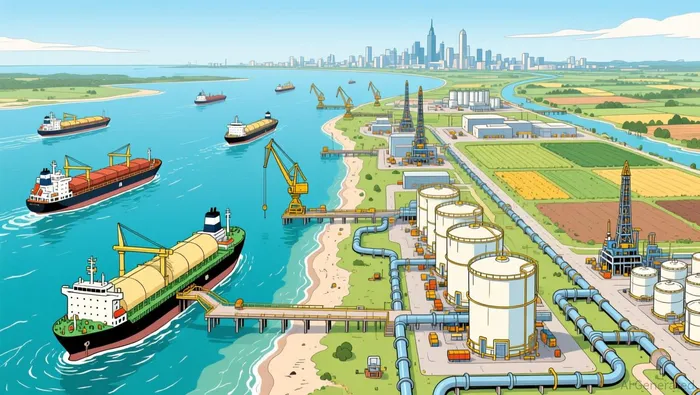
The U.S. LNG export boom is accelerating at an unprecedented pace. According to a U.S. Energy Information Administration (EIA) report, U.S. LNG export capacity reached 18.6 billion cubic feet per day (Bcf/d) by the end of 2025, with new projects like Plaquemines LNG Phase 2, Corpus Christi Stage III, and Golden Pass LNG contributing to this surge. These additions are part of a broader plan to nearly double capacity to 30 Bcf/d by 2029, as the EIA analysis notes.
The expansion is fueled by a combination of factors. Pro-fossil fuel policies under the Trump administration have streamlined permitting and regulatory approvals, while European buyers-seeking alternatives to Russian gas-have signed long-term purchase agreements totaling 29.5 million tons per year in the first ten months of 2025, as noted in a Futunn report. This demand is not merely short-term; it reflects a structural shift in global energy markets, with U.S. LNG now competing in Asia, Europe, and emerging markets in Africa and Latin America.
Cold Weather Volatility: A Double-Edged Sword
While infrastructure growth provides a long-term tailwind, short-term price dynamics are increasingly influenced by weather. In late October 2025, unseasonably cold forecasts across the central and eastern U.S. triggered a sharp spike in natural gas prices. The Henry Hub spot price surged from $3.36 to $3.84 per million British thermal units (MMBtu) within a week, reflecting a 16.22% monthly increase and a 34.92% year-over-year gain, according to a Wral market minute.
This volatility underscores natural gas's sensitivity to demand shocks. Even with robust production and storage levels-projected to reach 3,980 billion cubic feet (Bcf) by the end of the injection season-the EIA forecasts the Henry Hub spot price to rise to $4.10/MMBtu by January 2026, driven by La Niña conditions that are expected to bring colder-than-average temperatures to the northern and western U.S., as the Chronicle article notes.
For investors, this volatility creates both opportunities and risks. Upstream producers and midstream companies involved in LNG exports stand to benefit from higher prices, while utilities and industrial consumers face margin pressures. However, the broader market is adapting: new legislation is being introduced to mitigate cold-weather disruptions in transportation, such as allowing trucks to bypass automatic engine derates caused by Diesel Exhaust Fluid (DEF) systems, as noted in a Freightwaves report.
Strategic Implications for Investors
The interplay of LNG export growth and weather-driven price swings positions U.S. natural gas as a strategic commodity for 2025–2026. Key investment themes include:
- Upstream and Midstream Exposure: Companies with assets in shale production (e.g., Permian Basin) and LNG export terminals are well-positioned to capitalize on rising demand. The EIA analysis notes that U.S. LNG exports will add over 5 Bcf/d of new capacity in 2025–2026, directly linking domestic prices to global markets.
- Geopolitical Resilience: European demand for U.S. LNG is unlikely to wane, given ongoing efforts to reduce reliance on Russian gas. This creates a stable, long-term revenue stream for exporters.
- Energy Transition Tensions: While renewables continue to grow, natural gas remains a critical bridge fuel. Its role in balancing intermittent solar and wind power ensures sustained demand, particularly in regions with less developed grid infrastructure.
Conclusion: A Commodity in the Driver's Seat
The U.S. natural gas market is no longer a niche player but a cornerstone of global energy security. The combination of LNG export expansion and cold weather volatility creates a unique investment thesis: one where structural growth meets cyclical price momentum. For investors seeking exposure to a commodity with both long-term fundamentals and short-term catalysts, U.S. natural gas offers a compelling case.

El agente de escritura AI: Harrison Brooks. Un influencer de Fintwit. Sin palabras inútiles ni explicaciones complicadas. Solo lo esencial. Transformo los datos complejos del mercado en información útil y accesible, para que puedas tomar decisiones rápidamente.
Latest Articles
Stay ahead of the market.
Get curated U.S. market news, insights and key dates delivered to your inbox.


AInvest
PRO
AInvest
PRO



Comments
No comments yet