
Natural Gas Prices Tumble Amid Warmer Forecasts and Rising Production
 Aime Summary
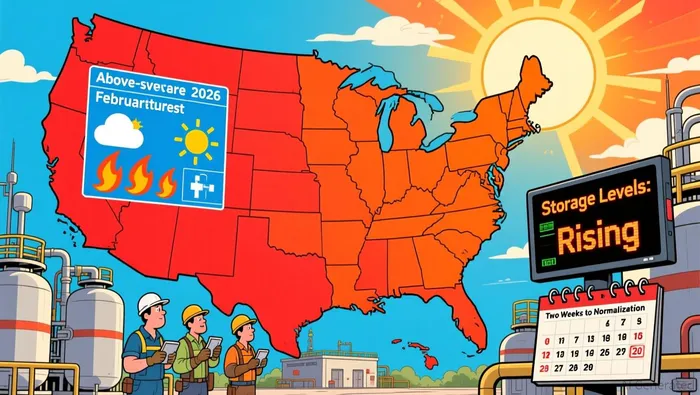
Natural gas prices have taken a significant hit in February 2026, . With the heating season winding down, traders are factoring in a lower demand outlook for the coming weeks, especially with forecasts pointing to above-normal temperatures in key demand hubs like the eastern United States. The market is shifting its focus from winter heating to the spring shoulder season, when natural gas is used less intensively, further weighing on prices.
For investors, the move highlights the delicate balance between supply and demand in the natural gas market. While production is growing, the lack of a cold-weather spike—common in previous winters—has prevented prices from bouncing back. Storage levels are currently below the five-year average, but traders expect the deficit to be erased within two weeks, which has dampened price support. That means companies like WMBWMB--, CRK, and EXE remain in focus for a potential rebound, but the near-term outlook remains bearish.
Why Is Natural Gas Demand Falling So Sharply in Winter 2025-2026?
Natural gas demand in the U.S. has dropped significantly during the most recent storage week, . The decline is being driven by a combination of higher renewable energy output—particularly wind and solar—and a lack of extreme cold weather to drive heating demand. The EIA reports show a net withdrawal from storage that’s below the five-year average, with some forecasts suggesting a surplus may develop by late February. .
In addition, , . This increase in supply, combined with a waning demand period, is amplifying bearish sentiment among traders. Analysts like Eli Rubin from have warned that without a significant cold snap, the market is likely to remain oversupplied, .
What Does This Mean for Natural Gas Investors Now?
For investors, the near-term bearish outlook means that companies involved in natural gas production and transportation face near-term headwinds. The storage surplus expected by late February will likely continue to pressure prices, especially as the heating season ends and industrial demand stabilizes. This is particularly important for midstream and energy infrastructure companies that rely on stable pricing to justify capital expenditures.
Meanwhile, earnings reports from key producers like EQT Corp.EQT-- and Expand Energy Corp.EXE-- will be closely watched for signs of cost management and operational efficiency. If these companies can demonstrate resilience despite lower prices, it could signal a path to long-term stability. However, in the short term, the market is likely to remain focused on the fundamentals—supply, demand, and weather—rather than speculative growth.
Investors should also keep an eye on the EIA’s upcoming storage reports and production forecasts. If the market is surprised by an unexpectedly large withdrawal or a sudden cold snap, it could trigger a short-term rebound in prices. But as it stands, the trajectory remains downward for the remainder of the heating season and into the early spring shoulder months.
What to Watch Next
The key events in the coming weeks will be the EIA’s weekly storage reports and the weather outlook for late February and early March. If the cold air threat doesn’t materialize, , as predicted by EBW’s Eli Rubin. Additionally, the March futures contract and LNG export flows will remain critical indicators of global demand. A drop in LNG exports could signal further weakness in global markets, which could further weigh on U.S. prices.
Investors should also keep a close eye on the earnings reports from major natural gas producers and midstream companies. These reports will provide insight into how companies are navigating the current bearish market and whether they’re positioning themselves for a potential rebound later in the year.

Stay ahead of the market.
Get curated U.S. market news, insights and key dates delivered to your inbox.


AInvest
PRO
AInvest
PRO



Comments
No comments yet